
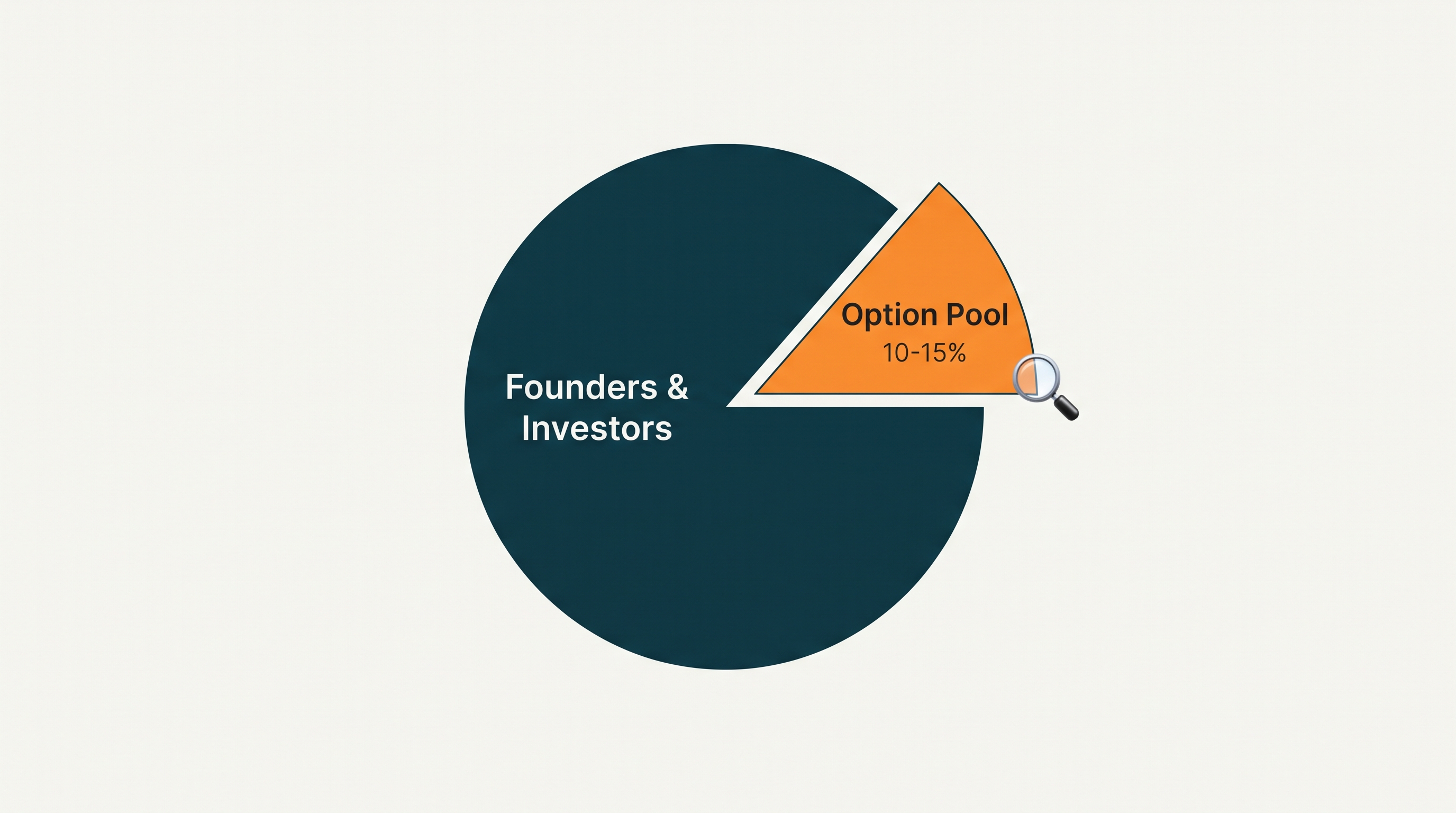
Your cap table is your company's DNA. Investors check it before they write a cheque. This guide reveals exactly how to build a clean, investor-friendly cap table that signals professionalism and accelerates your fundraise.
Your cap table is your company's DNA. It shows who owns what, who gets paid first, and who controls the company.
Investors check your cap table before they write a cheque. A clean, well-structured cap table signals professionalism, organization, and operational maturity. A messy one signals the opposite and can kill a deal before it starts.
This guide reveals exactly how to build an investor-ready cap table that accelerates your fundraise and protects your ownership.

What Is a Cap Table?
A cap table, short for capitalization table, is a document that outlines the ownership structure of a company. It lists every security your company has issued — common shares, preferred shares, options, warrants, SAFEs, and convertible notes — and shows who owns them.
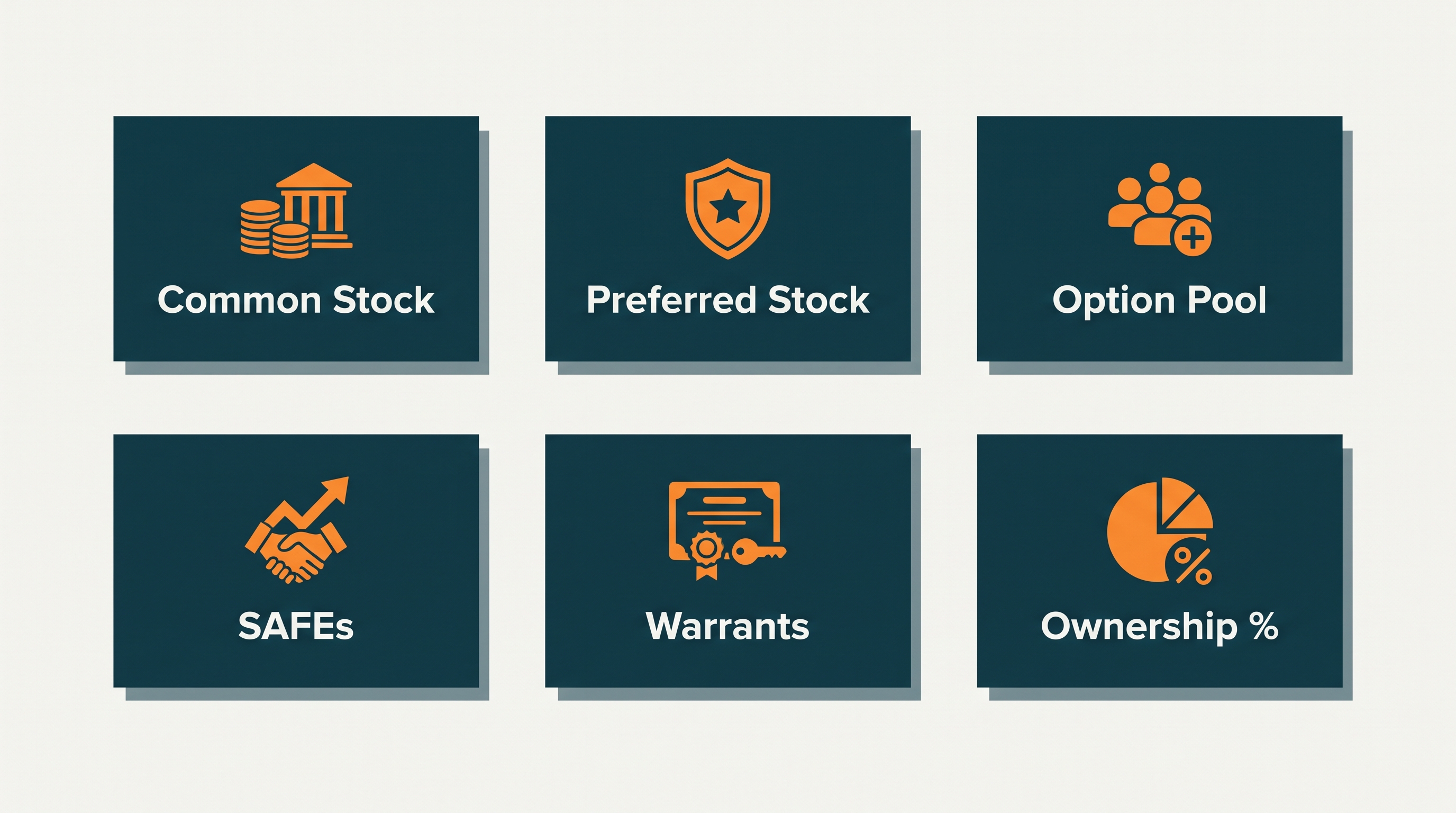
Think of it as your startup's financial map. At its core, a cap table answers one question: who owns what percentage of this company?
What Belongs on Your Cap Table
A well-structured cap table includes:
Common Stock — Equity owned by founders, employees, and early team members after exercising options. It usually carries voting rights and sits last in the liquidation line — common holders are paid only after creditors and preferred.
Preferred Stock — What investors buy in priced rounds. It carries a liquidation preference, protective provisions, and governance rights. Each round typically creates a new class (Series A, B, C) with its own terms.
Option Pool — Reserved shares for future employees. Every startup cap table must include an option pool.
SAFEs and Convertible Notes — Instruments that convert into equity at a future round. These must be modeled on a fully diluted basis.
Warrants — Rights to purchase shares at a future date.
Ownership Percentages — The percentage of the company each stakeholder owns.
Investment History — Records of every investment received.
Valuation — Pre-money and post-money valuation.
Sequence of Financing Rounds — Chronological order of all funding events.
Why Investors Care About Your Cap Table
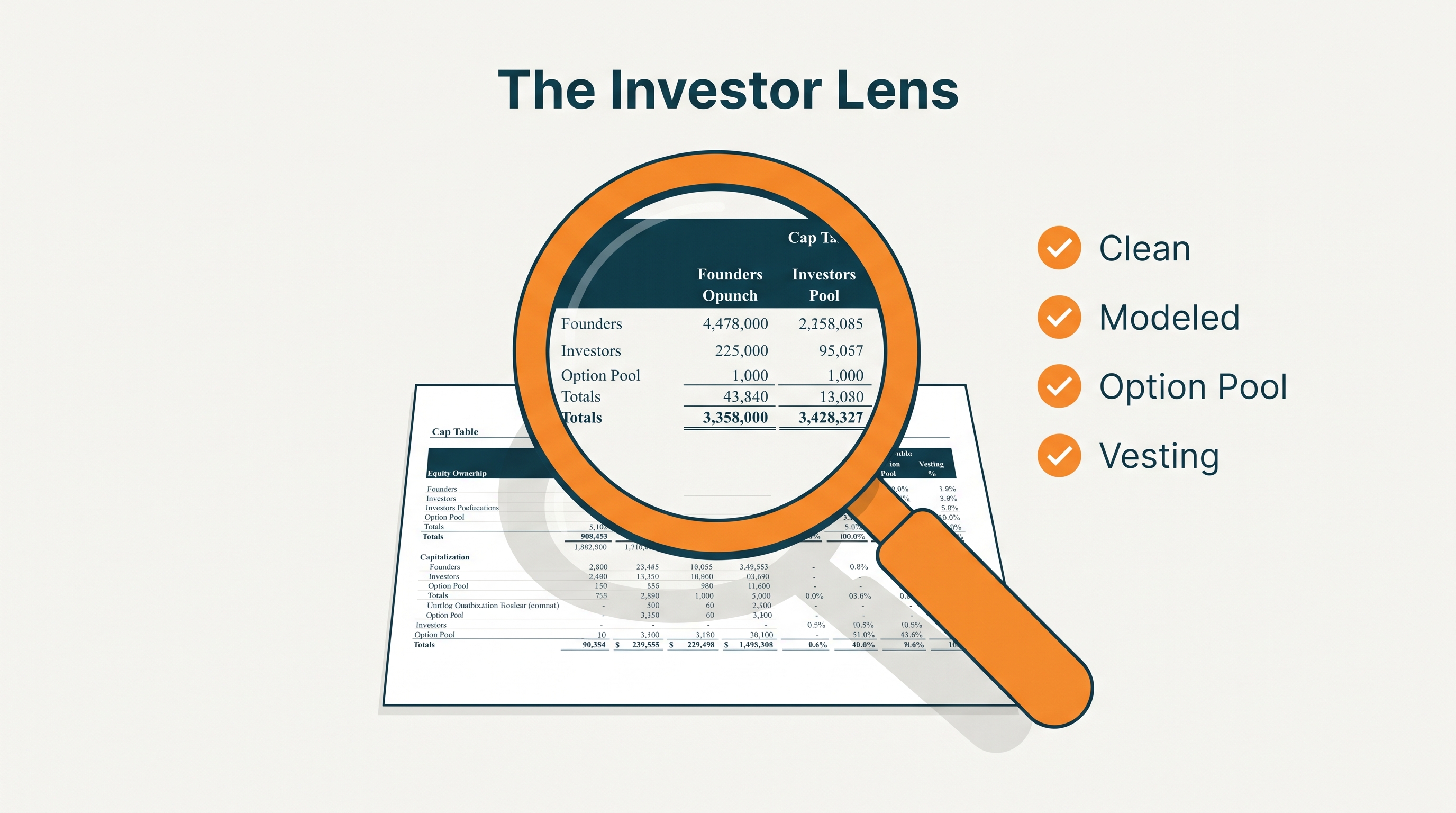
Investors scrutinize your cap table during due diligence. They are looking for:
Clean Ownership Structure — A clear, well-documented ownership structure that proves you know how to run a business.
Properly Modeled Convertibles — SAFEs and convertible notes must be tracked on a fully diluted basis.
Unissued Option Pool — Institutional investors typically expect to see an unissued Employee Stock Option Pool of 10 to 20 percent baked into your pre-money valuation.
Founder Vesting — A formal founder vesting schedule is required.
Cap Table Quality — Cap table quality signals operational maturity to investors.
A messy cap table can delay your funding timeline by weeks. Investors may walk away entirely.
Step 1: Build the Ownership Base
Start by listing every issued security in order of seniority: common stock first, then preferred stock, then the option pool, then convertibles. This structure makes the cap table easier to audit, reconcile, and connect to the waterfall model later.
Early-Stage Example:
| Holder | Security Type | Shares | Ownership % |
|---|---|---|---|
| Founder 1 | Common Stock | 2,000,000 | 40% |
| Founder 2 | Common Stock | 1,500,000 | 30% |
| Employee Pool | Option Pool | 750,000 | 15% |
| Seed Investor | Preferred Stock | 500,000 | 10% |
| SAFE Holder | SAFE | - | 5% |
Step 2: Size Your Option Pool Correctly
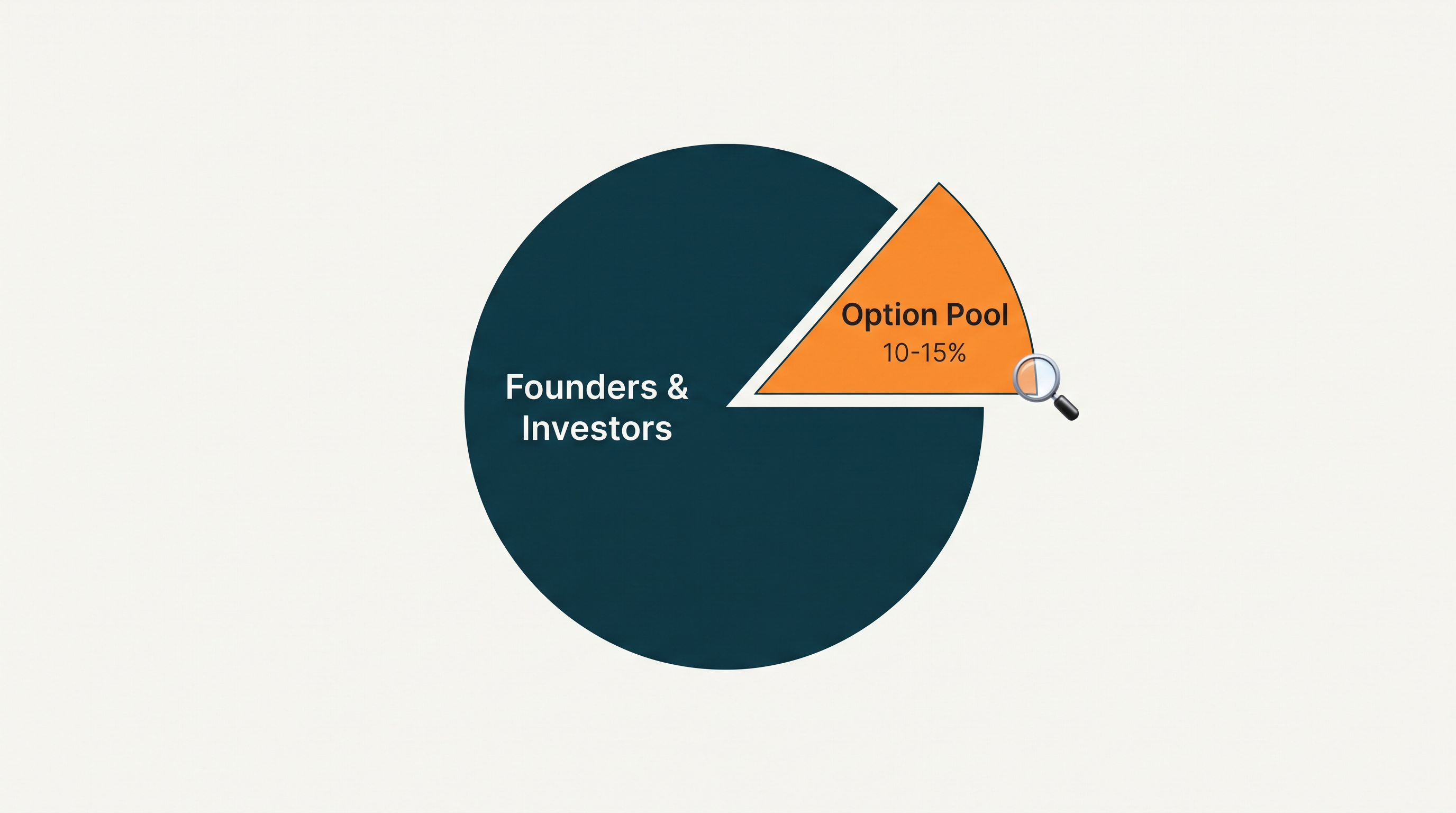
The option pool is one of the most critical — and most misunderstood — parts of your cap table. It is a block of shares specifically reserved for the company's employees.
Why the Option Pool Matters
A well-structured option pool makes your startup more attractive to investors. It enhances clarity, ensuring investors can quickly assess equity allocation and make informed decisions.
How Big Should Your Option Pool Be?
- Pre-seed/Seed: Typically 8–15%
- Series A: 10–15%
- Later rounds: 15–20%
The Option Pool Shuffle
Here is the trap. The option pool is typically set before a new investment round, meaning founders absorb the dilution, not investors.
If you negotiate a $10 million pre-money valuation and the investor requires a 10% option pool, that $1 million pool comes out of the pre-money. Your effective valuation is $9 million. The investor's ownership increases. Your dilution increases.
Negotiation Strategy: Push for a post-investment option pool. This protects your ownership percentage. Use a concrete hiring plan to justify the pool size your business needs.
Step 3: Implement Founder Vesting
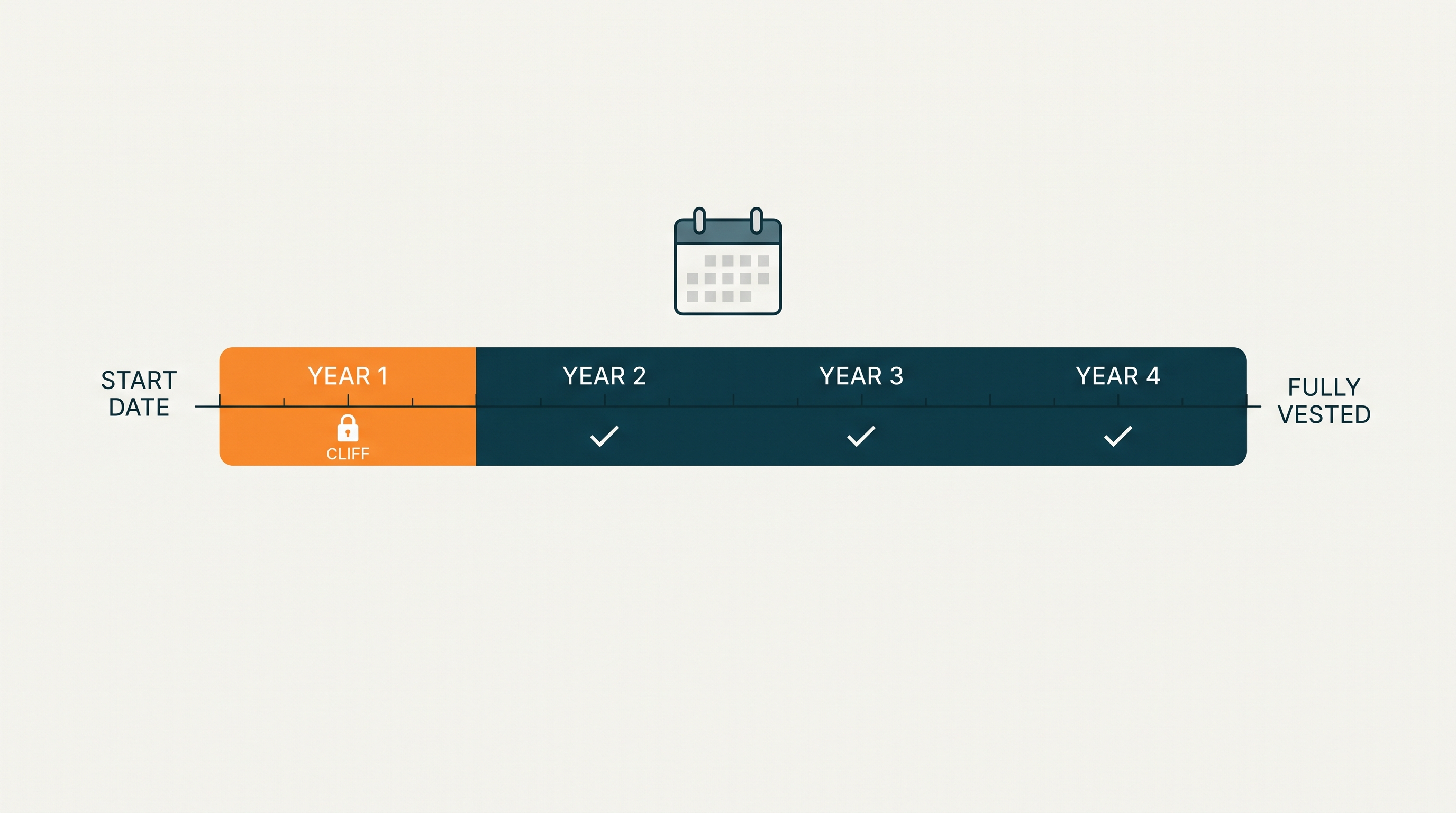
Founder vesting is a safety net for your company. It ensures that founders earn their equity over time, protecting the company from a founder leaving early with a large equity stake.
The Standard Vesting Schedule
Four years with a one-year cliff. If a founder leaves before one year, they get nothing. After one year, 25% of their shares vest, and the rest vest monthly or quarterly over the next three years.
Why Investors Require Vesting
Investors require vesting because it aligns incentives. It keeps founders committed to the company. It prevents "deadweight equity" on the cap table from founders who leave early.
Best Practices
- Implement vesting from day one
- Include appropriate acceleration triggers for acquisitions or unfair terminations
- Draft clear founder-to-founder agreements covering what happens if someone wants out
Step 4: Model Dilution
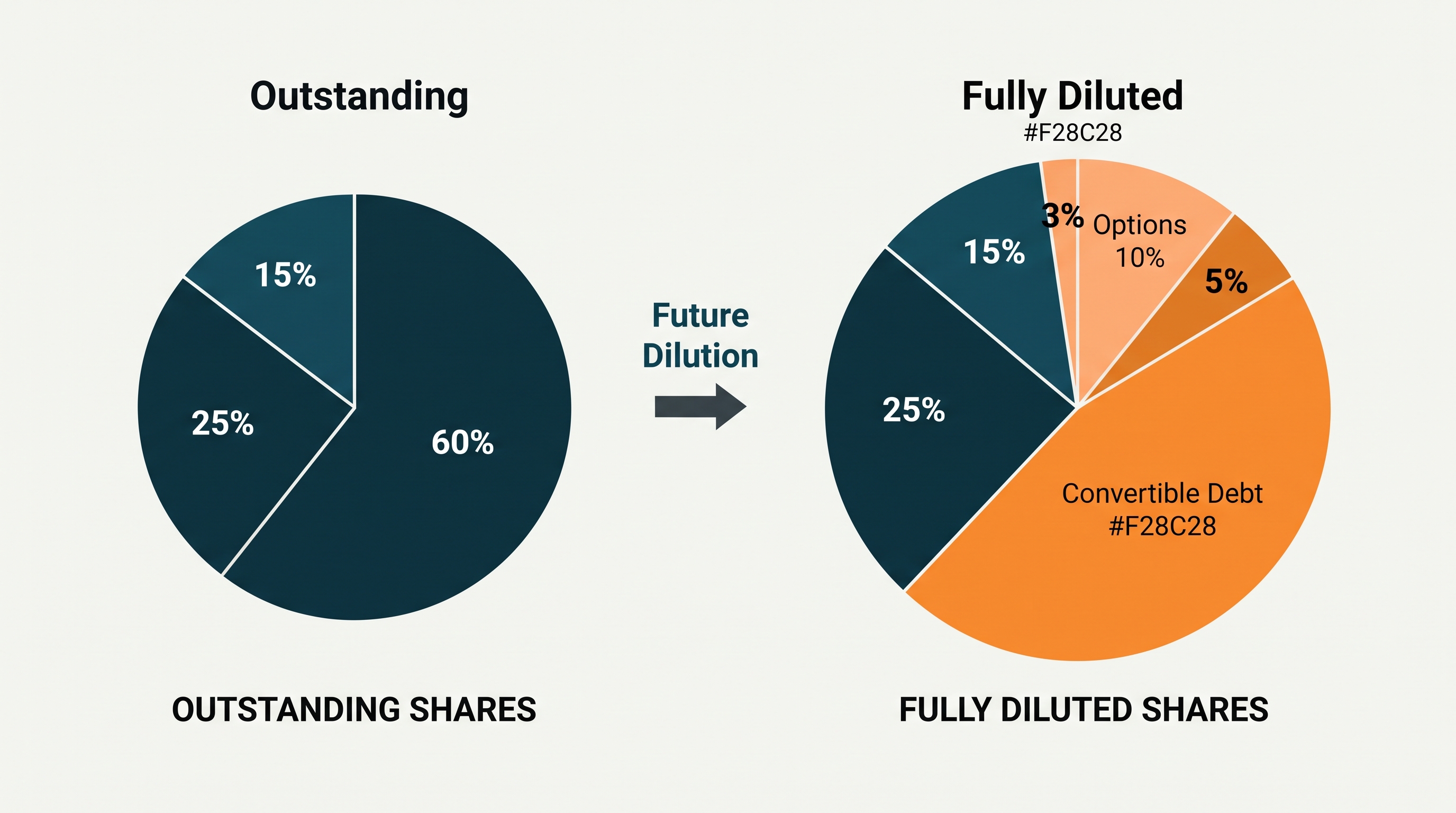
Dilution is the reduction in your ownership percentage as new shares are issued in future funding rounds. Most founders are surprised by how much dilution actually occurs.
Why Model Dilution?
A clean cap table helps you understand how ownership evolves over time and how you can prepare more effectively for the future. It helps you understand the impact of dilution before it happens.
What to Model
- Convertible Instruments: SAFEs and notes convert into equity, often at a discounted price, which impacts total shareholding.
- Option Pool Top-ups: Most term sheets create or top up the pool as part of the round.
- Future Rounds: Model scenarios to see how decisions today shape your ownership and growth tomorrow.
The Gap to Watch
Watch the gap between outstanding and fully diluted shares, because that gap is your future dilution. Fully diluted includes all options, warrants, and convertibles — not just issued shares.
Step 5: Build Your Waterfall Model
A waterfall model takes your cap table data and calculates what each holder receives in a specific exit scenario.
Cap Table vs. Waterfall
The cap table is the input. The waterfall is the output. The cap table has to be accurate first because every number in the waterfall is pulled directly from it.
Why Investors Review These Documents
Ownership percentage alone doesn't tell an investor what they will actually receive. A founder holding 40% of a company can end up with less cash at exit than a preferred investor holding 10%, because liquidation preferences are paid out before anything is split by ownership stake.
Investors request the cap table to see how equity is structured and what could dilute their position, and the waterfall to see what they would recover under different exit outcomes.
Build Your Waterfall
Start with the cap table. Then simulate different exit scenarios: $50 million, $100 million, $500 million. Show each class of shareholder what they receive.
Step 6: Move from Spreadsheets to Software
While spreadsheets might work in the early days, switching to cap table software like Carta or Pulley is a smart move as you grow.
The 7 Most Common Cap Table Mistakes
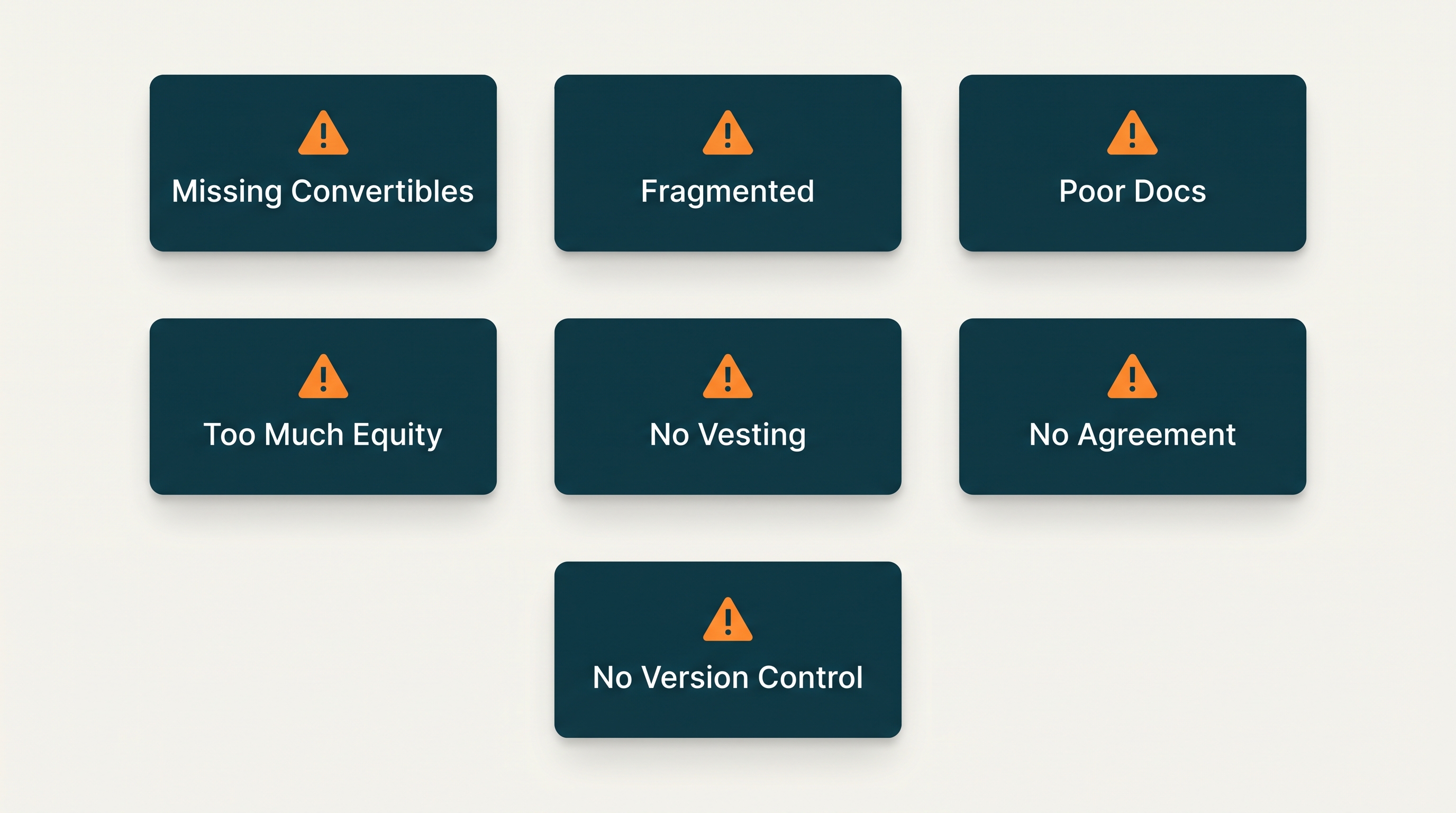
These mistakes are a leading cause of stalled fundraising during investor checks.
1. Not Tracking Convertible Instruments on a Fully Diluted Basis
Tracking convertible instruments incorrectly leads to surprise founder dilution. You must track SAFEs and convertible notes to understand true dilution before a priced round.
2. Allowing a Fragmented Cap Table
Keeping too many small investors on the ledger complicates governance and scares away lead investors.
3. Poorly Documented Equity Splits
Founders agree informally, and then disputes arise.
4. Giving Away Too Much Equity Too Early
Advisors and early employees can take more than their fair share.
5. Missing a Formal Founder Vesting Schedule
Founder vesting is required by investors.
6. Failing to Document a Proper Shareholders Agreement
The agreement is the legal foundation of your cap table.
7. Ignoring Cap Table Version Control
When sending files to different parties, ensure data room files match regulatory filings perfectly.
The Bottom Line
Your cap table is your company's equity story. A clean, well-maintained cap table helps you attract talent, streamline fundraising, maintain financing flexibility, and avoid due diligence hassles later on.
Investors check your cap table before they write a cheque. Make sure it tells the right story. Build on a solid foundation. Size your option pool correctly. Implement founder vesting. Model dilution. Build a waterfall. Move from spreadsheets to software.
A clean cap table means a confident fundraise. Build yours right from day one.
Frequently Asked Questions
Topics
cap table
startup cap table
investor-ready cap table
founder dilution
option pool
founder vesting
waterfall analysis
cap table software
investor due diligence