Equity vs Debt vs Quasi-Equity vs Blended Capital — Which Is Right for You?
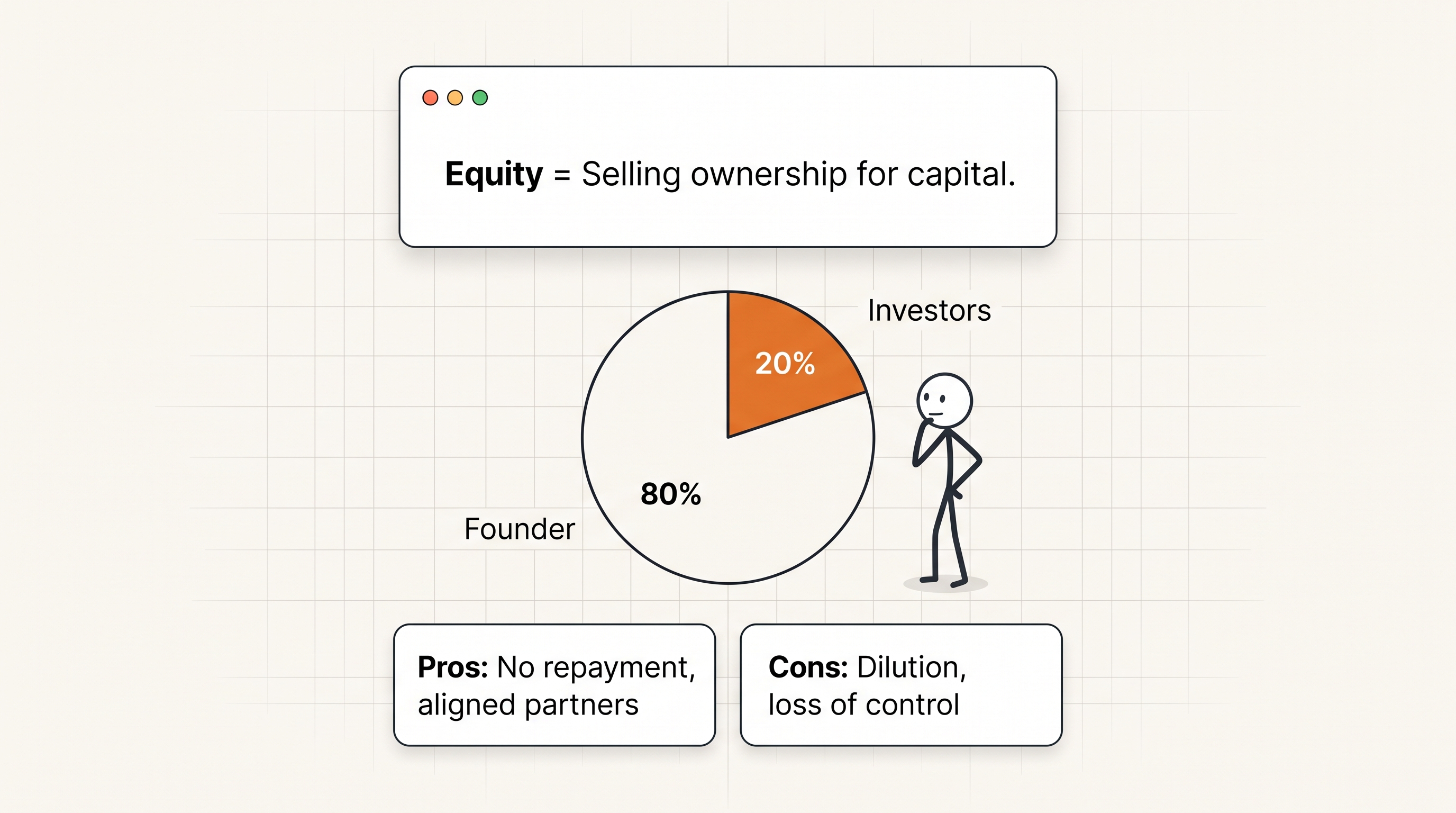
Equity, debt, quasi-equity, or blended capital — each funding path comes with trade-offs. This guide breaks down the pros, cons, and real-world applications of every option so you can choose the right capital for your business.
Every founder eventually faces the same question: what type of capital should I raise? The answer is rarely straightforward. It depends on your stage, your business model, your growth trajectory, and your personal goals as a founder. The four main paths are equity, debt, quasi-equity, and blended capital. Each comes with its own set of trade-offs, and understanding them is essential to making the right decision for your company. This guide breaks down each option in detail, explores the pros and cons, and helps you determine which path is right for your business.
1. Equity: Selling a Piece of Your Future
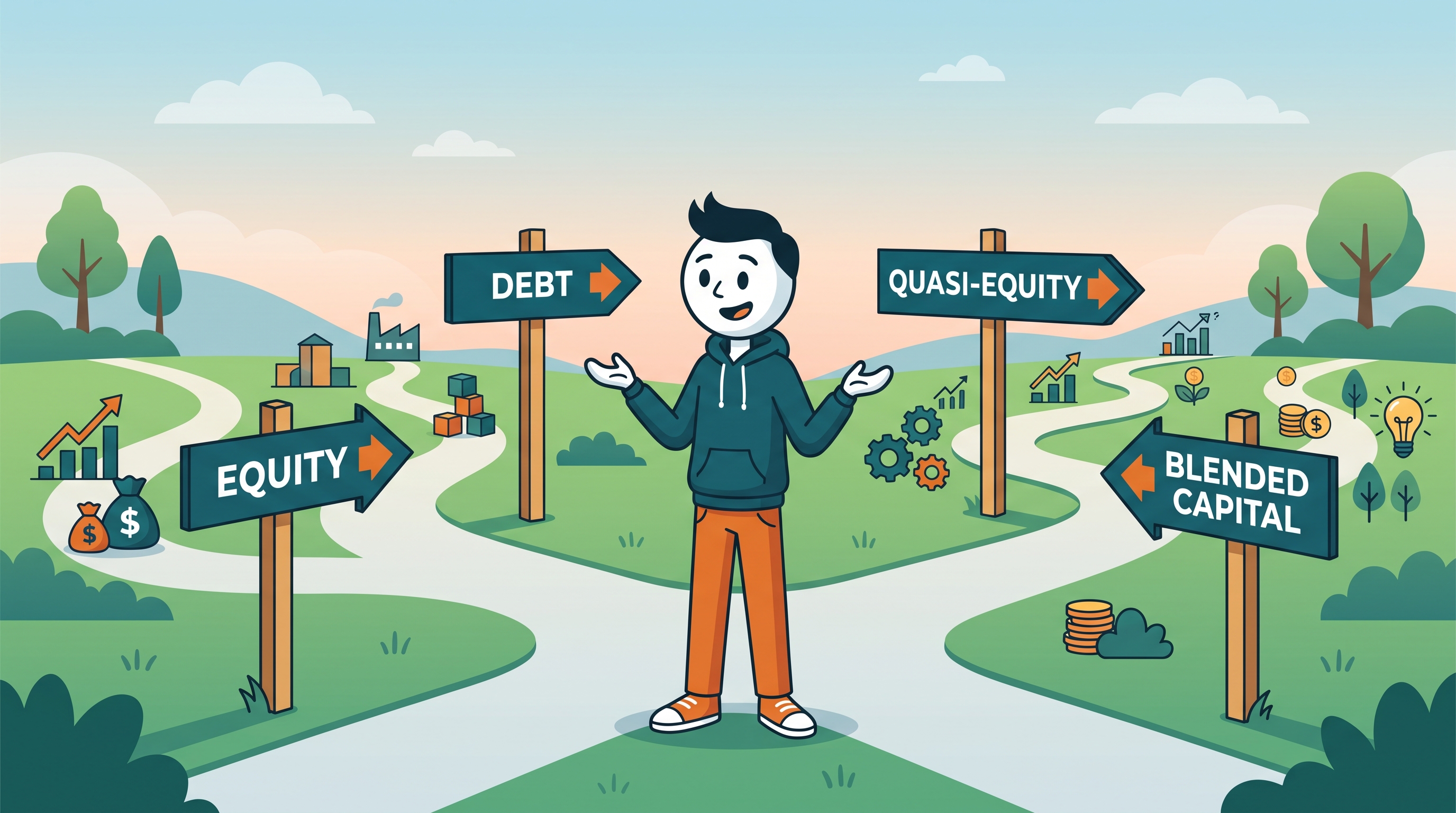
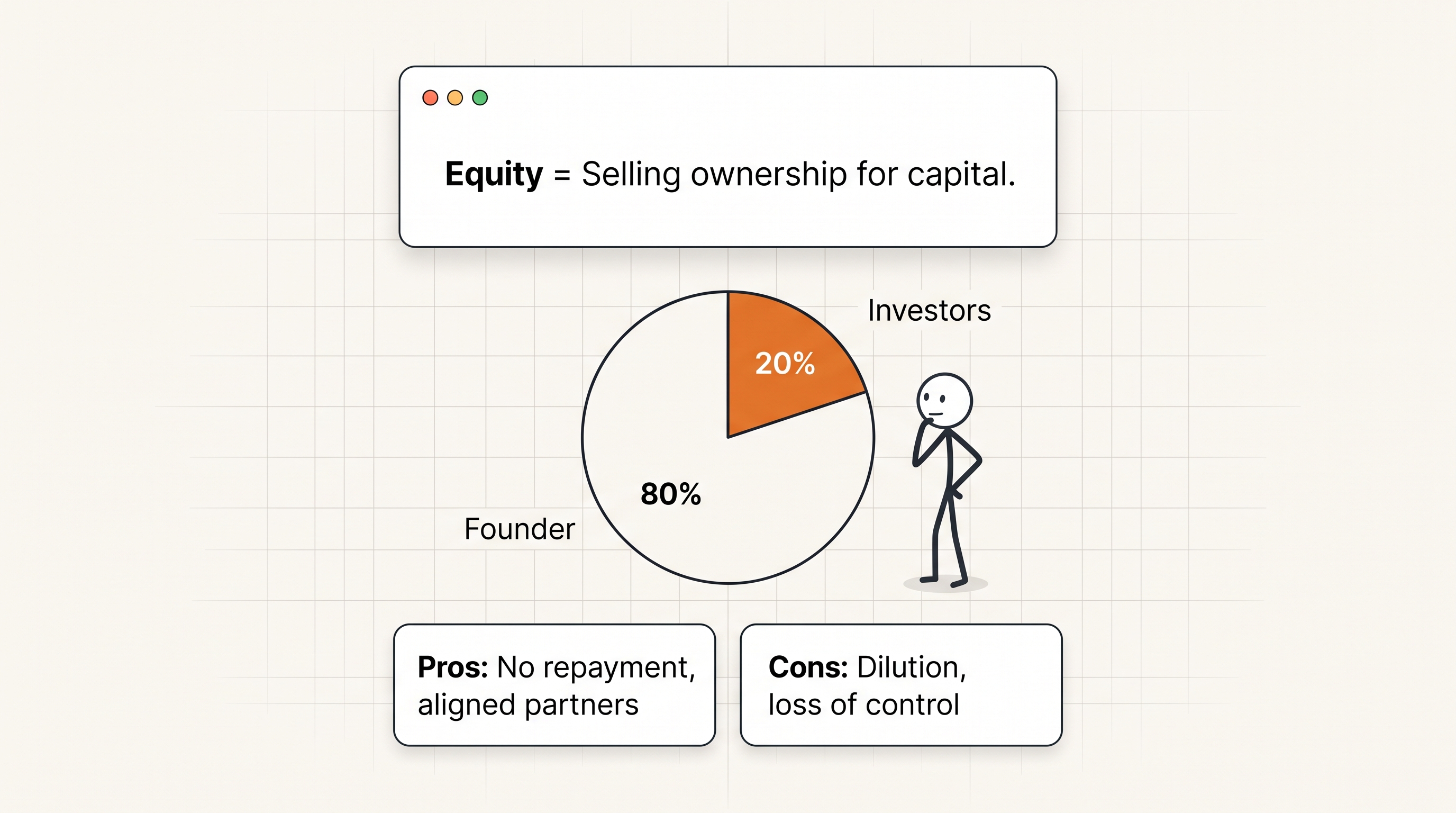
Equity financing is the most well-known form of startup funding. It involves selling a percentage of your company to investors in exchange for capital. The investors become partial owners and share in both the risks and rewards of your business. When you raise equity, you are trading ownership for capital. This means you will never have to repay the money, but you will share control and future profits with your investors. The most common equity investors are angel investors, venture capital firms, and private equity funds.
The Pros of Equity
The most significant advantage of equity is that there is no repayment obligation. The money is yours to deploy, and if the business fails, you do not owe anything to your investors. This makes equity the safest option from a cash flow perspective because it preserves your working capital for growth. Equity investors also bring more than just money to the table. They often provide strategic guidance, industry connections, and operational support that can be just as valuable as the capital itself. A good investor becomes a partner who is aligned with your long-term success.
The Cons of Equity
The downside of equity is dilution. Each time you raise equity, you give away a piece of your company. Over multiple rounds, your ownership stake can shrink significantly. This dilution reduces your control and your share of the upside if the company succeeds. Equity investors also expect a seat at the table. They will want board representation and influence over major decisions. If your investors have different priorities or timelines, this can create friction.
When to Choose Equity
Equity is the right choice when you need significant capital for growth and do not have the cash flow to support debt repayments. It is also the best option when you value the strategic support and network that experienced investors can provide. For early-stage startups with high growth potential but limited revenue, equity is often the only realistic option.
2. Debt: Borrowing to Build
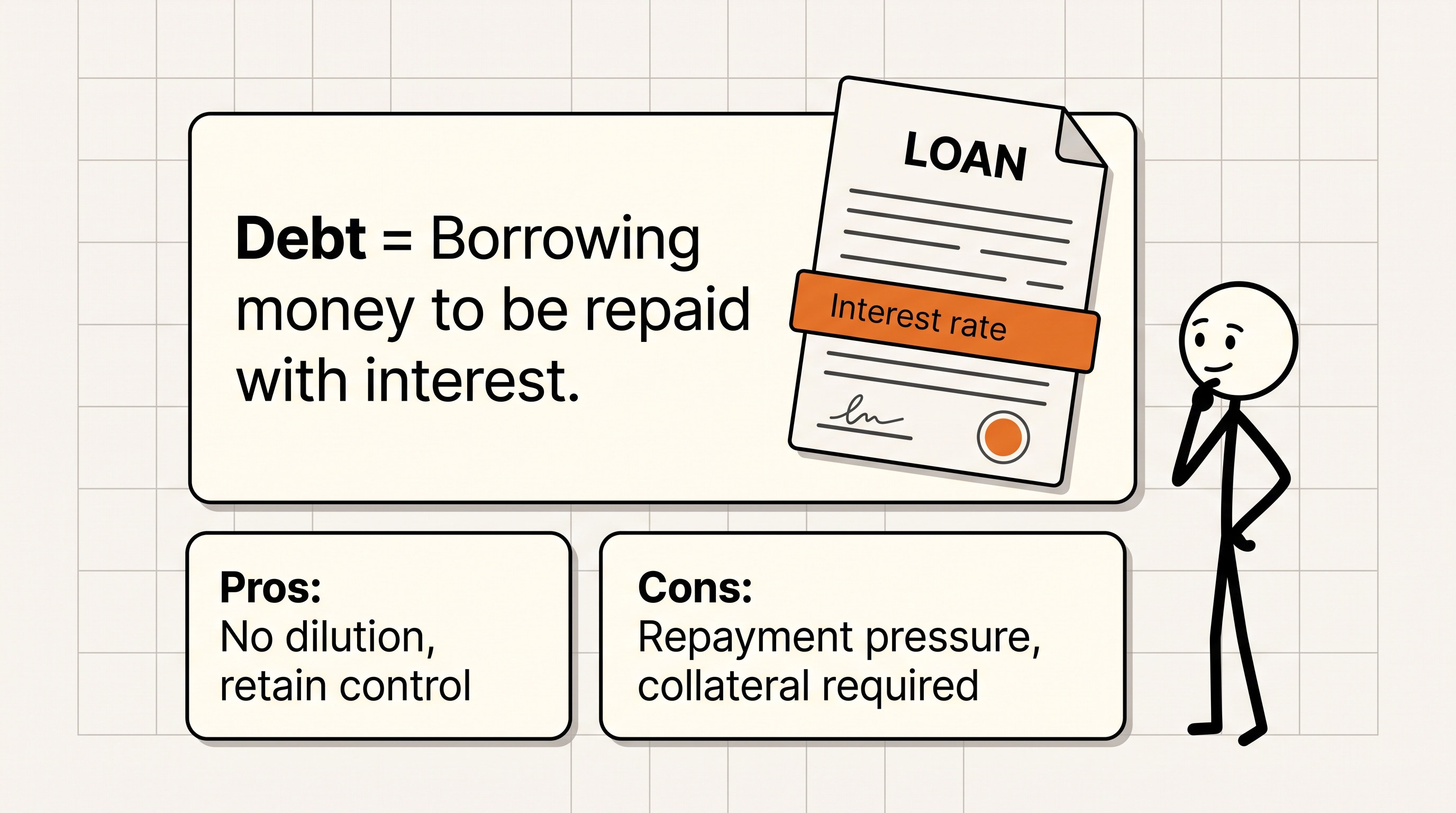
Debt financing is the traditional way businesses raise capital. You borrow money from a lender and agree to repay it over time with interest. Unlike equity, debt does not require you to give up ownership or control of your company. Debt can come from banks, financial institutions, or alternative lenders. It can be secured against assets or unsecured based on your creditworthiness. In the startup world, debt is often used for working capital, equipment purchases, or to bridge gaps between equity rounds.
The Pros of Debt
The most obvious advantage of debt is that you retain full ownership and control of your company. You do not dilute your equity or give up board seats. You are simply a borrower, and the lender has no say in how you run your business. Debt is also predictable. You know exactly how much you need to repay and when. If you have a clear path to generating revenue, debt can be a cost-effective way to finance growth. Interest payments are typically tax-deductible, which can provide additional savings.
The Cons of Debt
The biggest risk of debt is the obligation to repay regardless of your business performance. If your revenue falls short, you still need to make your payments. This can create significant financial stress and, in the worst case, lead to bankruptcy. Debt also requires collateral in most cases. This means you risk losing assets if you default. For early-stage startups with limited assets, securing debt can be difficult. Interest rates can also be high, especially for businesses without a proven track record.
When to Choose Debt
Debt is the right choice when you have predictable cash flow and can comfortably service the repayments. It is also a good option when you want to avoid dilution and retain full control of your company. For more mature startups with steady revenue, debt can be a cost-effective way to finance growth without giving up equity.
3. Quasi-Equity: The Best of Both Worlds?
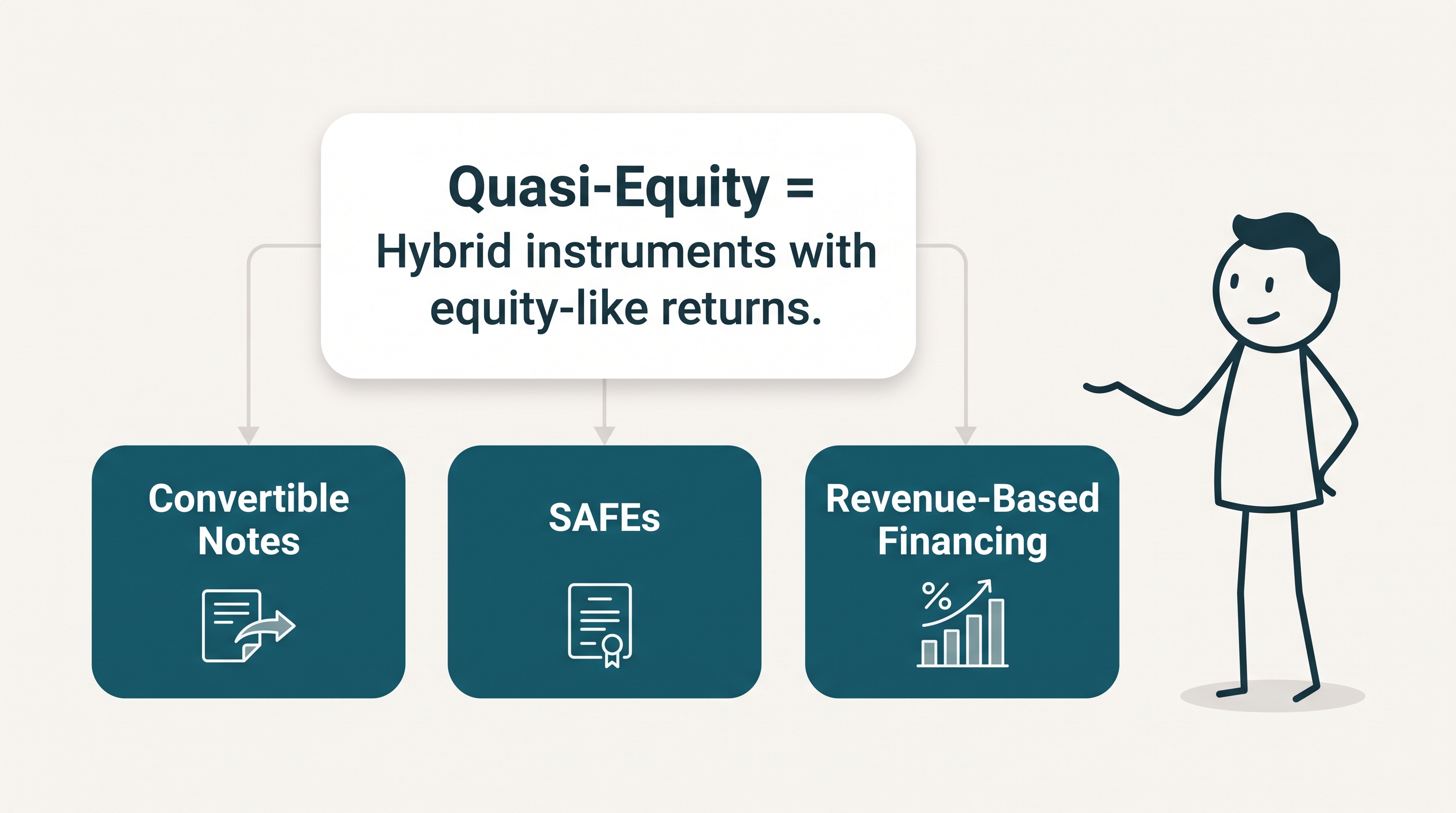
Quasi-equity is a hybrid form of financing that sits between debt and equity. It combines characteristics of both, offering flexibility that can be attractive to founders. The most common forms of quasi-equity are convertible notes, Simple Agreements for Future Equity (SAFEs), and revenue-based financing.
Convertible Notes
A convertible note is a loan that converts into equity at a future financing round. The investor lends money to the company, and instead of being repaid, the loan converts into shares at a discount to the next round's valuation. This allows founders to raise capital without agreeing on a valuation upfront. Convertible notes typically have a maturity date and an interest rate. If the company does not raise a qualified financing round before the maturity date, the note may need to be repaid or converted under different terms. This can create pressure if fundraising takes longer than expected.
Simple Agreements for Future Equity (SAFEs)
A SAFE is an agreement that gives the investor the right to purchase shares in a future priced round. It is similar to a convertible note but without the interest rate or maturity date. SAFEs were created by Y Combinator to simplify early-stage fundraising. SAFEs are typically faster and cheaper to execute than convertible notes. They do not accrue interest, and there is no repayment obligation. However, they do create future dilution when the conversion happens.
Revenue-Based Financing
Revenue-based financing is a form of quasi-equity where investors provide capital in exchange for a percentage of future revenue until a predetermined amount is repaid. Repayments are tied to revenue, so payments increase when revenue is high and decrease when revenue is low. This structure aligns the interests of the investor and the founder. The investor benefits from revenue growth, and the founder is not burdened with fixed repayments. However, the total repayment amount is typically higher than a traditional loan, and the ongoing revenue share can impact cash flow.
The Pros of Quasi-Equity
Quasi-equity instruments are flexible and can be tailored to specific situations. They allow founders to raise capital quickly without the complexity of a priced round. They also bridge valuation gaps between rounds, enabling startups to grow before setting a formal valuation.
The Cons of Quasi-Equity
The downside is that these instruments can be complex and lead to future dilution. The terms can also be difficult to understand, especially for first-time founders. Additionally, the conversion mechanics can be unpredictable, making it hard to model the long-term impact on ownership.
When to Choose Quasi-Equity
Quasi-equity is ideal for early-stage startups that need capital but are not ready for a priced round. It is also useful when there is a gap between the founder's valuation expectations and what investors are willing to pay. For companies with predictable revenue streams, revenue-based financing can be a good alternative to traditional debt or equity.
4. Blended Capital: Combining Multiple Sources
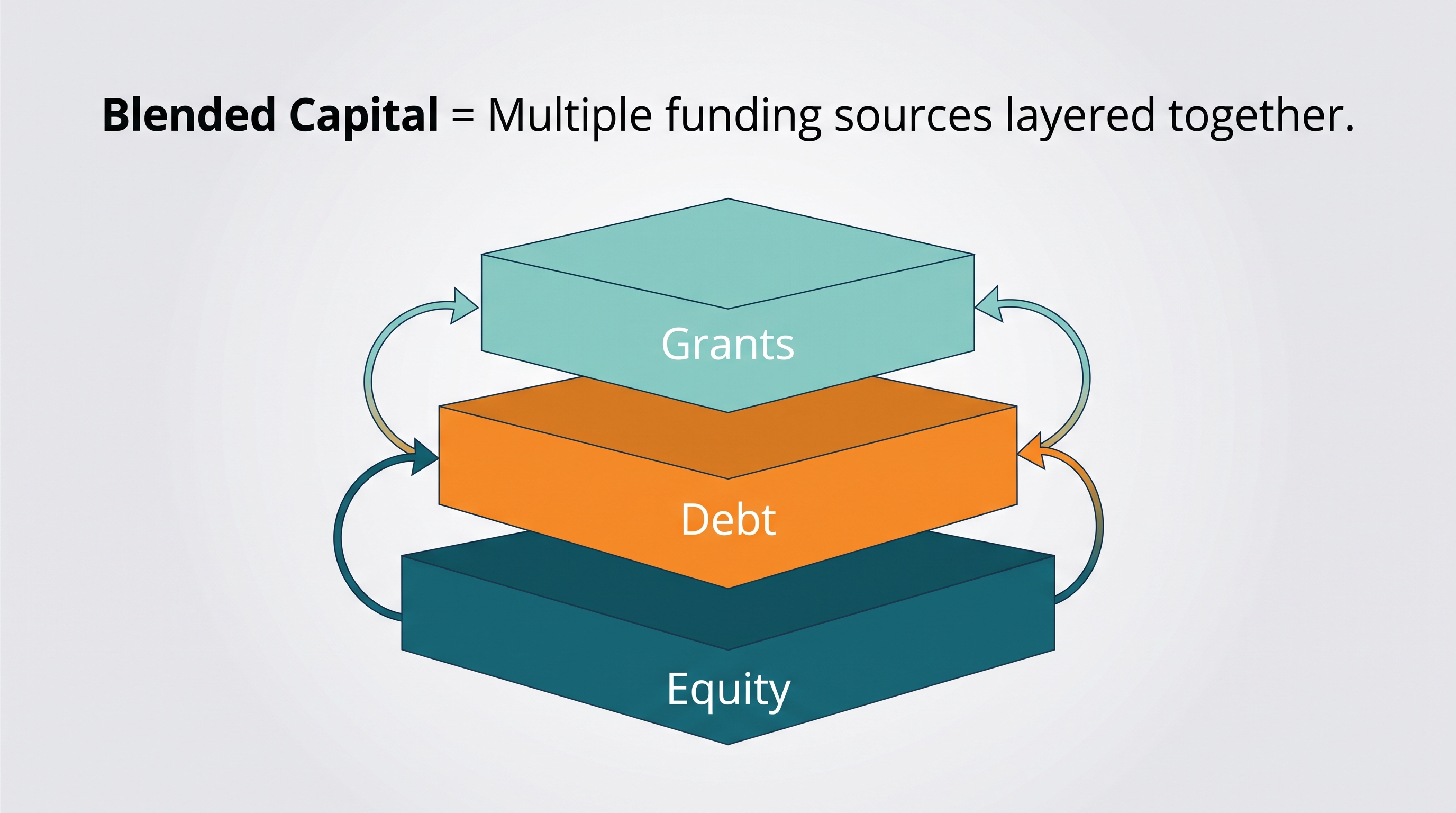
Blended capital is the strategic use of multiple funding sources to achieve a specific outcome. This can involve combining equity, debt, grants, and other forms of capital to build a funding structure that meets the company's needs. The concept is increasingly popular in impact investing and development finance, where catalytic capital is used to de-risk investments and unlock private capital. However, blended capital is also used by startups that want to diversify their funding sources and reduce risk.
How Blended Capital Works
Blended capital typically involves layering different types of capital to achieve a single objective. For example, a company might use a grant for research and development, equity for growth capital, and debt for working capital. Each source is used for a specific purpose and comes with its own set of terms. The key to successful blended capital is alignment. All stakeholders need to share a common vision for the company. This can be challenging when different investors have different expectations and timelines.
The Pros of Blended Capital
Blended capital allows companies to diversify their funding sources and reduce reliance on any single investor. It also enables companies to access capital that might not be available through a single channel. For impact-focused companies, blended capital can attract mission-aligned investors who might not otherwise participate.
The Cons of Blended Capital
The downside is complexity. Managing multiple stakeholders with different terms and expectations requires significant effort. The structure can also be time-consuming to set up and may require specialised legal and financial advice.
When to Choose Blended Capital
Blended capital is ideal for companies with complex capital needs that cannot be met by a single source. It is also a good option when you want to align different types of investors with different risk profiles and return expectations. For impact-focused companies, blended capital can unlock funding from sources that might not otherwise participate.
Making the Decision: A Framework for Founders
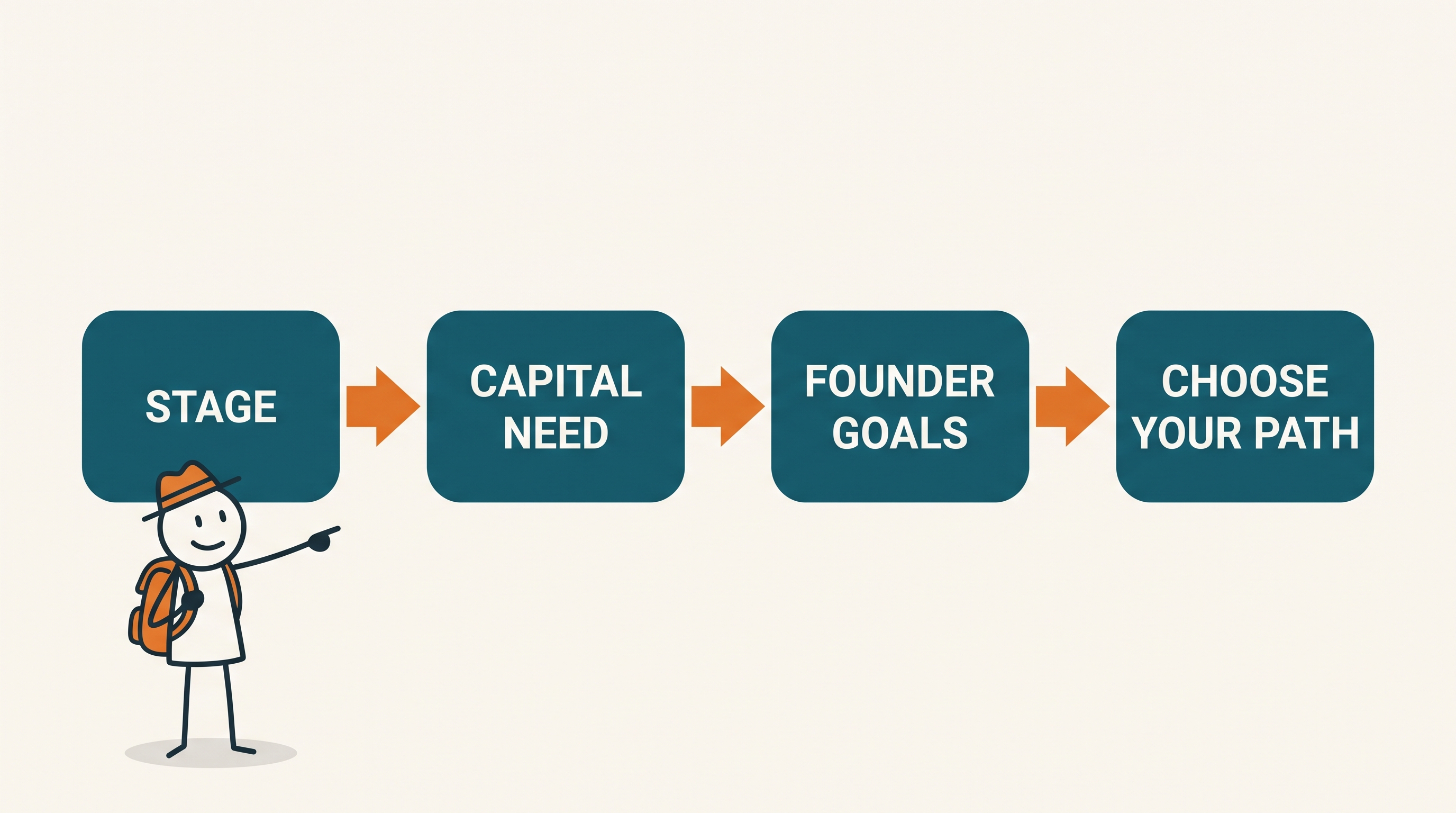
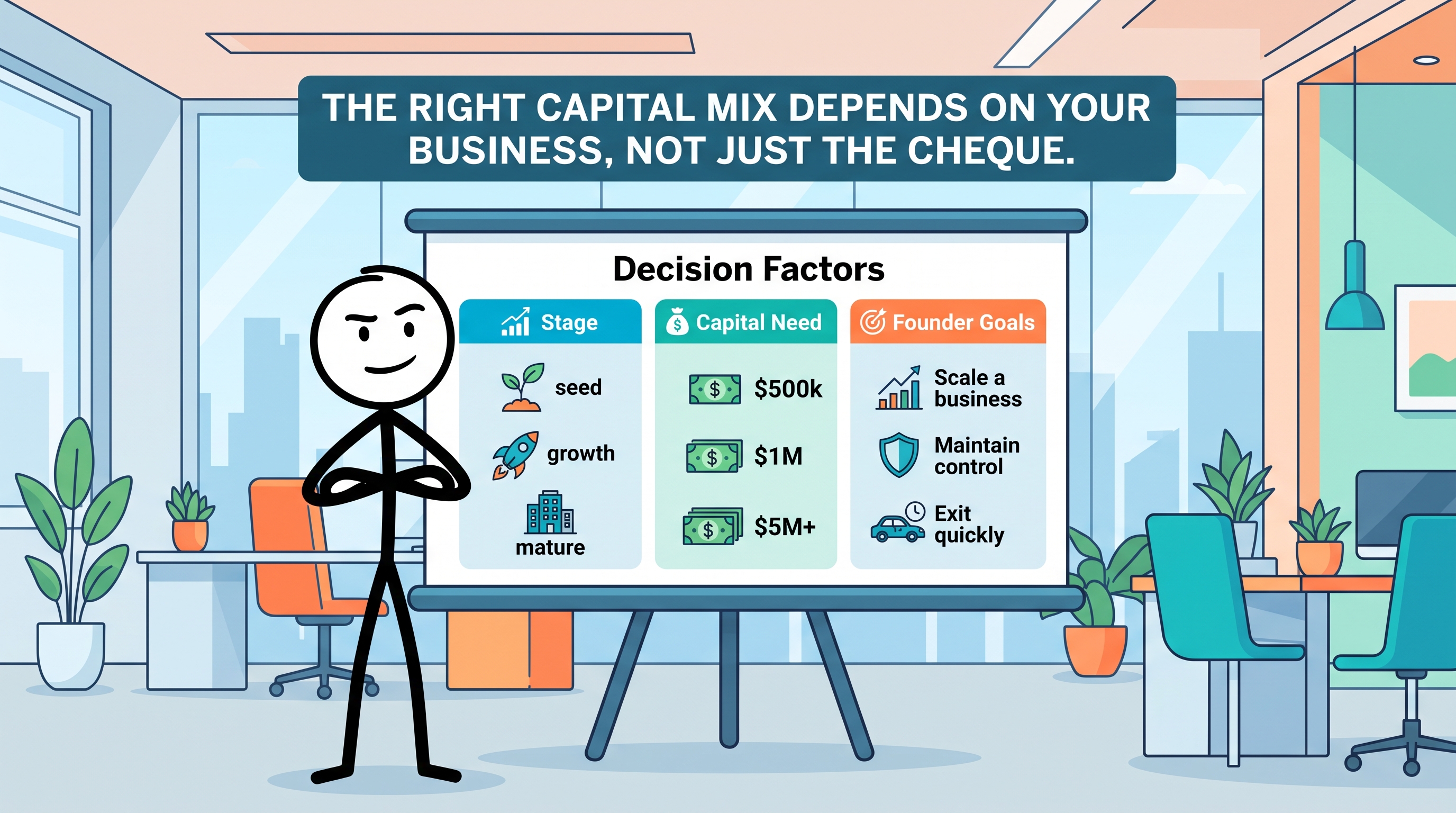
Choosing the right funding path requires careful consideration of your business stage, capital needs, and personal goals. Here is a framework to guide your decision: Stage: What is your company's maturity?
- Early-stage (idea to revenue): Equity or quasi-equity are typically the best options. Debt is difficult to secure without proven cash flow.
- Growth-stage (revenue to profitability): Debt becomes viable. Quasi-equity and blended capital can also be attractive.
- Mature-stage (profitable): All options are on the table. The choice depends on your growth plans and goals.
Capital Need: How much money do you need?
- Small amounts ($25K–$250K): Quasi-equity or grants are often the best fit. Angel equity is also possible.
- Medium amounts ($250K–$2M): Equity or quasi-equity are common. Debt may be possible with proven revenue.
- Large amounts ($2M+): Equity is typical, but blended capital or debt can also be used.
Founder Goals: What matters most to you?
- Control: Debt or quasi-equity are better choices. Equity means sharing control.
- Speed: Quasi-equity is typically faster than a priced equity round.
- Cost: Debt is typically cheaper than equity in the long run, but carries higher risk.
- Partnership: Equity brings strategic partners who can help beyond capital.
Final Thoughts
There is no one-size-fits-all answer to the question of which funding path to choose. The right capital mix depends on your business, your stage, your goals, and your values. Many founders will use multiple types of capital over the life of their company, starting with equity or quasi-equity and adding debt as they grow. The most important thing is to understand the trade-offs of each option and make an informed decision. Equity gives you capital without repayment but dilutes your ownership. Debt preserves ownership but creates repayment obligations. Quasi-equity offers flexibility but can be complex. Blended capital diversifies risk but requires careful structuring.
Start building your capital strategy today.
Frequently asked questions
What is the difference between equity and debt?
Equity involves selling ownership in your company in exchange for capital. There is no repayment obligation, but you dilute your ownership and share control. Debt involves borrowing money that must be repaid with interest. You retain full ownership, but you have repayment obligations.
What is quasi-equity?
Quasi-equity is a hybrid form of financing that combines characteristics of debt and equity. Common forms include convertible notes, SAFEs, and revenue-based financing. These instruments are flexible and can bridge valuation gaps.
What is blended capital?
Blended capital is the strategic use of multiple funding sources — such as equity, debt, and grants — layered together to achieve a specific objective. It allows companies to diversify their funding sources and reduce risk.
When should I choose equity?
Equity is the right choice when you need significant capital for growth and do not have the cash flow to support debt repayments. It is also the best option when you value the strategic support and network that experienced investors can provide.
When should I choose debt?
Debt is the right choice when you have predictable cash flow and can comfortably service the repayments. It is also a good option when you want to avoid dilution and retain full control of your company.
Which funding path is right for early-stage startups?
For early-stage startups, equity or quasi-equity are typically the best options. Debt is difficult to secure without proven cash flow. Quasi-equity instruments like convertible notes and SAFEs are often used to bridge the gap between rounds.