
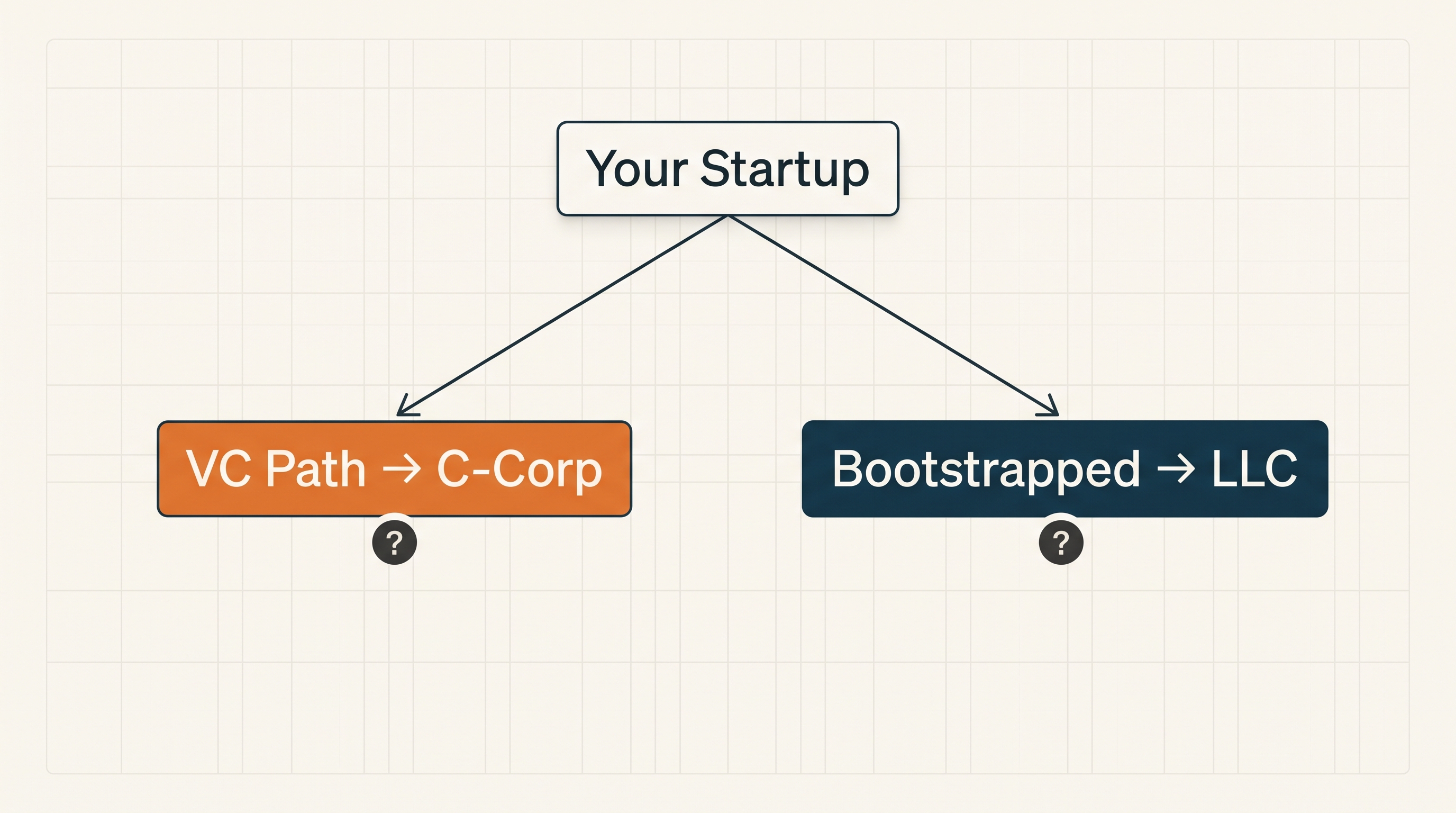
Your choice of legal entity determines everything; how you raise capital, issue equity, manage taxes, and exit. This guide breaks down the real trade-offs between C‑Corps and LLCs and helps you choose the right structure for your startup.
I remember the exact moment I almost screwed up my first company. It wasn't a bad hire or a missed product deadline. It was a single checkbox on a legal form. LLC or C‑Corp? My lawyer at the time, a guy who mostly did real estate deals, told me an LLC was simpler. "Lower fees, less paperwork, pass‑through taxation," he said. It sounded great. It was also terrible advice.
If you are building a tech company with any ambition of raising venture capital, the answer is simple: you need to be a Delaware C‑Corp. For 99% of founders, that is the end of the debate.
But you deserve to understand why. This guide breaks down the real trade-offs between C‑Corps and LLCs — not just the textbook definitions — so you can make an informed decision.
The Fundamental Difference
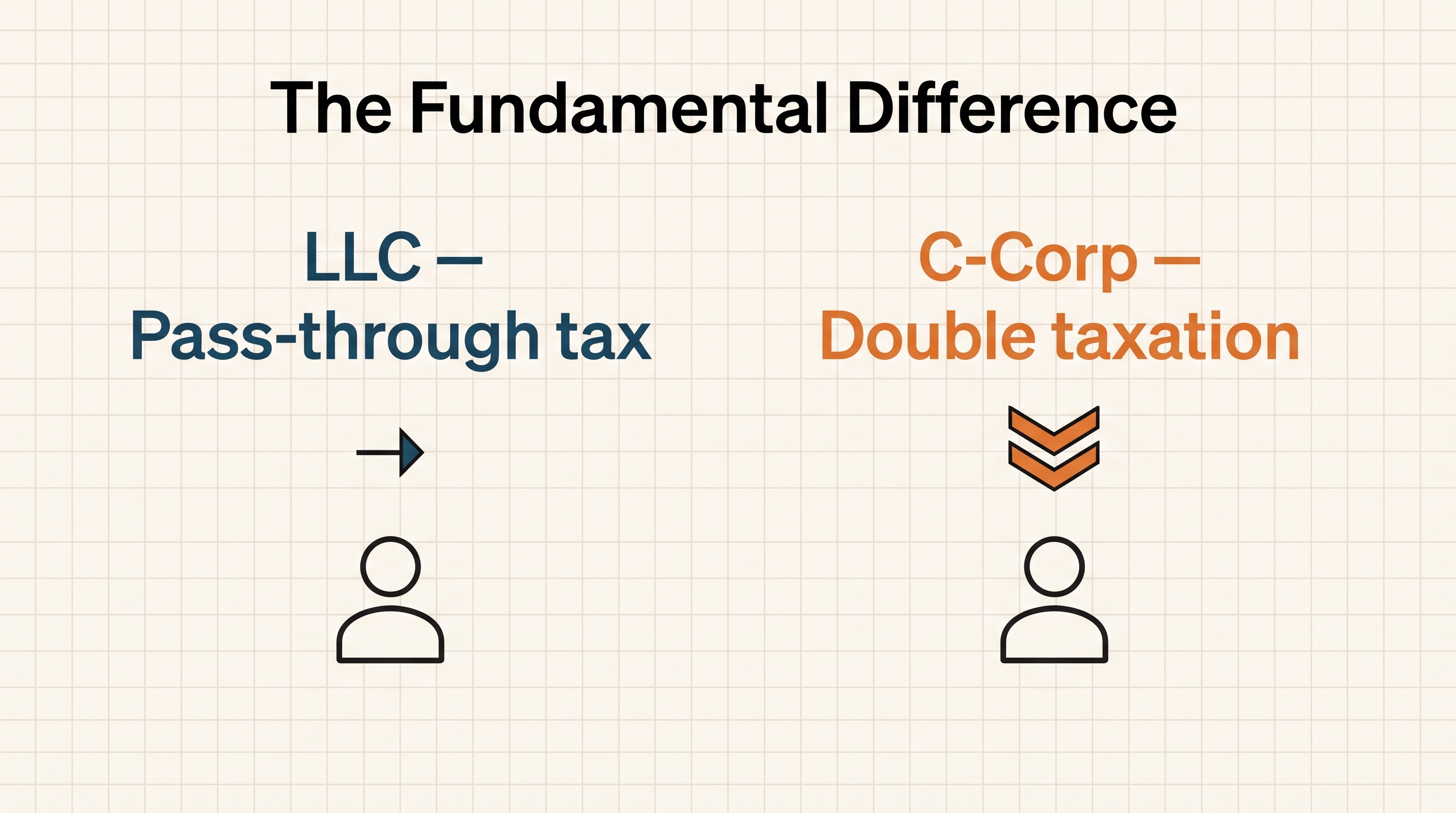
A C‑Corporation is a separate legal entity that pays its own federal income tax. Shareholders are taxed again when they receive dividends or sell their shares. This is the "double taxation" you have heard about.
An LLC, by default, is a pass‑through entity. It does not pay federal income tax itself. Instead, income and losses flow through to the members' personal tax returns.
Both provide limited liability. Both can have multiple owners. The differences that actually matter for startups are about fundraising mechanics, equity compensation, tax planning, and long‑term exit strategy.
Why Most VC-Backed Startups Are C‑Corps
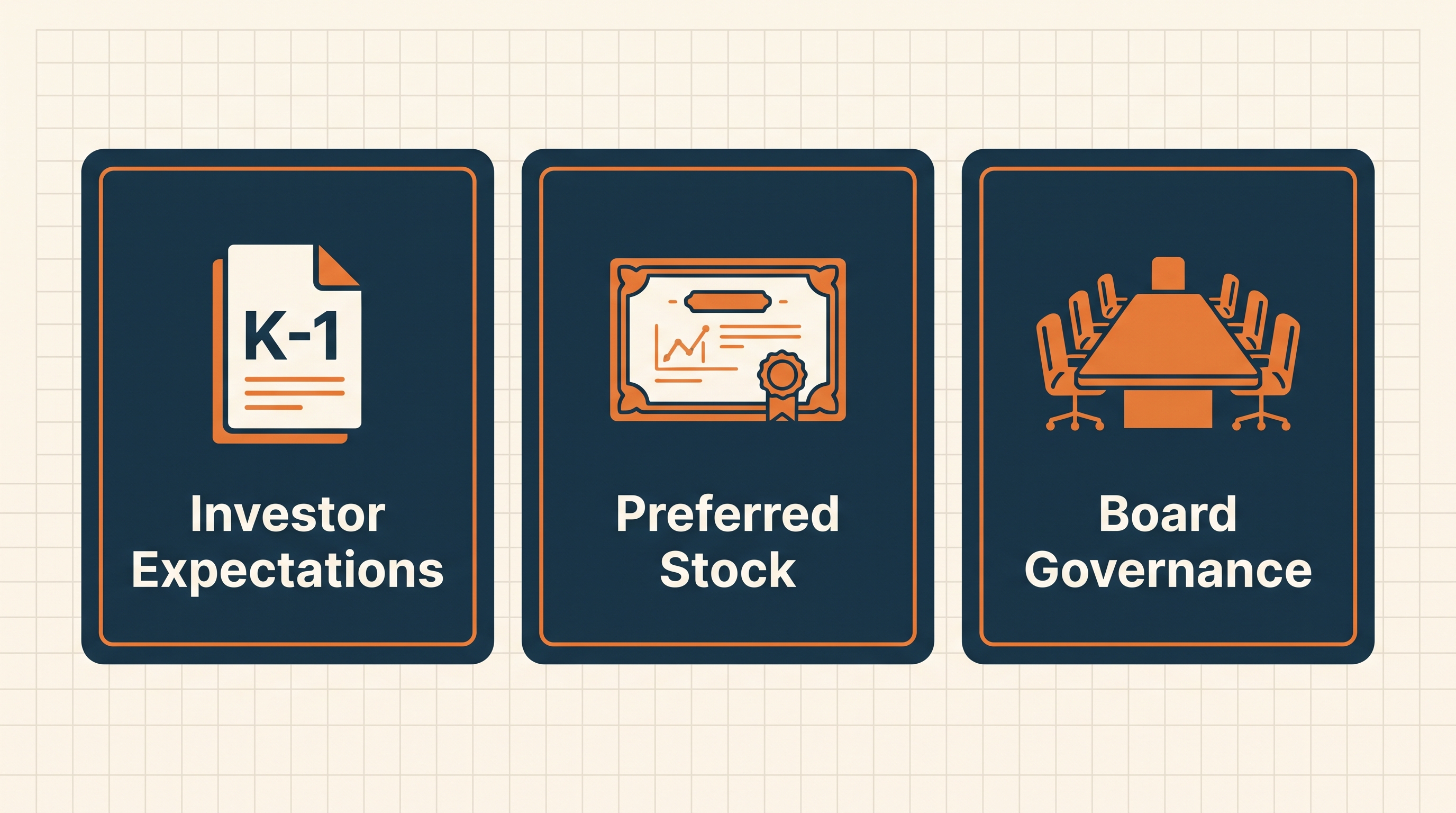
If you plan to raise venture capital, you will almost certainly need to be a C‑Corp — specifically, a Delaware C‑Corp. Here is why.
Investor expectations. Venture capital funds are structured in ways that make investing in pass‑through entities complicated. LLCs generate K‑1s for their members, which creates tax headaches for institutional investors — particularly tax‑exempt LPs like endowments and pension funds, which can trigger Unrelated Business Taxable Income. Most VCs simply will not invest in an LLC.
Preferred stock mechanics. C‑Corps issue shares of stock in well‑understood classes — common stock, Series Seed Preferred, Series A Preferred, and so on. The legal infrastructure for these instruments is mature and standardized. LLC membership interests can be structured to mimic preferred stock, but the documentation is more complex, less standardized, and more expensive to negotiate.
Board governance. C‑Corps come with a well‑established governance framework: a board of directors, officers, and shareholder voting rights. VCs expect board seats and the governance protections that come with the corporate form.
The Investor Reaction: What Happens When You're an LLC
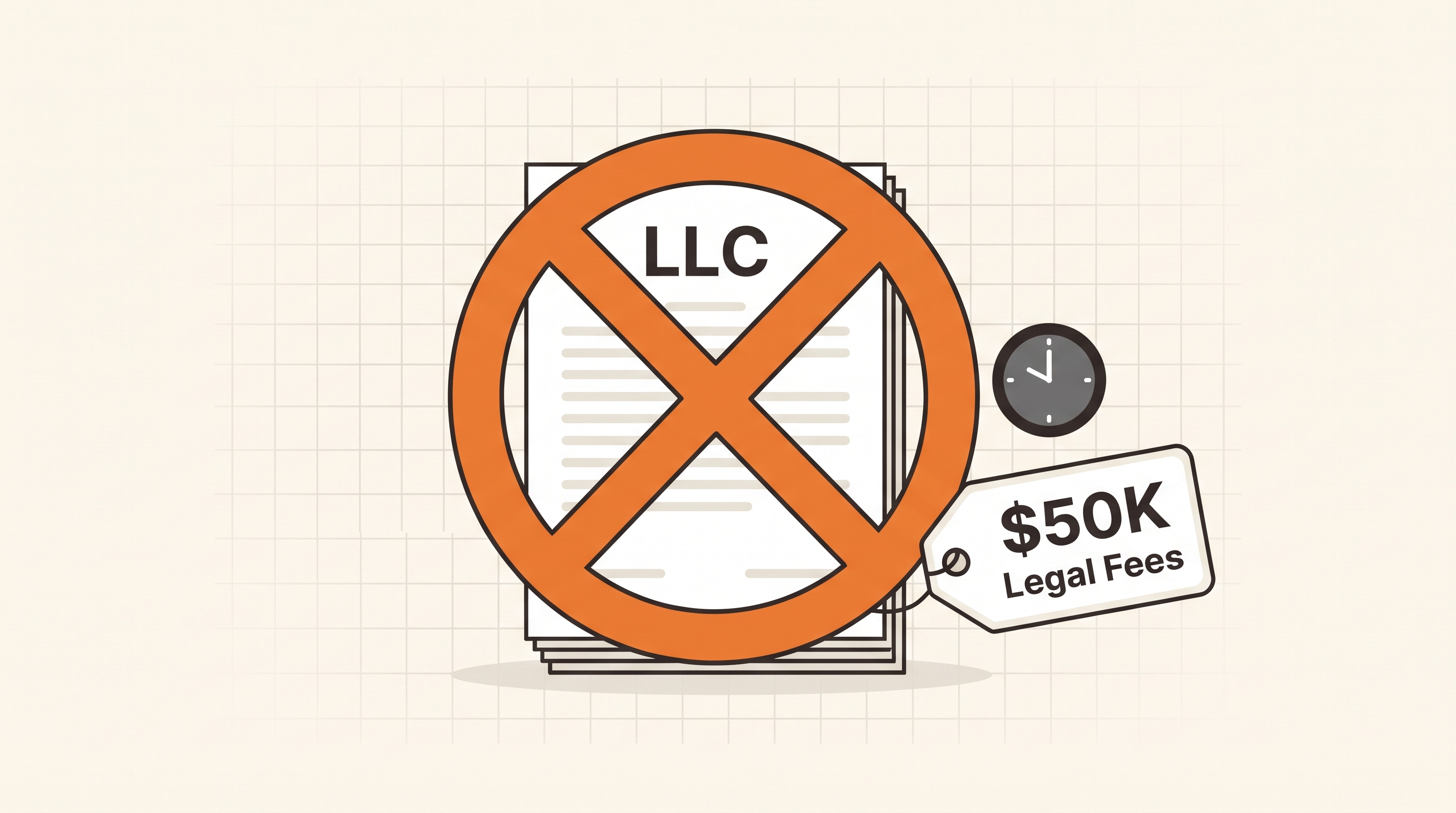
"I remember passing on an investment a few years back. The team was brilliant, the product was solid, but they were an LLC. Their cap table was a mess of different profit‑sharing agreements. Just to figure out how a new investment would even work was going to cost $50,000 in legal fees. We walked away.
They eventually had to convert to a C‑Corp, but it cost them six months and a ton of legal headaches."
This is not an isolated story. Venture capitalists typically prefer C corps over LLCs because of the way they are taxed. An investor in an LLC could be taxed even if they do not receive any distributions from the company and VCs do not like that. With C corps, investors are only taxed if they sell their stock or receive distributions.
This is not an isolated story. Venture capitalists typically prefer C corps over LLCs because of the way they are taxed. An investor in an LLC could be taxed even if they do not receive any distributions from the company and VCs do not like that. With C corps, investors are only taxed if they sell their stock or receive distributions.
If a VC tells you they will invest in your LLC, proceed with caution. The operating agreement will need to be substantially more complex, and you will likely spend more in legal fees than you would have spent simply incorporating as a C‑Corp from the start.
When an LLC Actually Makes Sense
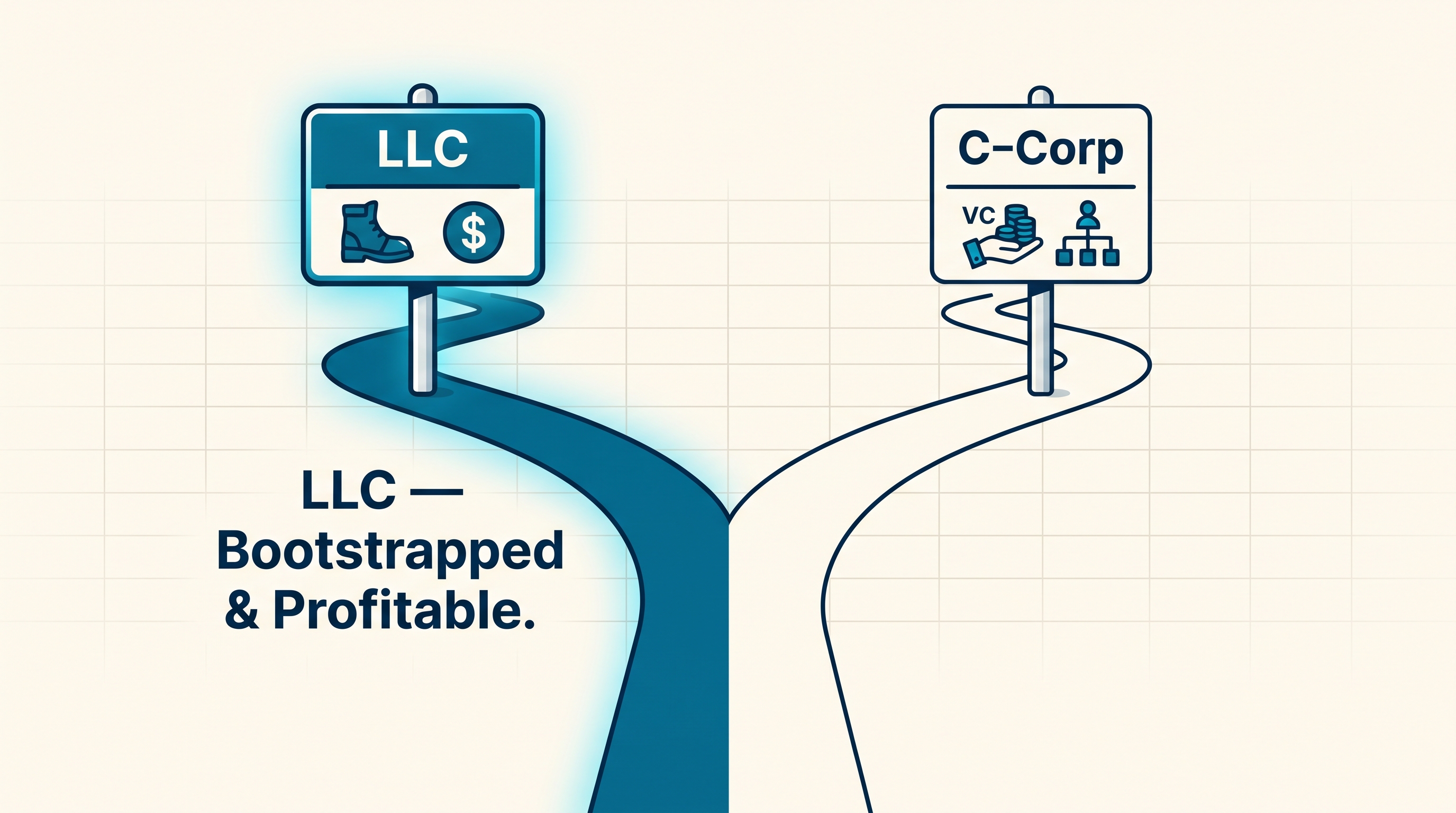
Not every startup needs venture capital, and not every startup should be a C‑Corp. An LLC can be the better choice when:
You are bootstrapping and profitable early. If your business will generate meaningful income from year one and you do not plan to raise institutional capital, pass‑through taxation lets you avoid double taxation entirely. You pay tax once, on your personal return.
You have a small, stable ownership group. Two co‑founders building a consulting agency, a design studio, or a SaaS tool that will stay small. LLCs offer simplicity and flexibility, making them appealing for founders who want pass‑through taxation and minimal ongoing compliance.
LLCs are best for bootstrapped startups, single founders, or early projects not yet ready for outside funding.
The Double Taxation Myth
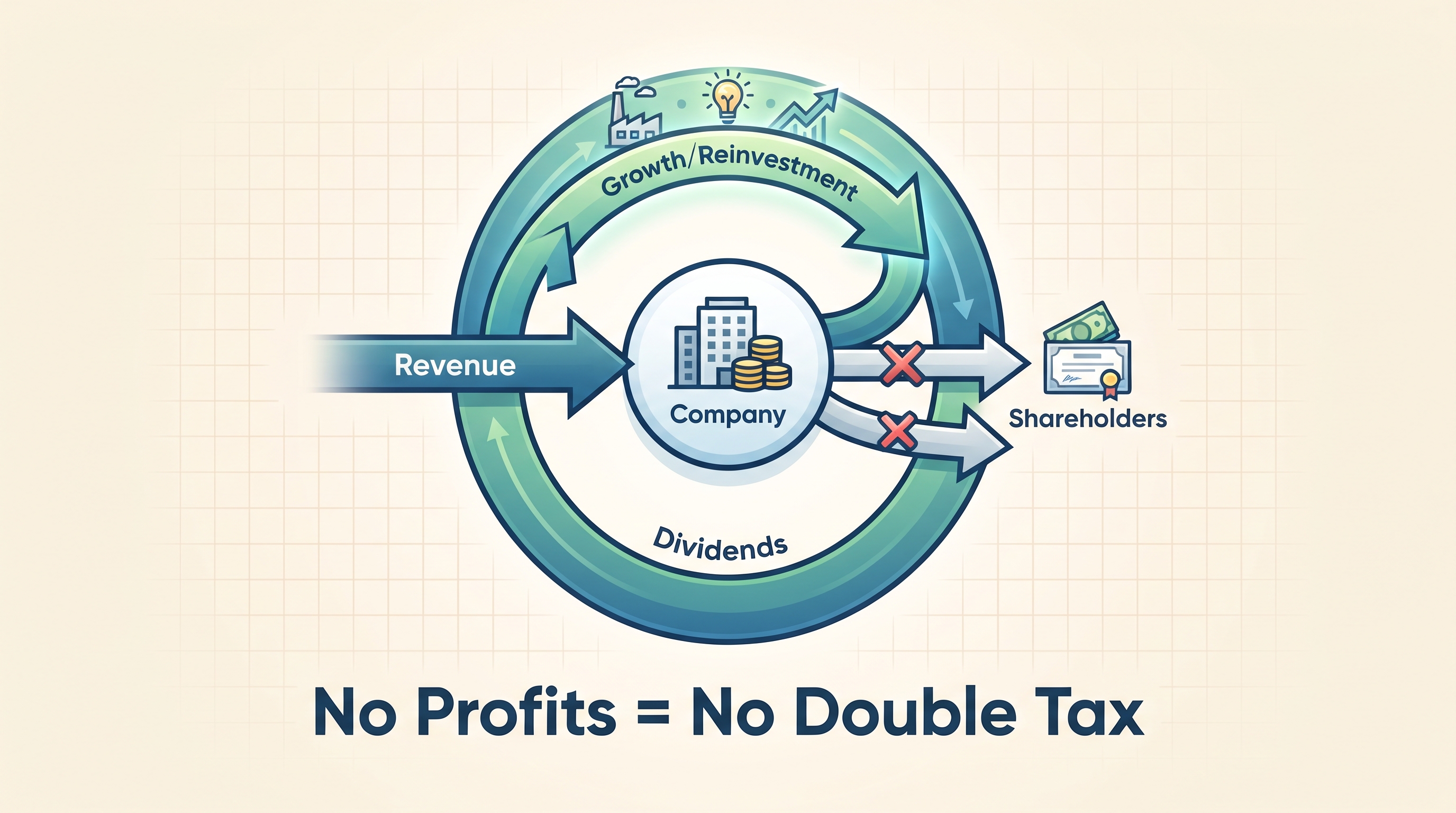
The main drawback people point to with C‑Corps is "double taxation." The corporation pays taxes on its profits, and then shareholders pay taxes again on any dividends they receive.
But here is the secret: early‑stage, high‑growth startups do not have profits. And they certainly do not pay dividends. You are reinvesting every single dollar back into the business to grow. So the double taxation argument is completely irrelevant for the first 5‑10 years of your company's life.
For companies planning major growth, going public, or pursuing acquisitions, the structure's clarity and scalability outweigh the drawbacks.
Equity Compensation and Option Pools
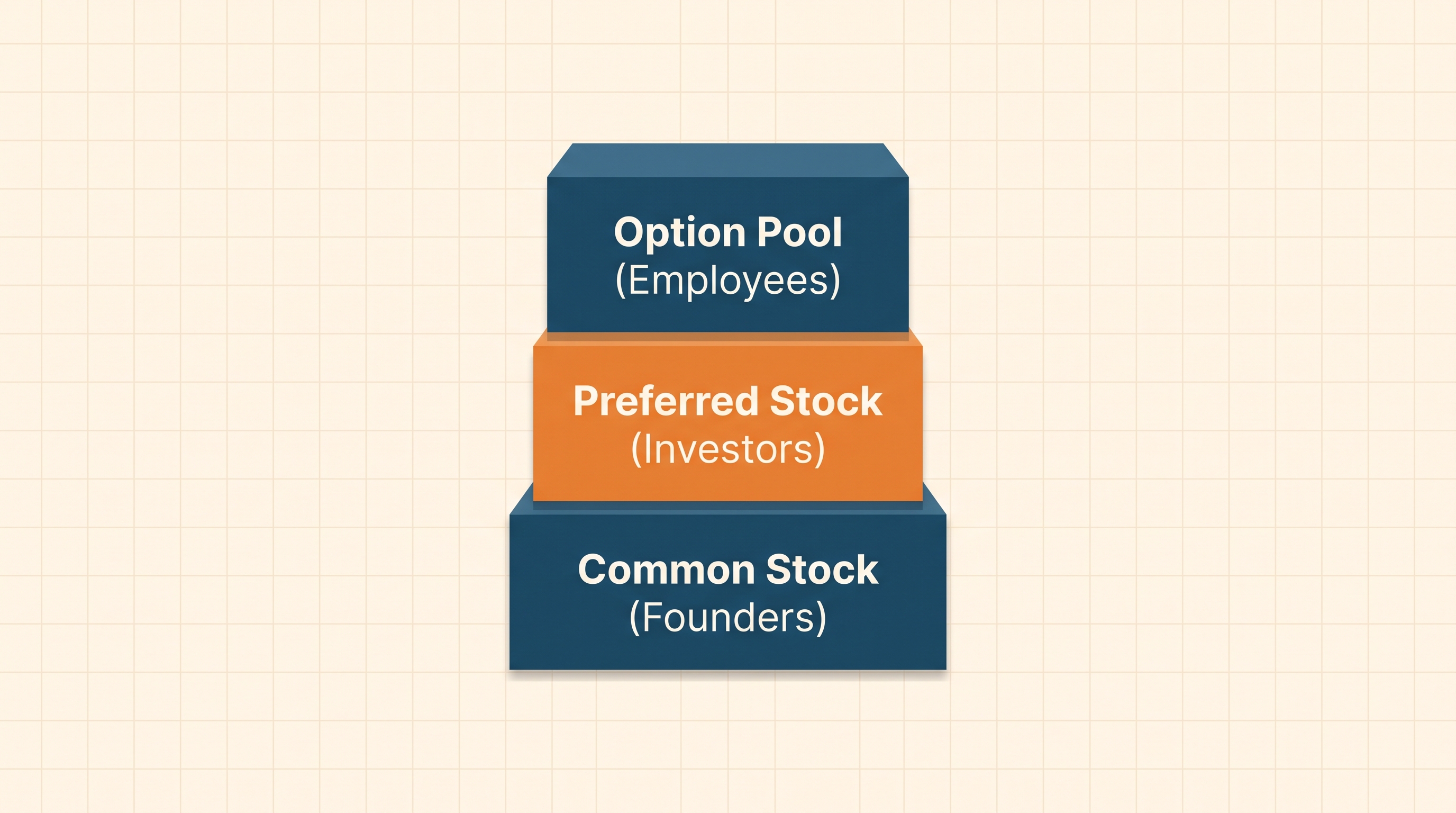
Unlike LLCs, C corps let you issue stock, which you can use to attract and incentivize employees.
With LLCs, you can offer employees "profit interest units" (which give them the right to receive a percentage of the LLC's future profits) and "phantom equity" (which give them the contractual right to certain payments as if they held real equity). But there are restrictive tax rules, and it is more typical to incentivize employees by offering them stock options — which C corps let you do.
If you want standard equity compensation mechanics, C‑Corp wins on execution.
QSBS: The $10 Million Tax Advantage
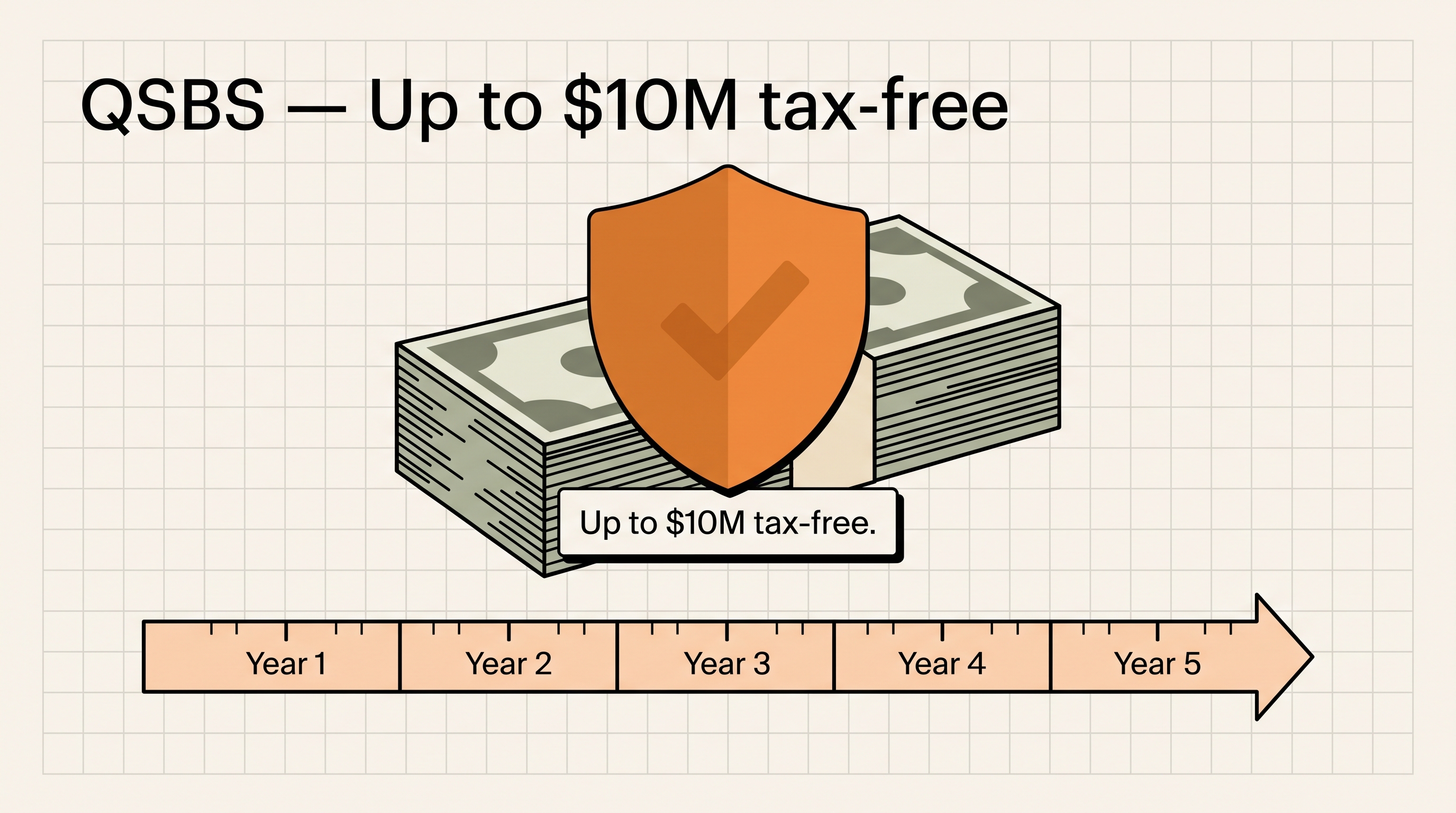
Qualified Small Business Stock under Section 1202 of the Internal Revenue Code can exempt up to $10 million (or 10x basis) of gain from federal capital gains tax when a founder or early investor sells shares held for more than five years.
A C‑Corp election may entitle you to the benefits of the Qualified Small Business Stock exemption. This is a massive tax advantage that LLCs cannot offer. QSBS is one of the most compelling reasons to form a C‑Corp early.
The clock starts when the C‑Corp issues stock — not when your LLC was formed. So if you start as an LLC and convert later, your QSBS clock resets or is delayed, potentially costing you millions in tax-free gains.
The Conversion Trap: What Happens When You Wait
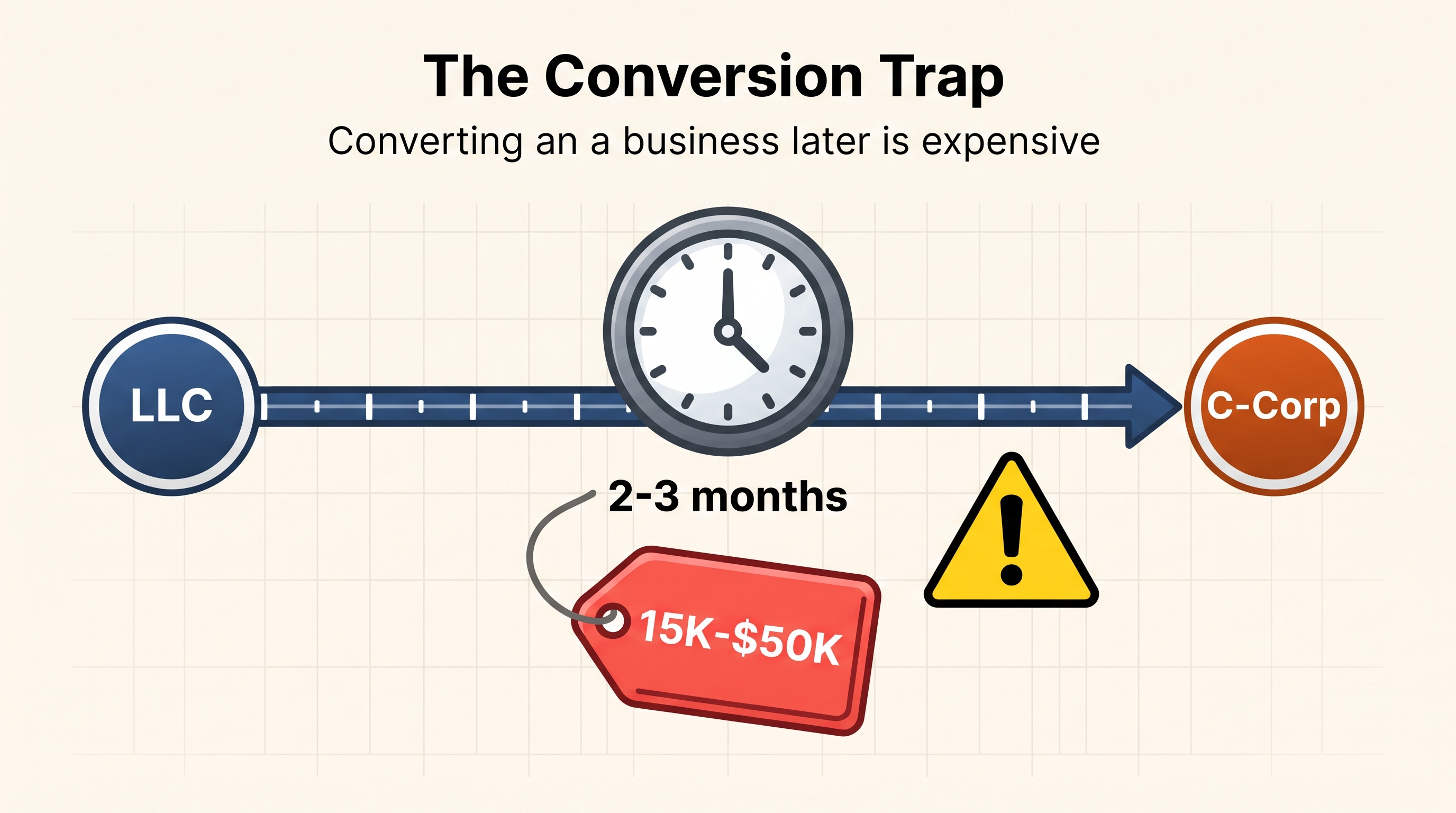
Many founders start as an LLC for simplicity and convert to a C‑Corp before raising capital. But converting later is expensive and time‑consuming.
The costs: It takes 2‑3 months to complete properly, and you want it done before you start fundraising conversations. A rushed conversion can cost you QSBS benefits, trigger taxes, or delay your funding round by 2‑3 months. Typical conversion costs run $15,000‑$50,000.
The right time to convert: If you are even thinking about VC funding, convert now. Pre‑product or idea stage is the ideal time — zero assets mean a clean conversion and your QSBS clock starts immediately. Converting after you start fundraising talks is a mistake.
The Delaware Advantage

Most investors especially VCs will generally only want to invest in Delaware C corps. That is because the laws in Delaware are very business-friendly and investors are most familiar with them.
The Delaware Division of Corporations points to Delaware's corporate laws, judiciary, legal community, and incorporation services as reasons businesses choose Delaware. That standardization matters because every financing round asks the same practical question: can the next investor quickly understand who owns what, who controls what, and what happens if the company raises, sells, or shuts down?
Y Combinator demands Delaware C Corps before investing. This is not optional if you want institutional capital.
The Decision Framework

Here is how to think about the choice.
If you plan to raise VC funding in the next 12 months: Convert NOW before any funding conversations. VCs expect Delaware C‑Corps.
If you have high‑value intellectual property or have built significant product value: Convert ASAP. Delaying increases your IP's fair market value, making conversion more expensive or taxable.
If you want QSBS tax benefits for founders and early investors: Convert NOW. QSBS clock starts when C‑Corp issues stock. Earlier equals more tax‑free gains.
If you are building a profitable, closely held business (or you have unusual tax facts): An LLC (or sometimes an S‑Corp) can be the right call.
If you are building a company for institutional venture capital, a Delaware C corporation usually creates less friction than an LLC.
The Bottom Line
For high‑growth, venture‑backed startups, the Delaware C‑Corp is the gold standard. It is what investors expect. It is what acquirers prefer. It is what unlocks QSBS and standardized equity compensation.
For bootstrapped, profitable businesses with no plans to raise institutional capital, an LLC offers simplicity and pass‑through taxation.
The cheapest entity on day one can become expensive if the startup has to convert under fundraising pressure.
Choose based on your path, not today's convenience.
Frequently Asked Questions
Topics
C‑Corp vs LLC
startup legal structure
Delaware C‑Corp
LLC for startups
venture capital entity
QSBS
founder equity
startup incorporation