
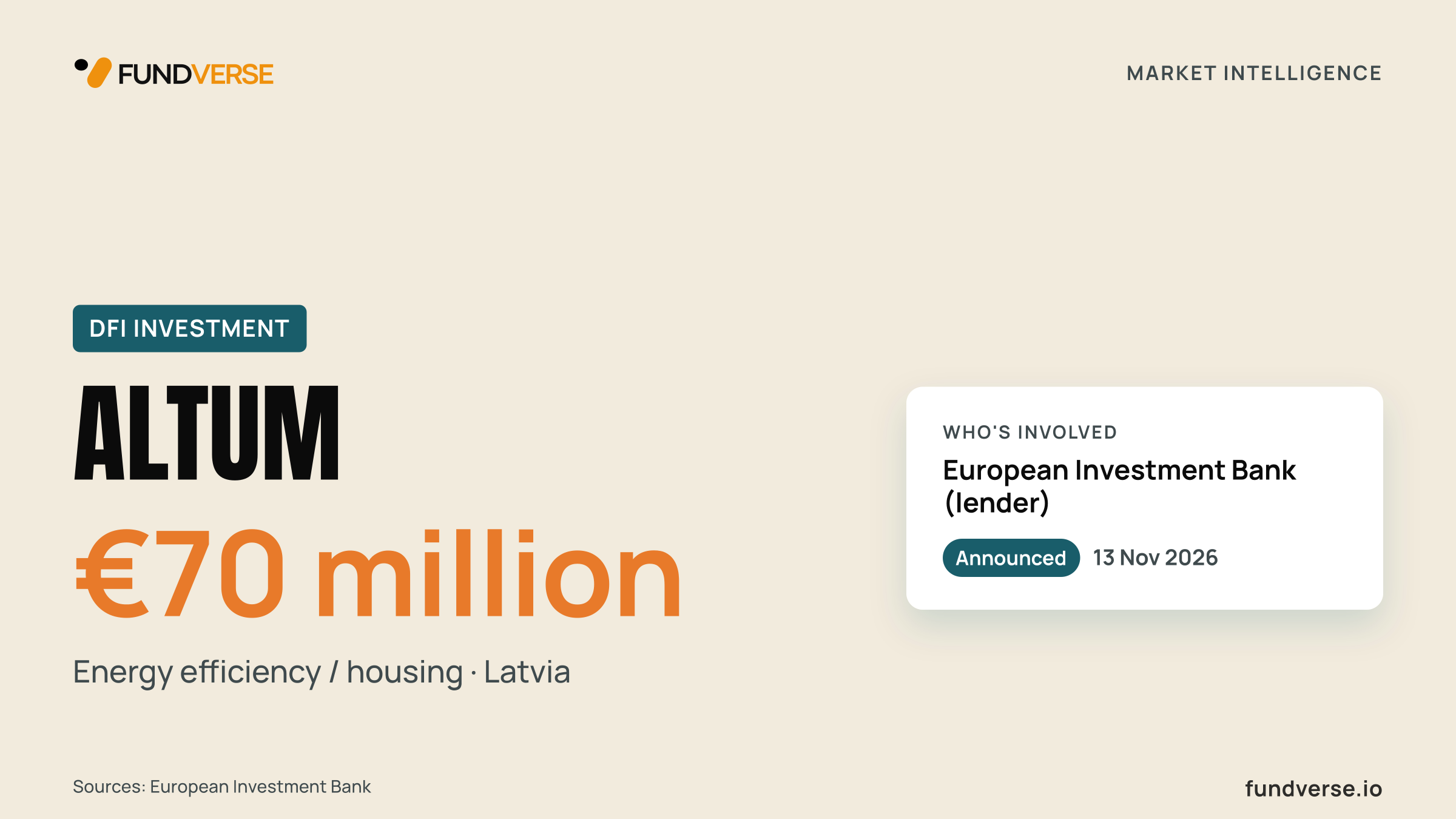

The European Investment Bank is lending €70 million to Latvian development finance institution Altum, covering half of a €140 million project for homeowners' associations.
The European Investment Bank (EIB) is providing a €70 million loan to Altum, a Latvian development finance institution, to finance energy-efficiency upgrades of apartment buildings across Latvia. The EIB announced the loan on November 13, 2026, saying Altum "is advancing energy-efficiency upgrades of apartment buildings across Latvia with a €70 million loan from the European Investment Bank (EIB)."
The EIB credit covers half of a €140 million project for homeowners' associations in Latvia. The loan was announced rather than described as completed, and the terms were not disclosed in the material provided, including tenor, pricing, and the timetable for disbursement.
What the capital is and who provides it
This is debt, not equity or a grant. The EIB is the lender and Altum is the borrower and intermediary. The €70 million funds a project twice that size, so the remaining €70 million comes from elsewhere. The source of that second half was not disclosed.
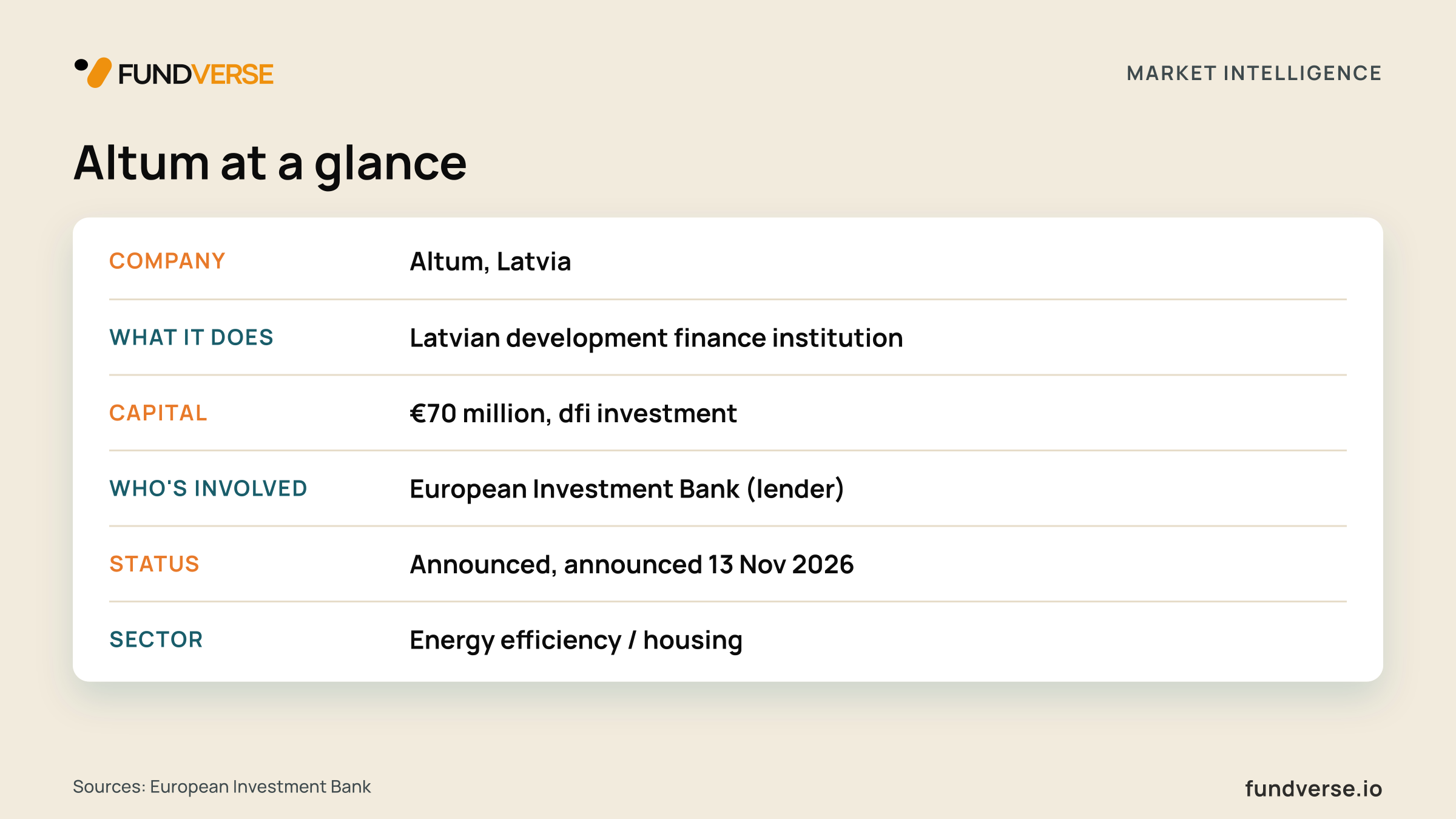
Altum is described as a Latvian development finance institution. Beyond that description and the project's focus on housing energy efficiency, no further detail on its programs, balance sheet, or lending criteria was given. Readers should therefore treat any assumption about how Altum prices or screens loans as unconfirmed.
Who the end borrowers are
The project is aimed at homeowners' associations, the bodies that manage apartment buildings. The financing is structured so that capital moves from a multilateral lender to a national development institution and then to building-level groups. The end users are collective owners of residential property, not individual companies.
The announcement did not state how Altum will lend to associations, what rates they will pay, or how many buildings are expected to be upgraded. Those details will determine how much of the €140 million reaches actual construction work and over what period.
Why it matters to those raising capital
For founders in energy efficiency and housing
Upgrade projects financed this way create demand for contractors, materials, and energy-efficiency services. Whether that demand reaches particular suppliers depends on how Altum and the associations procure work, which was not disclosed. Founders serving this segment should not assume a loan of this size translates into orders for them. A sensible first step is to learn how associations choose and pay suppliers before building a sales plan around the program.
For capital providers
The structure is a familiar one: a multilateral lender funds half of a project through a local development institution that knows the borrowers. It shows how co-financing can be used to reach small, dispersed borrowers. One transaction does not show how the program will perform. Repayment, uptake, and cost outcomes were not reported.
Raising debt or project finance? Use Fundverse to match with lenders and investors whose mandates fit your sector, and prepare a data room before those conversations begin.
What to watch next
Several points remain open: the loan's terms, the identity of the co-financier for the other €70 million, and the rollout to homeowners' associations. For anyone weighing similar funding, the currency and local lending dynamics behind development-bank credit are worth understanding. The loan's significance will depend on how quickly Altum turns it into completed building upgrades.
Frequently asked questions
Topics
Altum
European Investment Bank
EIB loan
Latvia
energy efficiency
development finance institution
homeowners' associations
Raising or investing?
Find the right people on the other side of the table, and run the round in one place.