
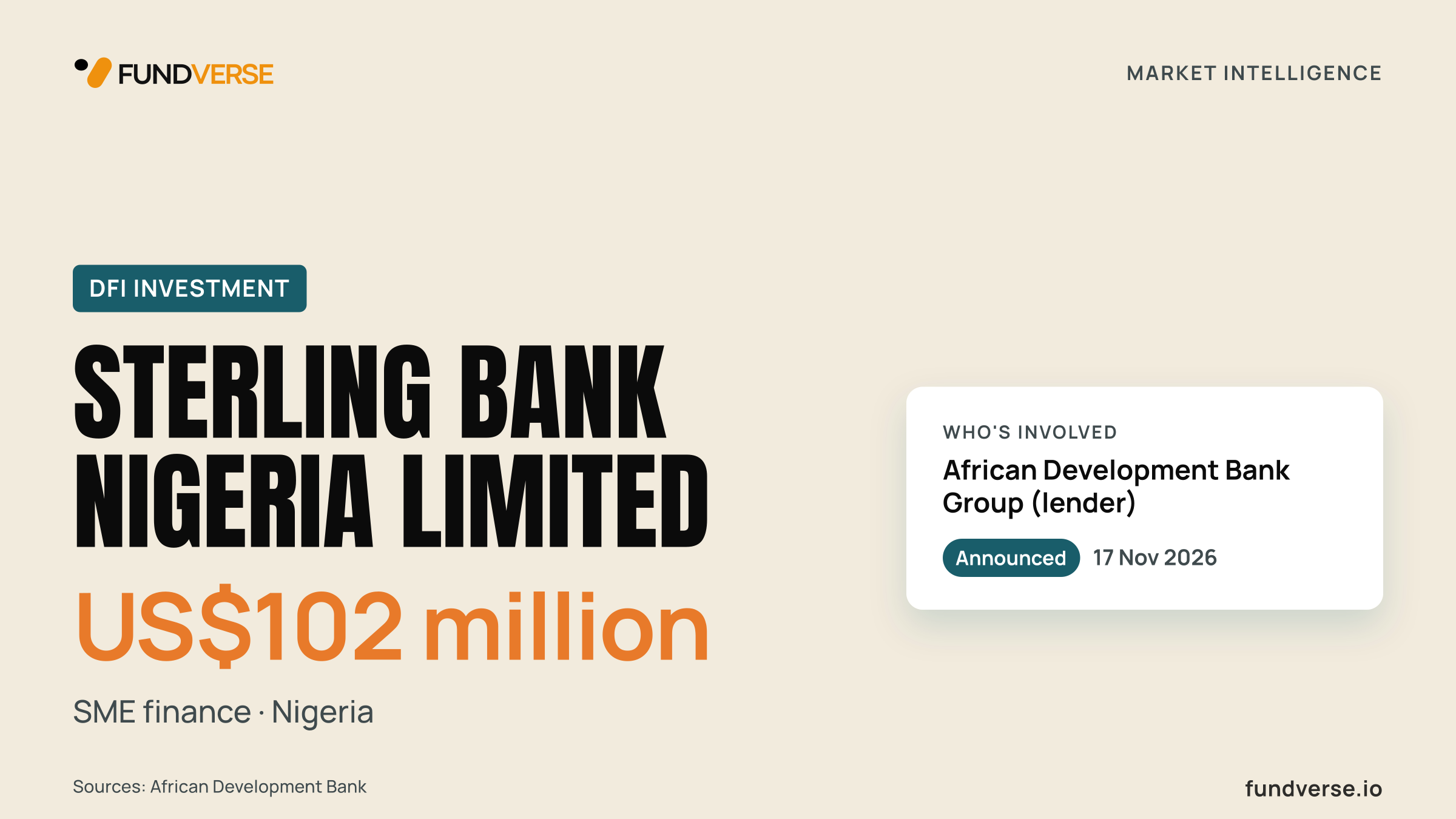

The African Development Bank Group approved four instruments totaling US$102 million for Sterling Bank Nigeria, aimed at SMEs, women and youth-led businesses, and farmers.
The Board of Directors of the African Development Bank Group has approved a US$102 million financing package for Sterling Bank Nigeria Limited, the bank said in a press release dated November 17, 2026. The approval is an announcement of board action; the release did not state that funds have been disbursed.
According to the AfDB, the package is intended "to expand access to finance for small and medium-sized enterprises (SMEs), women and youth-led businesses, businesses pursuing sustainable green and social investments, and vulnerable farming communities across Nigeria."
What the package contains
The AfDB said the package comprises four instruments. Together they mix funded debt, concessional money and a risk-sharing product.
- A US$50 million Line of Credit
- A $20 million Sustainable Loan
- A US$2 million concessional loan
- A US$30 million Trade Finance Transaction Guarantee
The release as provided did not disclose tenors, pricing, repayment terms, or how the funds will be allocated among the stated target groups. Those terms matter for judging how the money will reach borrowers.
The borrower and its focus
Sterling Bank Nigeria Limited is a Nigerian commercial bank that provides financing to SMEs, women and youth-led businesses and farmers. The AfDB is the lender, acting as a development finance institution. This is debt and guarantee capital extended to a bank, not equity in operating companies.
How the capital reaches businesses
Lines of credit to commercial banks are typically on-lent to end borrowers, so businesses would encounter this capital through Sterling Bank's own lending decisions rather than by applying to the AfDB. The AfDB's statement did not describe Sterling Bank's lending criteria or product terms, so what borrowers will be offered remains unstated.
The role of the guarantee
A Trade Finance Transaction Guarantee is a different tool from a loan. The AfDB named it as US$30 million of the package, but the release as provided did not detail how it will be structured or which transactions it will cover.
Why it matters to founders and lenders
For SME owners in Nigeria, bank credit is often the nearest alternative to equity. A package aimed explicitly at SMEs, women and youth-led businesses, green and social investments, and farming communities signals the segments the AfDB wants Sterling Bank to serve. Whether that translates into easier or cheaper credit depends on terms that were not disclosed.
Founders weighing debt should look past headline availability to security, covenants and guarantees; our guide to debt financing beyond interest rates covers those points. The AfDB also recently proposed a subordinated facility for another bank, covered in our report on Equity Bank Kenya.
Raising from banks, DFIs or equity investors? Use Fundverse to find capital providers that fit your stage and sector, and to prepare the materials they will ask for.
What to watch next
Board approval is one step; signing, disbursement and Sterling Bank's on-lending are the stages that determine impact. The AfDB's statement did not give timing for those steps. Readers tracking DFI-backed SME credit in Nigeria should look for details on pricing, eligibility and how much reaches smaller borrowers.
Frequently asked questions
Topics
African Development Bank
Sterling Bank Nigeria
SME finance
line of credit
trade finance guarantee
DFI financing
Nigeria
Raising or investing?
Find the right people on the other side of the table, and run the round in one place.