Gust vs Fundverse: Which Platform Helps You Raise Faster?
Match, message, share the deck, and close — inside a single product.
Gust pioneered startup-investor platforms. Fundverse rebuilds the experience for the AI era — matched discovery, modern data rooms, and direct messaging without gatekeeping.
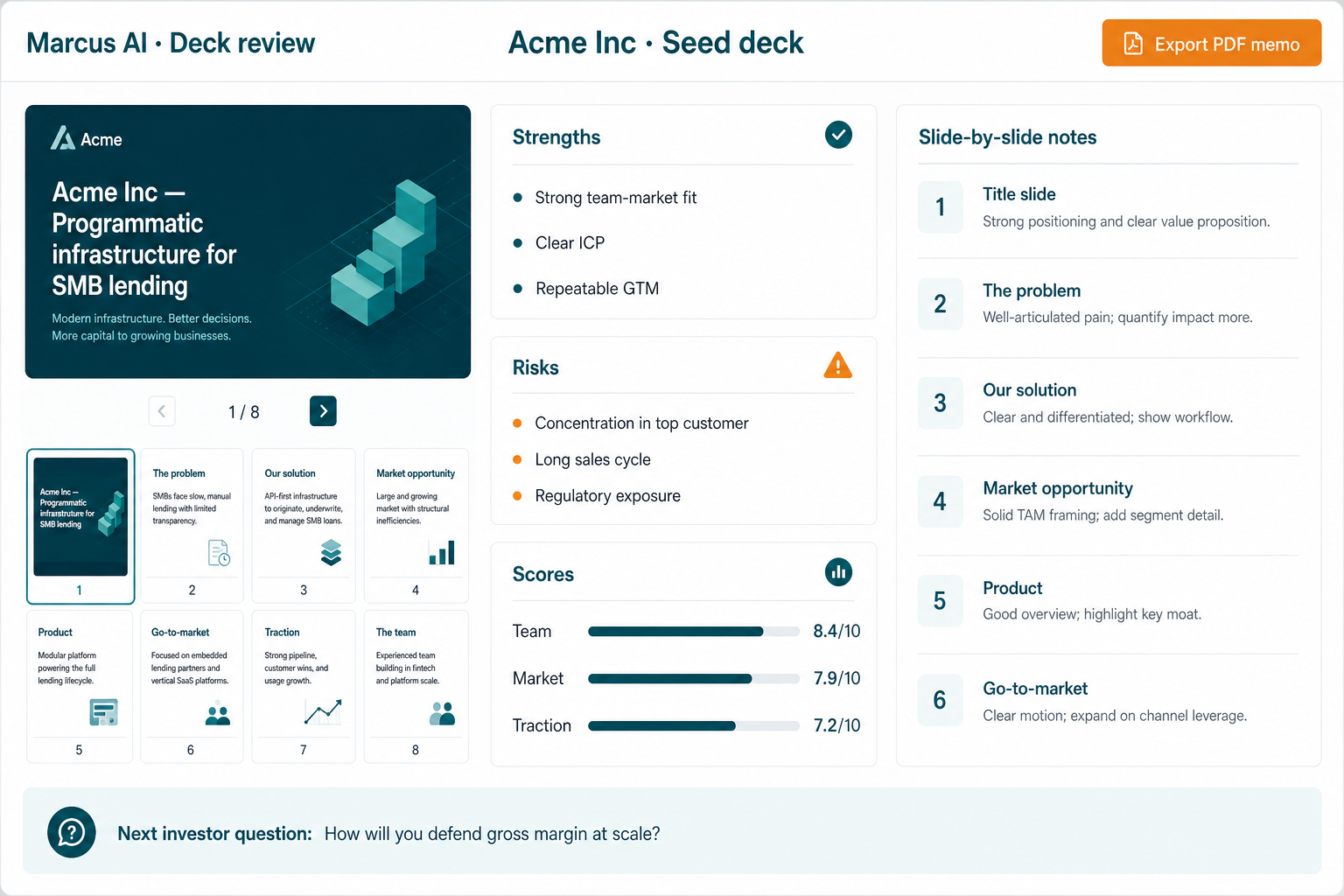
60-second VC memo on your deck
Marcus reads the deck the way an associate would — strengths, risks, and the next investor question, in a memo you can export.
- Slide-by-slide scoring
- Investor-grade memo
- PDF export
Founding team, one shared workspace
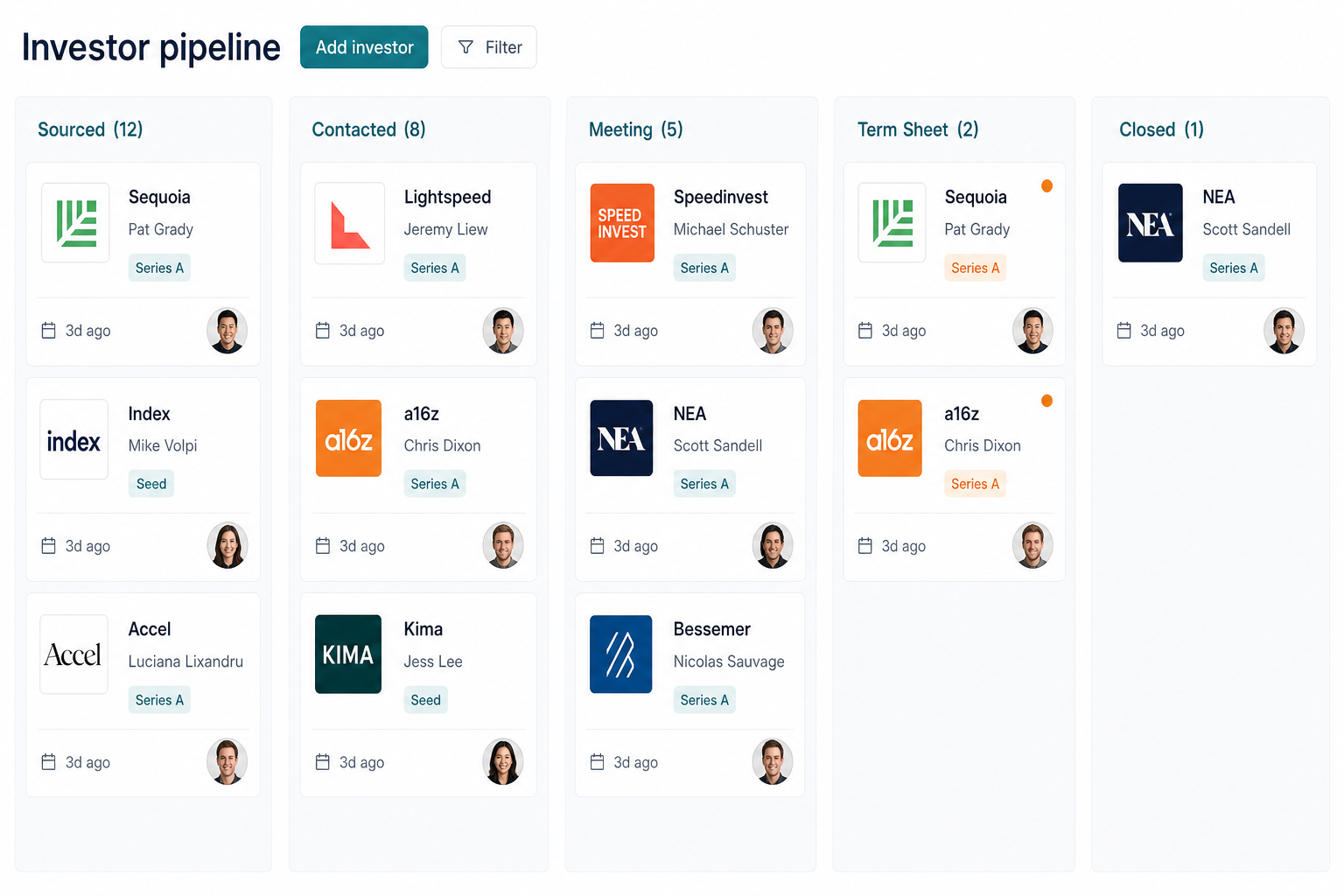
Investor pipeline, follow-ups, and diligence notes synced across the co-founding team with role-based access.
- Up to 5 team seats
- Shared inbox + CRM
- Role-based permissions
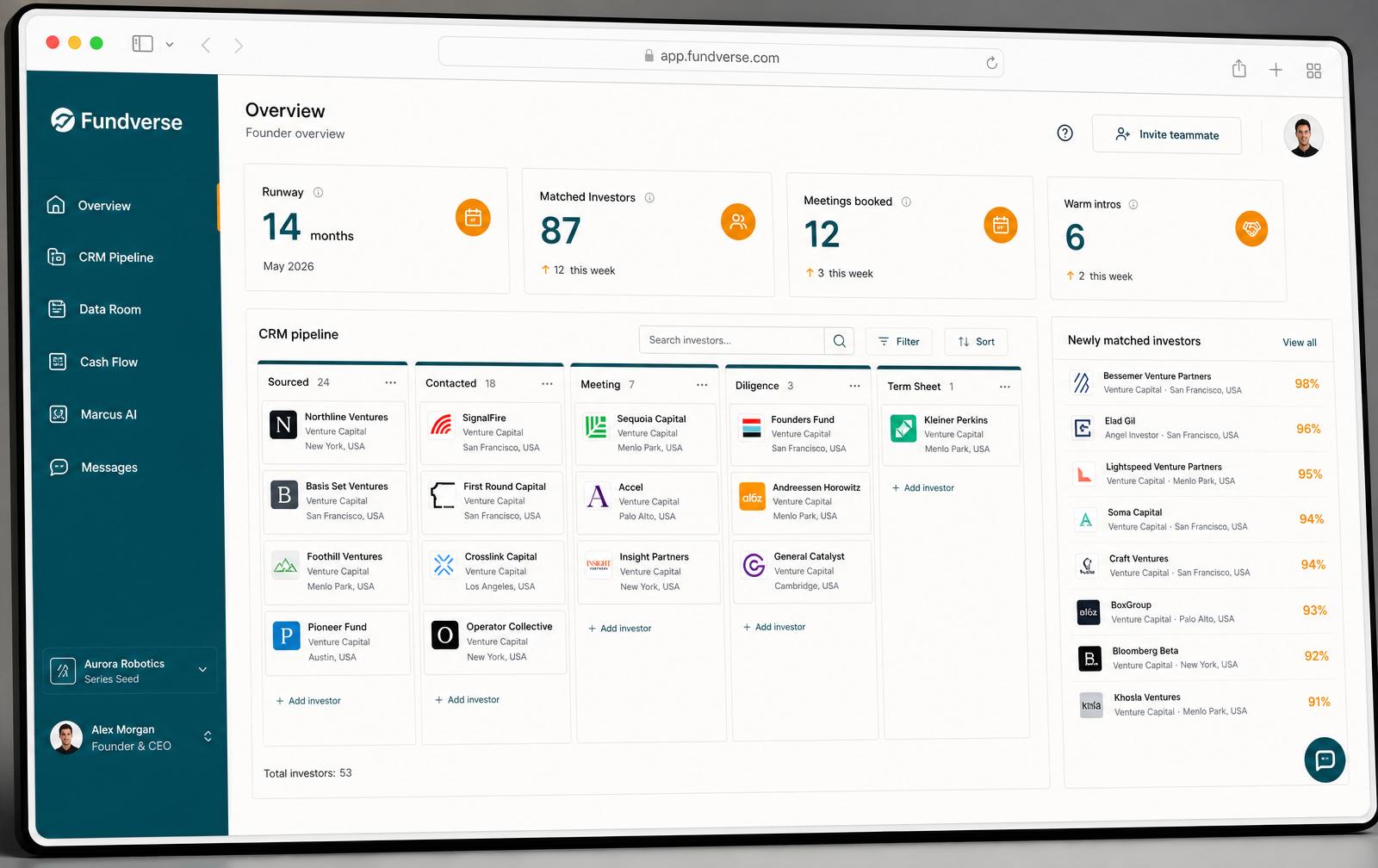
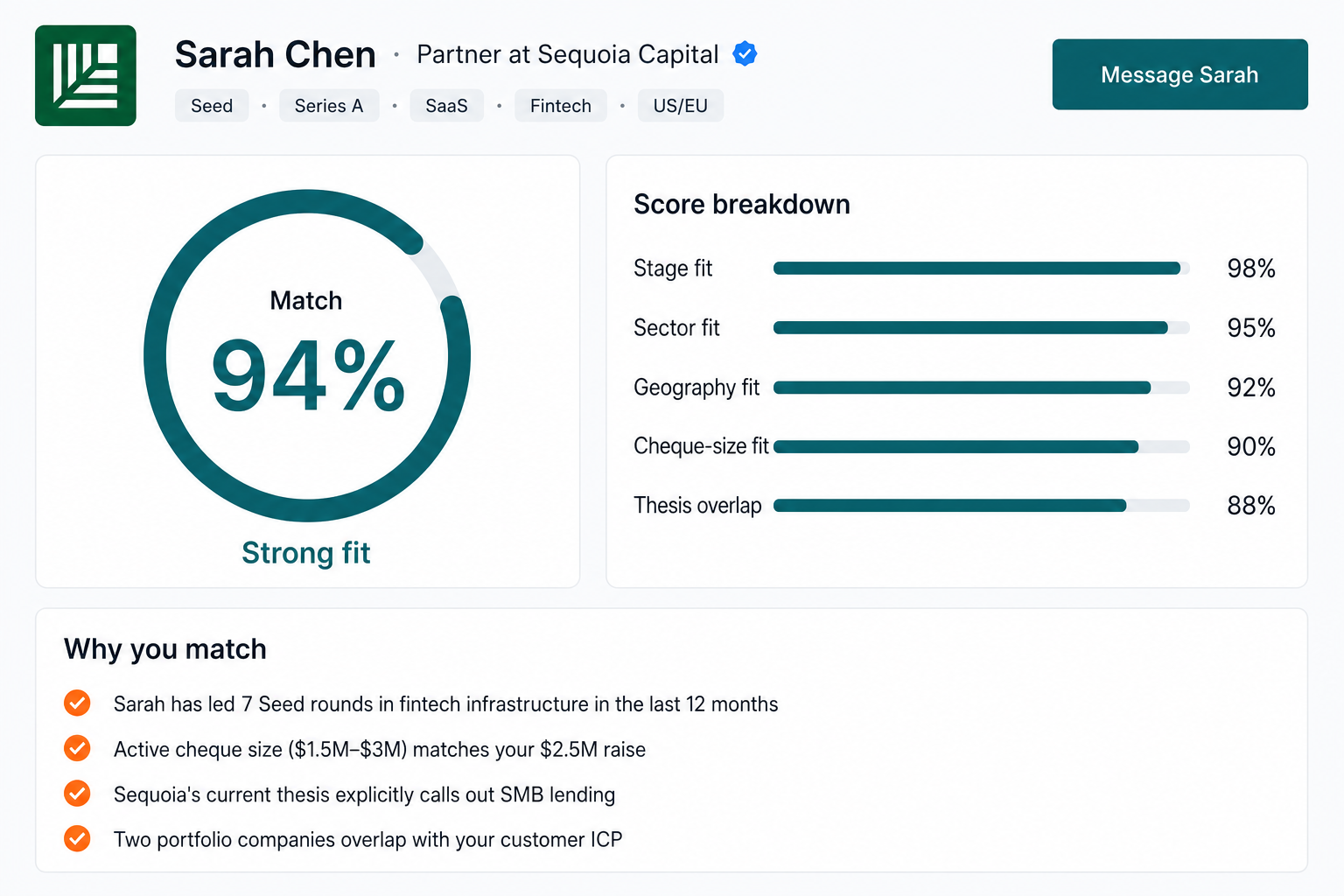
Every match, with the reasoning shown
Transparent scores explain why an investor matched — stage fit, thesis overlap, geography, active cheque size. No black box.
- Stage + sector + geo fit
- Cheque-size signals
- Thesis overlap reasoning
From signup to first investor reply, same week
Median founder gets a first verified-investor reply within five days of publishing a complete profile.
- 5-day median first reply
- Complete-profile boost
- Priority in match queue
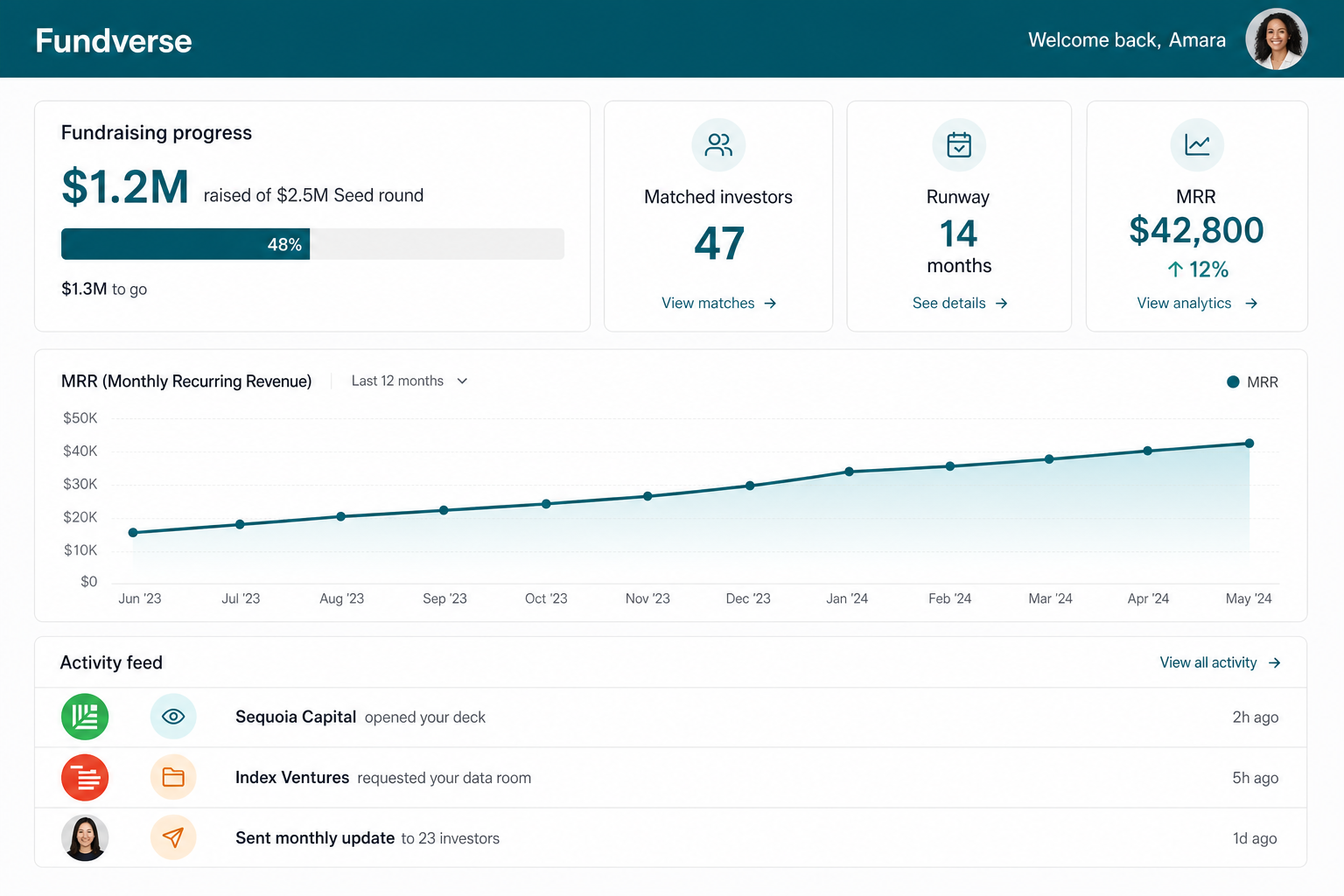
Investor updates that pull KPIs automatically
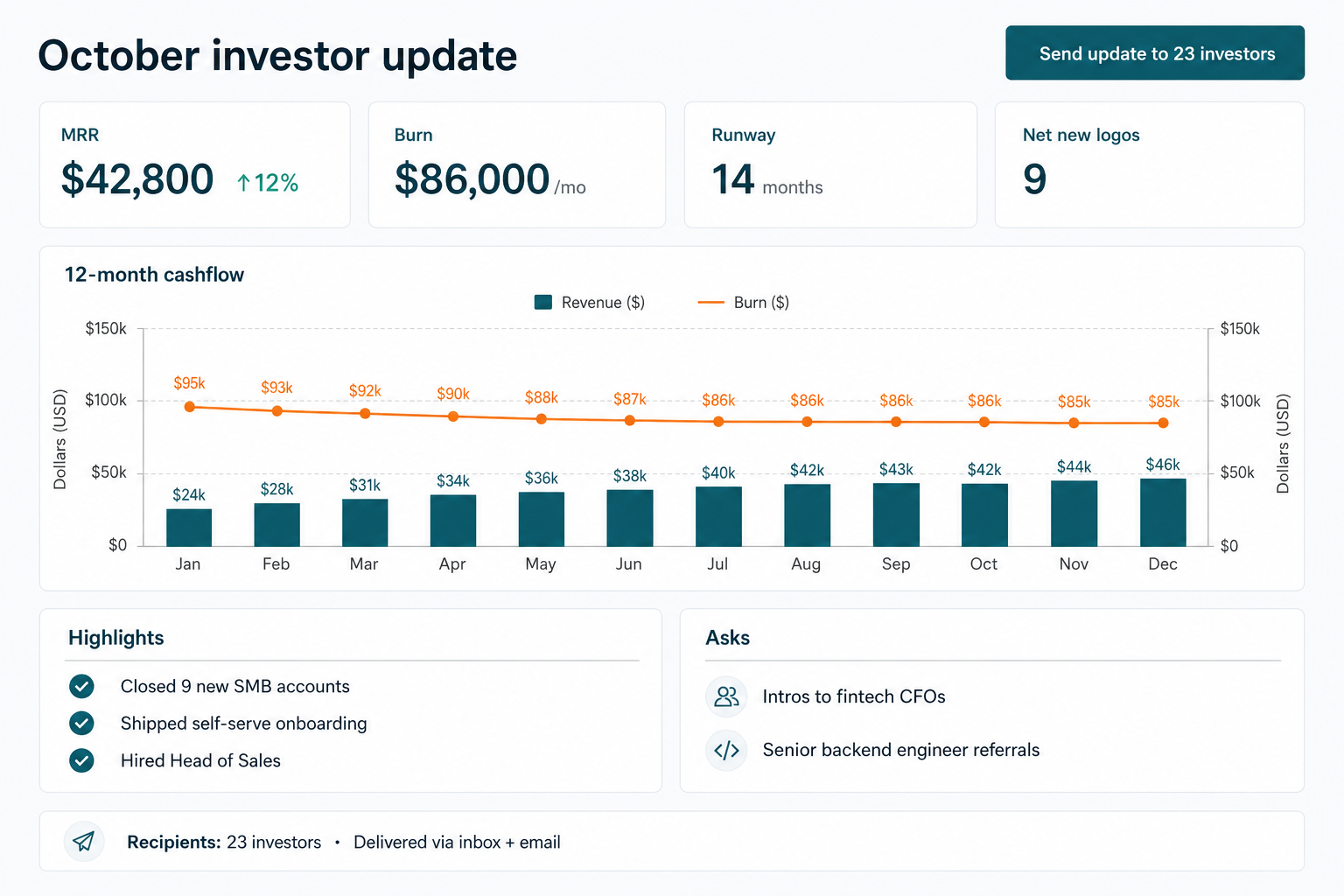
Monthly updates compose themselves from your KPI tiles, runway, and hiring — one click delivers to matched investors.
- Cashflow + runway sync
- KPI dashboards
- One-click distribution
The four steps most founders take on day one
Most teams are live in an afternoon. Here is the four-step path new workspaces take.
- Step 1
Import or rebuild your pipeline
Upload your existing investor list as CSV or start fresh.
- Step 2
Get AI-matched warm leads
Match with verified, active investors who fit your thesis.
- Step 3
Message and share rooms inline
Direct messaging plus permissioned data rooms — no separate tools.
- Step 4
Close the round with full context
Pipeline CRM, document analytics, and AI review through to wire.
Gust vs Fundverse
| Capability | Gust | Fundverse |
|---|---|---|
| Investor discovery | Form-based | AI-matched discovery |
| CRM / pipeline | Basic | Modern kanban CRM |
| Data rooms | Dated UX | Modern + analytics |
| Due diligence | Manual | Document requests + KYC |
| Founder collaboration | Single-user | Team workspace |
| AI features | None | Marcus AI pitch review |
| Pricing | Subscription | Free + transparent paid |
Built for the AI era
Modern, mobile-ready data room
Direct messaging without intro gatekeeping
Fundraising best practices, baked in
Legacy investor databases were built for analysts, not active fundraising. Founders want AI-matched discovery, direct messaging, integrated data rooms, and pipeline tools in one place — without warm-intro gatekeeping.
- Skip warm-intro gatekeeping with AI-matched investor discovery.
- Message verified, KYC'd investors directly inside Fundverse.
- Use the built-in data room for permissioned document sharing.
- Track every conversation in the Fundverse pipeline CRM.
- Run your deck through Marcus AI for a free VC-style review.
- Send LP-style updates to keep matched investors warm between rounds.
- AI-matched investor discovery
- Modern data room UX
- Direct messaging — no intros required
- Founder pipeline CRM
- Investor LP reporting
Start free — pay when the round picks up speed
Founders and investors get a distinct plan shape — pick the one that matches how you work.
Frequently asked questions
Does Fundverse replace Gust entirely?
Fundverse covers discovery, fundraising, and post-investment workflows.
What does 'verified investor' mean on Fundverse?
Every investor account is KYC-checked against the fund entity or angel identity before it can message founders. No burner accounts, no fake partners.
Is the free plan enough to close a small round?
For pre-seed and small seed rounds, the free plan is often enough. Teams typically upgrade when the pipeline hits ~20 active investor threads.
Can I use Fundverse alongside my existing CRM?
Yes. Most teams import an existing Notion/Airtable pipeline on setup and use Fundverse as the messaging + data room layer on top.