Who Is an Angel Investor, Really? The Definitive Guide for Founders

Forget the myths. Angel investors are not just wealthy individuals with cash to burn. This guide reveals who they actually are, what motivates them, how they operate, and why their value extends far beyond their check.
The person who answers your cold email at 11 PM on a Sunday night with genuine feedback — not because they have to, but because they remember being in your shoes. That's your angel investor. Not the caricature of a bored wealthy uncle tossing money at startups. Not a faceless institution with a formal process. A real human who made their own money, took their own risks, and now wants to help you do the same. Let's demystify who they actually are.
Beyond the Myth — Who Are Angel Investors, Really?
When most people hear "angel investor," they picture a monied individual writing big cheques at pitch events. The reality is more nuanced. An angel investor is an individual who invests their own personal capital in early-stage startups, typically in exchange for convertible debt or ownership equity. They operate at the earliest stages — often the first external capital a startup raises after friends and family. In the United States alone, there are over 330,000 active angel investors, according to the Angel Capital Association. Globally, the number is in the millions, with growing ecosystems in Europe, Africa, and Southeast Asia. But raw numbers only tell part of the story. Understanding who they are requires looking at their profile, motivations, and the unique value they bring.
The Typical Angel Investor Profile
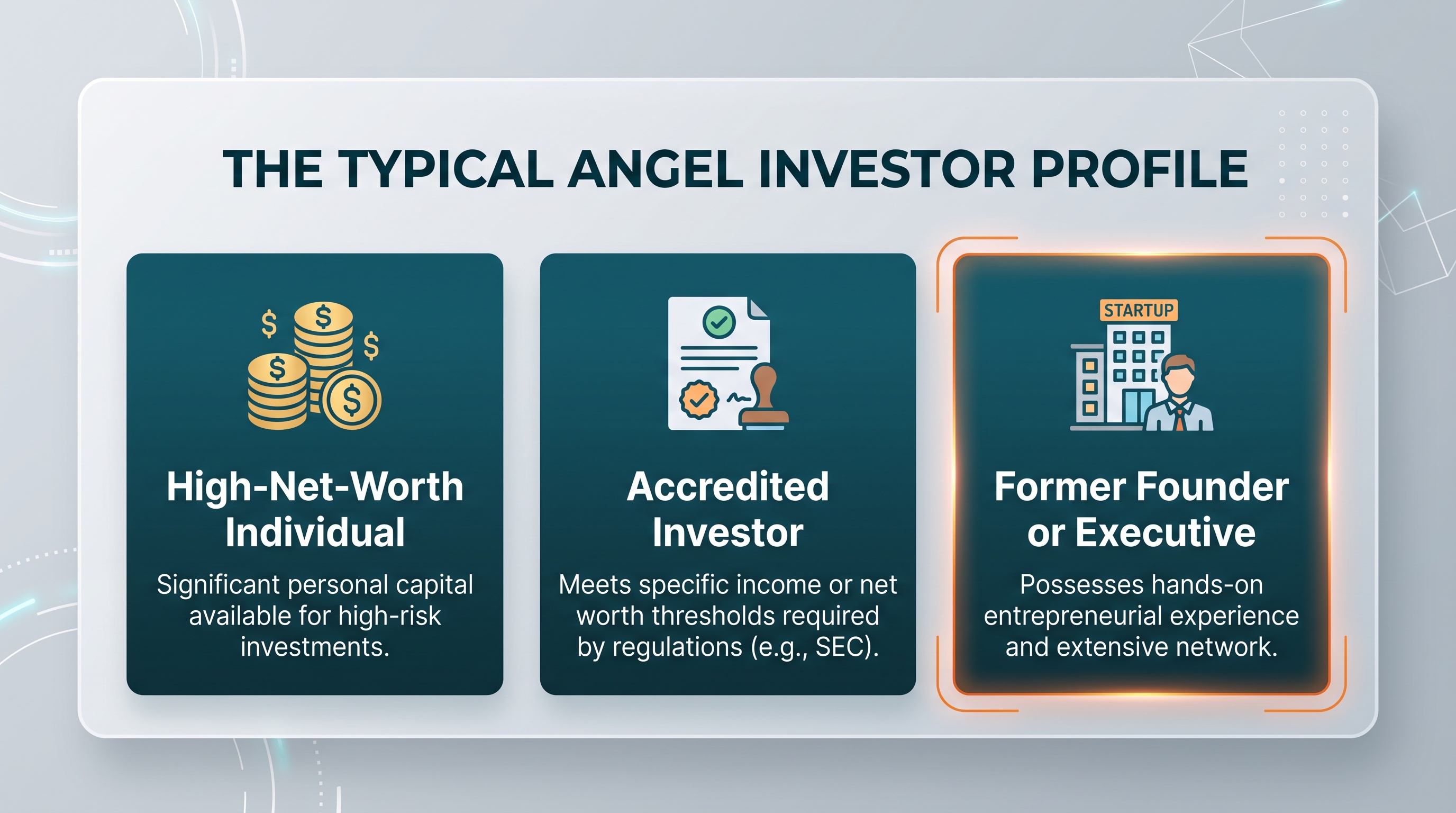
The stereotype of the angel as a retired tech executive is not entirely wrong, but it is incomplete. The data reveals a more diverse picture. High‑Net‑Worth Individuals : Most angels have significant personal wealth accumulated over years of successful careers. This allows them to deploy capital with a long-term mindset. Accredited Investors : In jurisdictions like the US, angels must meet regulatory standards (e.g., $1M+ net worth or $200K+ annual income) to invest in private companies. This rule exists to protect less sophisticated investors from high-risk asset classes. Former Founders or Executives : The single most common background among active angels is that of a former founder. They have built and sold companies, held senior leadership roles, and understand the founder journey intimately. They know what it's like to be in your position. Operational Expertise : Many angels have deep functional expertise — product, marketing, engineering, finance — and can provide hands-on support beyond capital. Patient Capital : Angels typically have a 5-7 year investment horizon. They understand that building a company takes time.
The Dual Motivation — Why Angels Invest
Angels are not pure philanthropists. They are investors. But they are also driven by something beyond returns. Financial Returns : The primary motivation is the potential for outsized returns. A successful angel investment can yield 10x, 50x, or even 100x returns. However, this comes with significant risk. Giving Back : The second motivation is the desire to give back. Many angels have been helped by investors and mentors themselves. They want to pay it forward. They genuinely enjoy the process of mentoring and watching founders grow. Staying Engaged : For former founders, angel investing is a way to stay connected to the entrepreneurial ecosystem — to remain in the game. Learning : Angels often invest in sectors they want to learn about. It's a form of education and exploration.
The Stage — Where Angels Play
Angels occupy a specific place in the funding lifecycle. They are the bridge between "friends and family" and institutional venture capital. Idea Stage : Some angels invest at the earliest, pre-product stage. They are betting on the founder. Seed Stage : Most angel investment occurs at the seed stage, when a startup has a prototype or early traction. Pre-Seed : An increasingly common stage for angels, often via SAFE or convertible note instruments. Bridge Rounds : Angels also participate in bridge rounds, providing short-term capital to get a company to a Series A. Angels are crucial because they provide capital when venture capital is not yet available. They take the highest risk, before the company has proven its viability.
The Check Size — How Much Do Angels Invest?
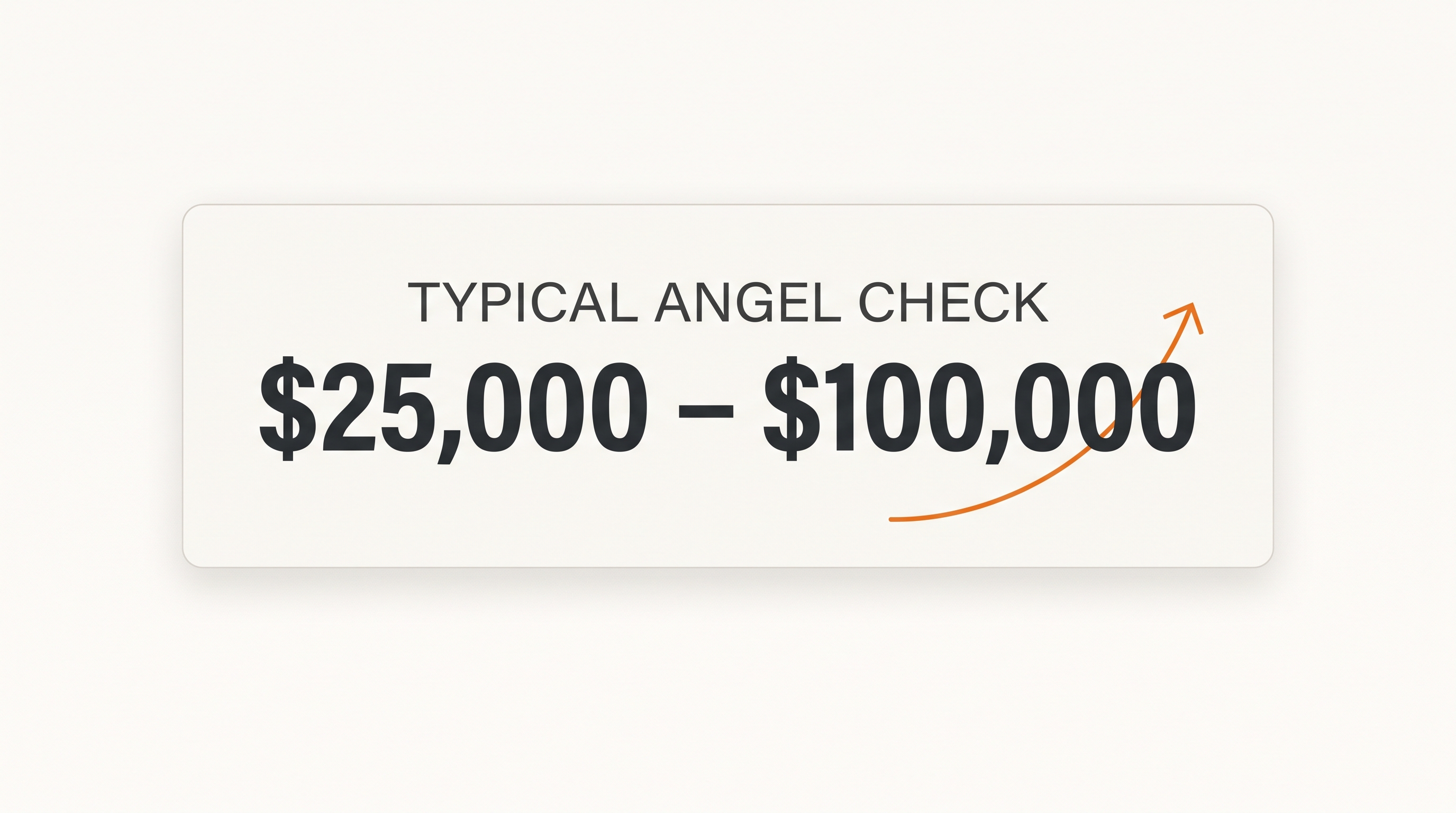
Angel checks vary widely by geography, sector, and stage. But some general patterns emerge:
- Typical Range: $25,000 to $100,000 per investment.
- Larger Checks: Experienced angels or those in expensive markets may write $250,000+.
- Smaller Checks: Some angels invest as little as $5,000 through syndicates.
Syndicates : Angels often pool their capital through angel groups, platforms like AngelList, or syndicates. This allows them to participate in larger rounds and diversify risk. A group of 10 angels investing $25,000 each can put together a $250,000 seed round — a meaningful amount for an early-stage startup.
The Risk Reality — The Ugly Truth About Angel Investing
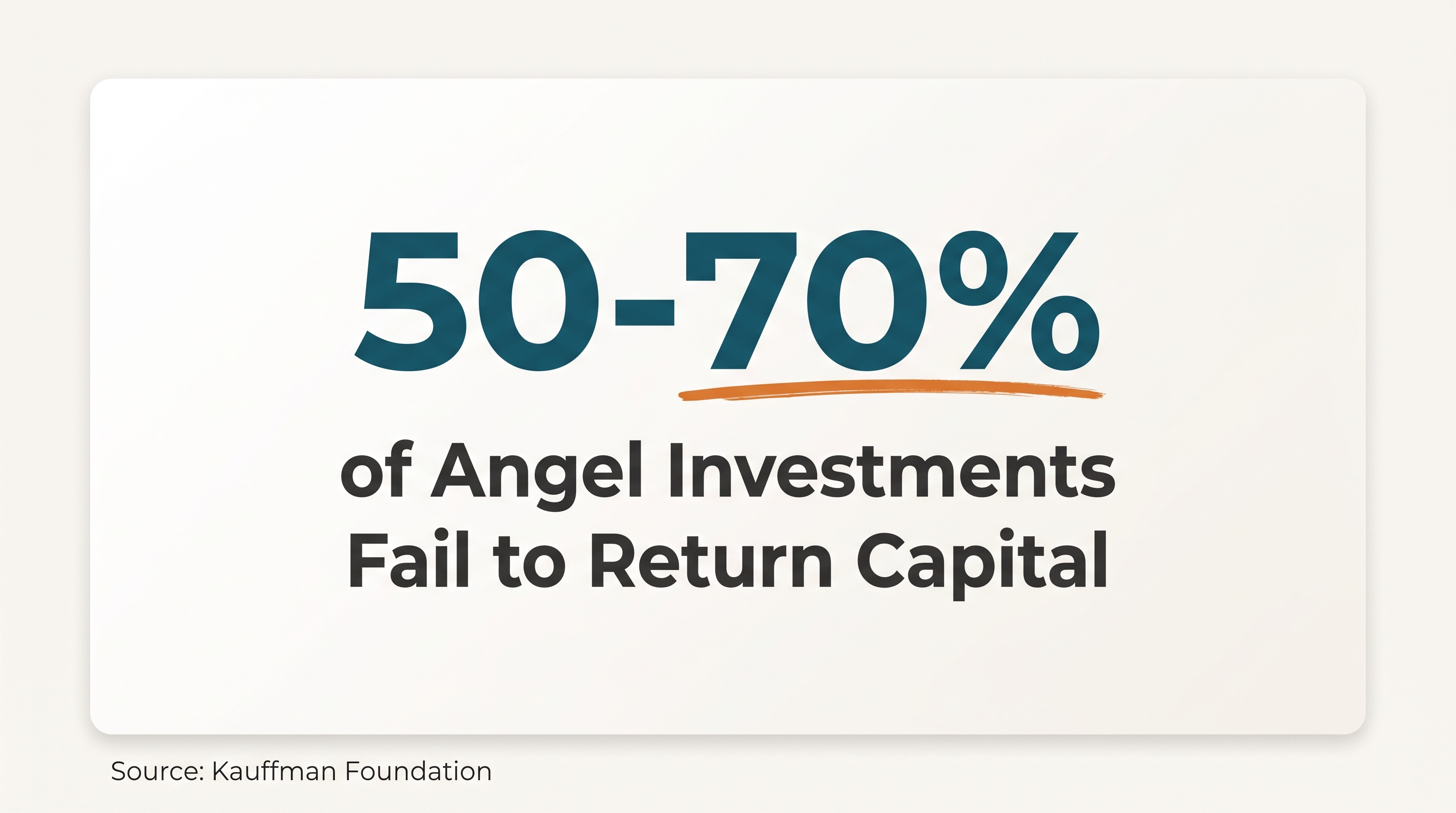
Angel investing is high-risk. The data is sobering: according to the Kauffman Foundation, 50-70% of angel investments fail to return capital. This means that the majority of angel investments do not produce positive returns. Many are lost entirely. The Power Law : Angel returns follow a power law distribution. A small number of winners drive the vast majority of portfolio returns. A single 50x winner can offset dozens of losses. Patience Required : The median holding period for an angel investment is 5-7 years. It takes time to build and exit a company. Angels must be patient. Diversification : Successful angels diversify across startups, sectors, and geographies to manage risk.
The Hidden Value — Beyond the Cheque
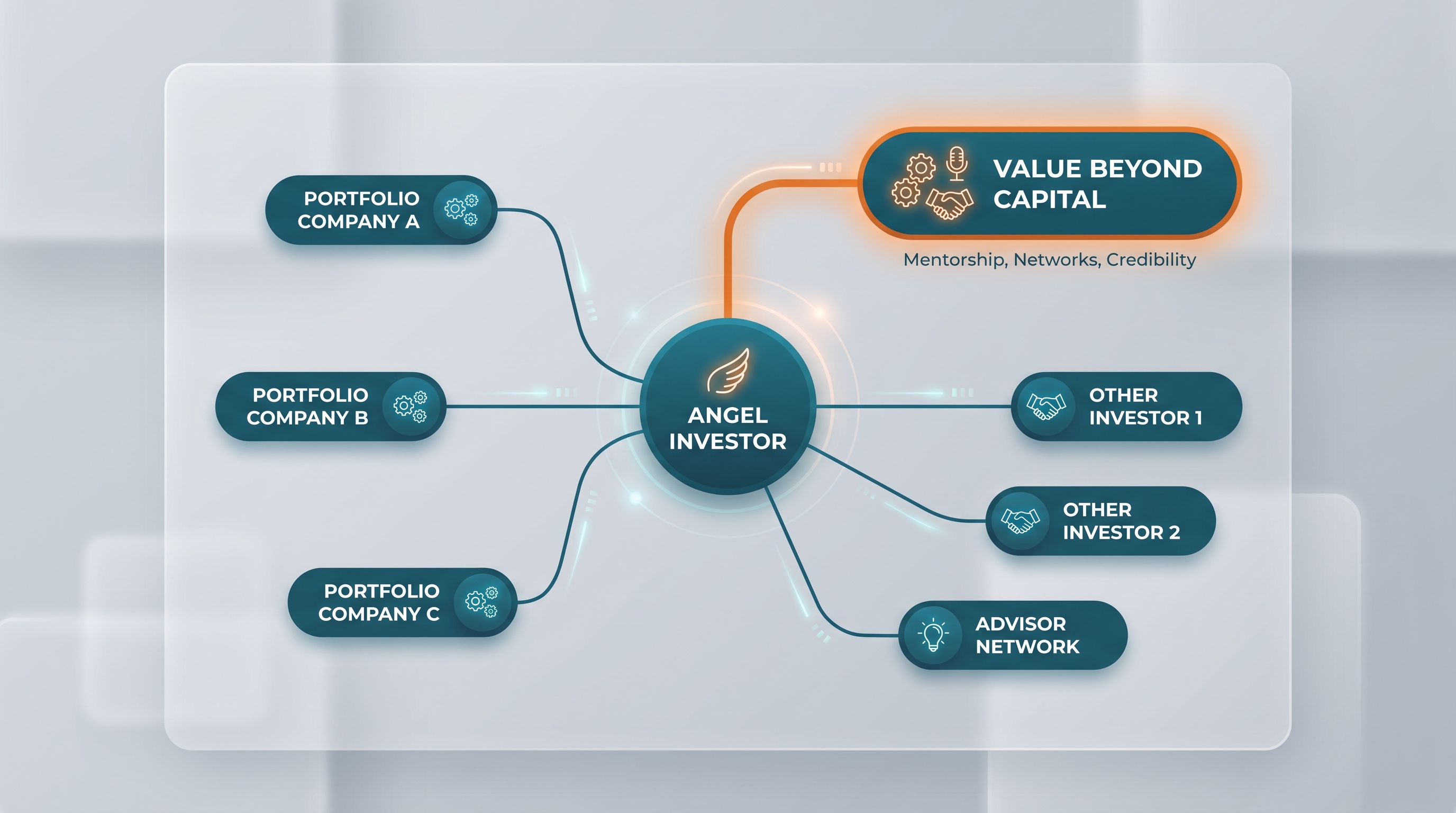
The most important thing to understand about angels is that their value extends far beyond their cheque. In many cases, the non-financial value is greater than the financial value. Mentorship and Guidance : Angels have been where you are. They can provide strategic advice, help you avoid mistakes, and offer a sounding board for ideas. Networks : Angels bring relationships — to customers, partners, potential hires, and later-stage VCs. A warm intro from an angel can open doors that would otherwise remain closed. Credibility : Having a respected angel investor on your cap table signals to others that you are worth backing. It's social proof for later investors. Operational Support : Angels can provide hands-on support in areas like product, marketing, finance, or engineering. Accountability : An angel investor becomes a partner who cares about your success and holds you accountable.
How Angels Operate — The Process and Instruments
Angels source deals through a combination of warm introductions, angel networks, and online platforms like AngelList. Sourcing : The best way to meet angels is through referral — a founder they've backed, a mutual connection, or a program they support. Evaluation : Angels evaluate startups based on four key criteria:
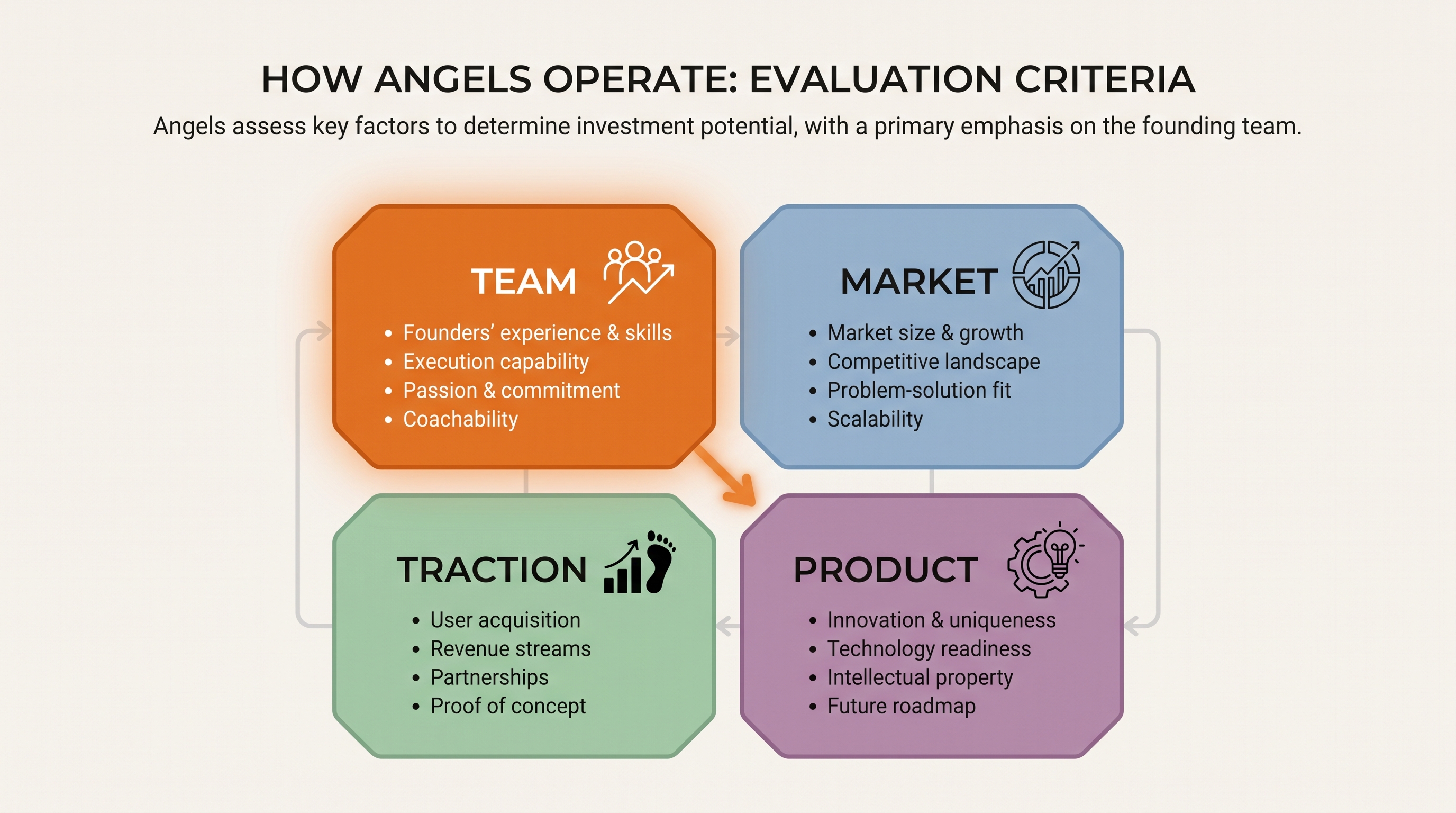
- Team: Are the founders coachable, resilient, and complementary?
- Market: Is the market large enough and growing?
- Traction: Is there evidence of demand or product-market fit?
- Product: Is the solution differentiated and defensible?
Instruments : Angels typically use one of three instruments:
- Convertible Note: A loan that converts to equity at the next priced round.
- SAFE (Simple Agreement for Future Equity): A popular instrument created by Y Combinator that converts equity at a future round.
- Priced Round: An equity round with a pre-money valuation determined at the time of investment.
The Global Ecosystem — Angels Beyond the US
Angel investing is not uniquely American. It is a global phenomenon.
United States : The largest ecosystem, with over 330,000 active angels and many organised angel groups. Europe : Growing ecosystems in the UK, Germany, France, and the Nordics. Africa : The African Angel Network connects angels across the continent, while the African Angel Academy is training a new generation of African angels. Southeast Asia : Singapore, Indonesia, and the Philippines have active angel networks. Latin America : Brazil and Mexico are seeing growing angel activity. The structure varies by region, but the underlying dynamics are consistent: successful individuals investing their own capital to support the next generation of founders.
The Future of Angel Investing
The angel investing landscape is changing. More Diverse Angels : Increasingly, angel investors are more diverse in terms of gender, ethnicity, and geography. Organisations like Angel Investing Diversity are driving change. Institutional-like Syndicates : Angels are organising into more structured syndicates that resemble institutional investment vehicles, with dedicated due diligence and portfolio management. Platforms : Online platforms are making it easier for accredited investors to participate in angel investing, democratising access. Focus on Impact: More angels are explicitly seeking impact investments, aligning their capital with their values. Founder-Friendly Terms: There is a growing recognition that founders need fair terms to succeed, leading to more founder-friendly standardisation.
The Takeaway — Know Your Angel
For founders, understanding who angels are is essential. It is not just about getting a cheque — it is about finding a partner who can accelerate your journey. Find the Right Fit : Not all angels are the same. Some are hands-on, others are hands-off. Some have specific expertise, others are generalists. Choose an angel who aligns with your needs. Build the Relationship : The relationship with an angel starts before the investment. Build trust, be transparent, and treat them as a partner. Leverage the Network : Don't just take the money — leverage the network, the advice, and the credibility. Be Prepared : Angels will ask tough questions. Be prepared with data, customer feedback, and a clear vision. Angels are not just investors — they are early believers. They take the first leap of faith. And for founders, that faith can be the difference between a startup that survives and one that soars.
Ready to find your angel? Start building your early-stage journey today.
Frequently asked questions
How do I find angel investors?
The best way is through warm introductions — from other founders, mentors, or service providers. You can also apply to angel groups, attend demo days, or use online platforms like AngelList & Fundverse.io
What do angel investors look for in a founder?
The team is the most important factor. Angels look for coachable, resilient founders with domain expertise and a complementary skill set. They also want to see traction and a large market.
What's the difference between an angel investor and a venture capitalist?
Angels invest their own capital in early-stage startups, often in smaller amounts ($25K-$100K). VCs invest institutional capital across all stages, typically at larger amounts and in exchange for board seats.
How much equity do angel investors typically take?
It varies widely based on valuation, stage, and round size. Typically, angels take 5-25% of a company across their investments, depending on the terms.
Is angel investing only for accredited investors?
In many jurisdictions, yes. In the US, angels must meet accredited investor criteria. However, some platforms allow non-accredited investors to participate through certain exceptions.
What is the failure rate of angel investments?
According to the Kauffman Foundation , 50-70% of angel investments fail to return capital. The risk is high, but the potential returns from winners can more than compensate.