The Psychology of Fundraising: Why Investors Invest in People, Not Pitch Decks

You've perfected your pitch deck. Your financial projections are solid. Your market size is enormous. And then the investor asks a question that has nothing to do with any of it. This is the psychology of fundraising – and most founders fail it without knowing why.
Imagine you're sitting across from an investor. You've spent weeks perfecting your pitch deck. Your financial projections are solid. Your market size is enormous. You've rehearsed every slide. And then the investor asks a question that has nothing to do with any of it. "What keeps you up at night?" This is not a casual question. This is a test. And most founders fail it without knowing why. Here's the uncomfortable truth about venture capital: investors are not primarily making rational decisions. They're making emotional decisions that they later justify with numbers. The human brain is not a calculating machine. It's a pattern recognition organ that runs on instinct, fear, and social proof.
The Two Processes Running in Every Pitch Meeting
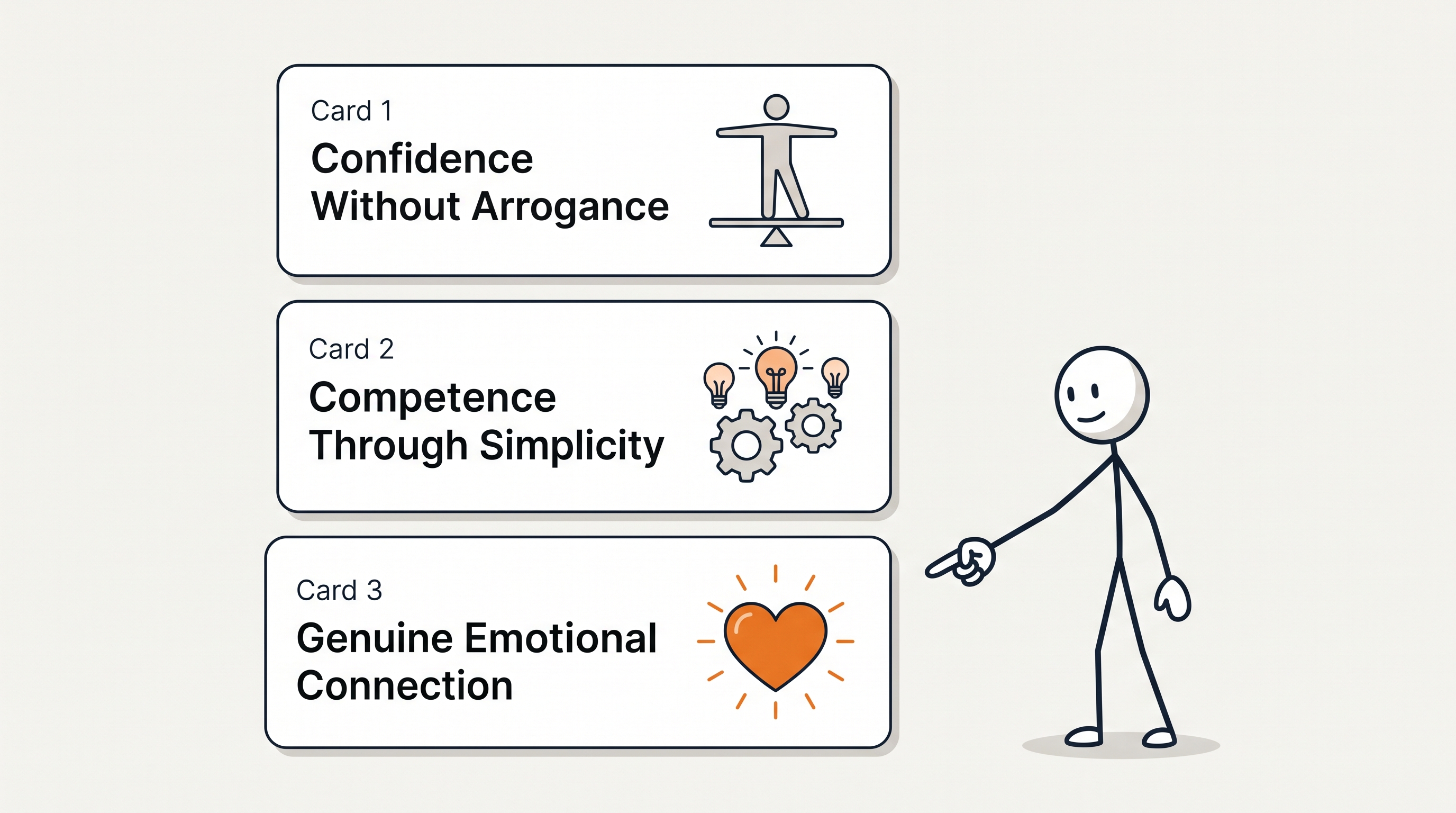
When an investor listens to your pitch, their brain is running two parallel processes. The conscious process is evaluating your metrics, your team, your market. But underneath that, a much faster system is asking a single question: "Do I trust this person?" This is called affective trust. It happens in milliseconds. It's the same system that tells you whether to trust a stranger in an elevator. And it's remarkably difficult to override with logic. So what triggers this trust response? Three things. First, confidence without arrogance. Second, competence demonstrated through simple explanations. Third, a genuine emotional connection to the problem you're solving. Notice that none of these things appear in your financial model.
The Most Dangerous Force in Venture Capital
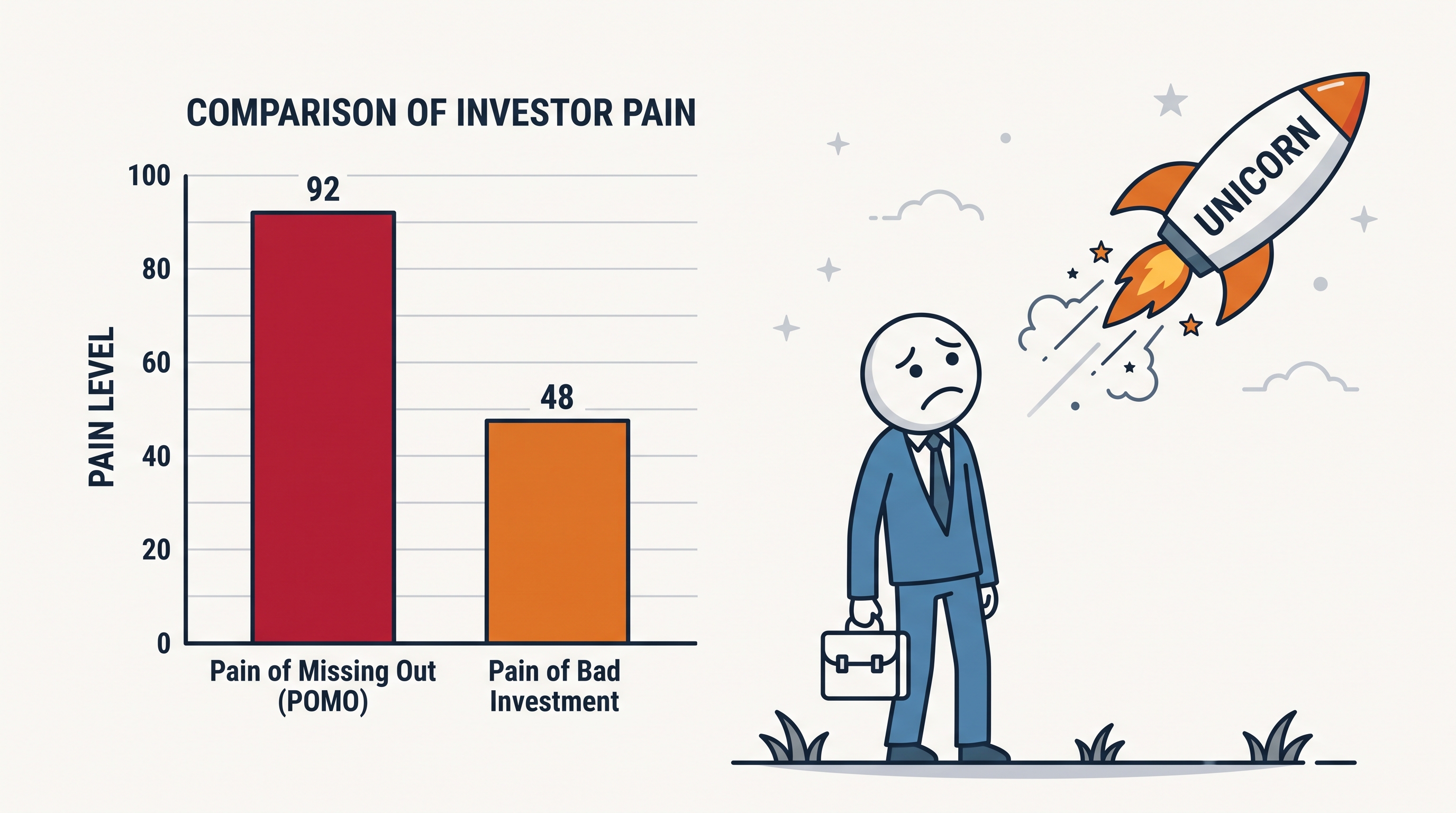
Now let's talk about the most dangerous force in venture capital. Social proof. Investors are herd animals. They're terrified of being the only one who says yes. They're equally terrified of being the only one who says no. The venture capital industry operates on a simple rule: nobody gets fired for following the crowd. If a16z invests in a company, every other firm wants to look at it. If Sequoia passes, suddenly nobody wants the deal. This is not because investors are stupid. It's because the cost of a missed opportunity feels worse than the cost of a bad investment. Psychologists call this loss aversion. The pain of losing something is twice as powerful as the pleasure of gaining it. For an investor, passing on the next Google is a career-ending mistake. Investing in a failure is just part of the job. So the natural bias is toward saying yes when others say yes, and no when others say no. This is why momentum matters so much in fundraising. A round that's oversubscribed attracts more interest. A round that's struggling to close becomes impossible. The signal is not the company itself. The signal is what other investors are doing.
The Real Investment They're Making
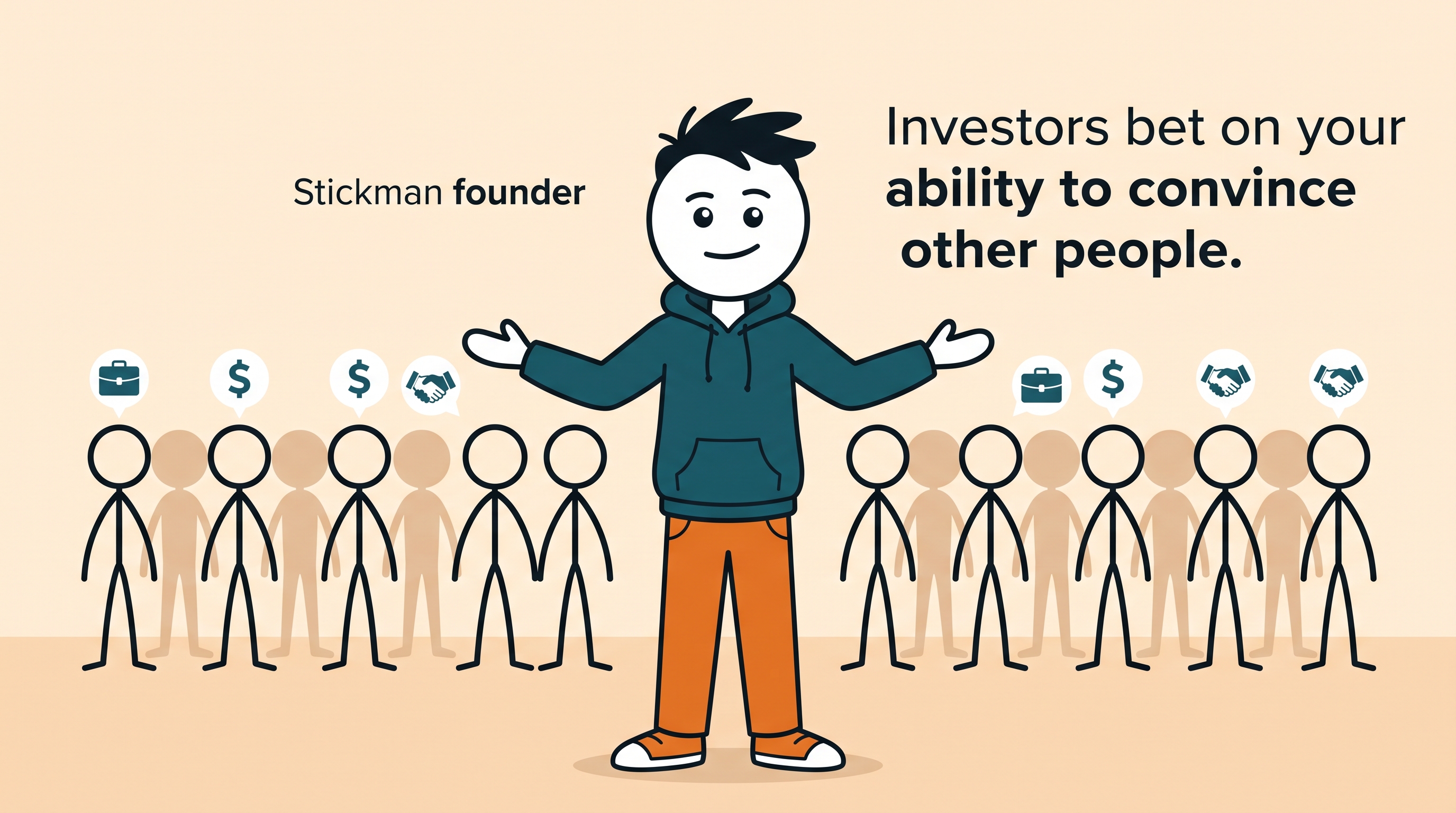
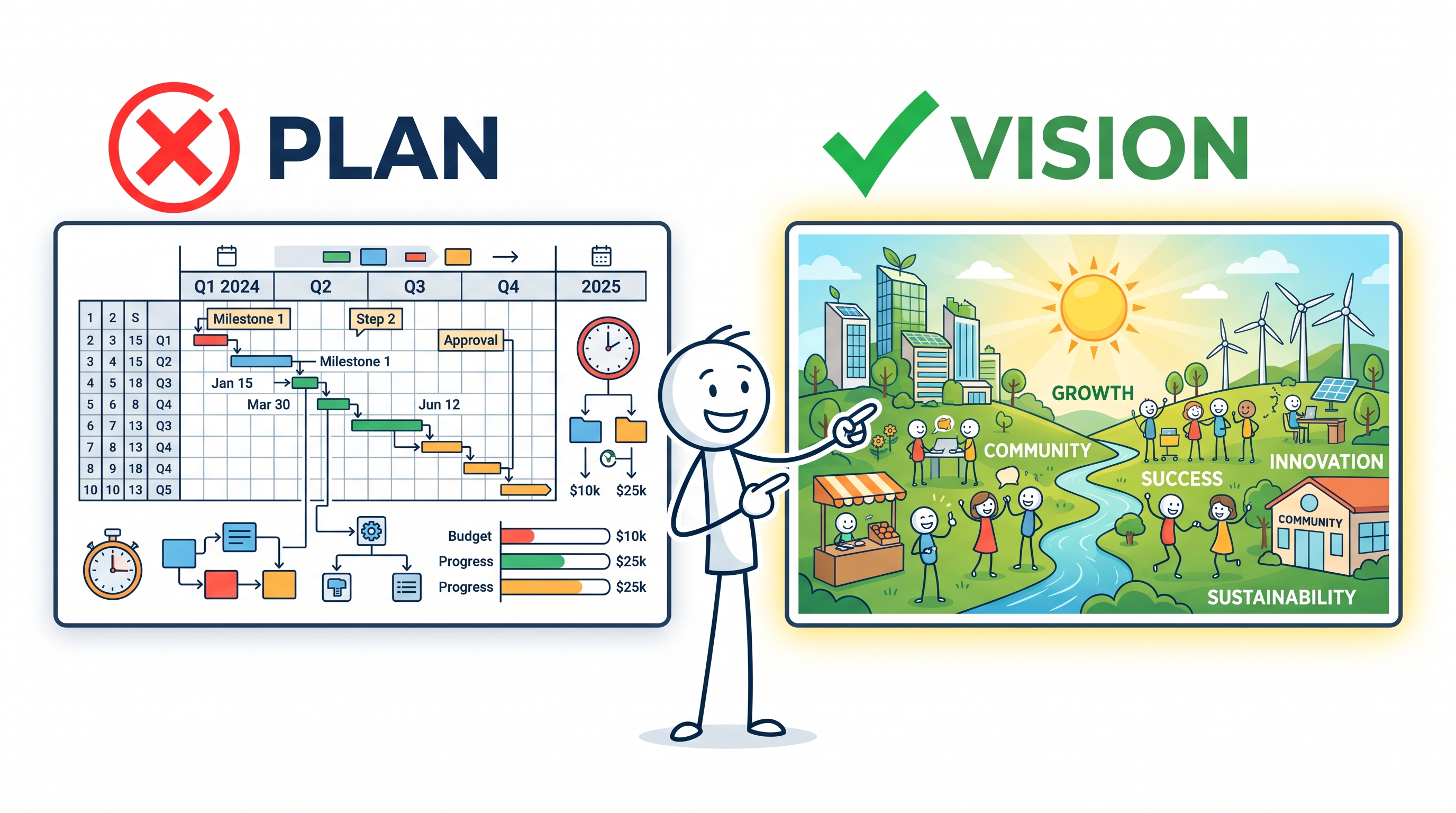
Here's the part that really surprises founders. Investors are not investing in your company. They're investing in your ability to convince other people. Because your job as a founder is not just to build a product. It's to recruit talent, attract customers, close partnerships, and eventually convince the public markets. Every pitch meeting is actually a test: can this person persuade me? If you can't convince one investor, how will you convince a thousand employees? How will you convince millions of customers? Venture capitalist Ben Horowitz once said that the single most important trait in a founder is the ability to articulate a vision. Not a plan. A vision. Plans change. Visions endure. What does a vision look like? It's not a slide with numbers. It's a story about the future that feels inevitable. It's the world as it should be. And the founder is simply the person who helps everyone else see it.
The Vulnerability Paradox
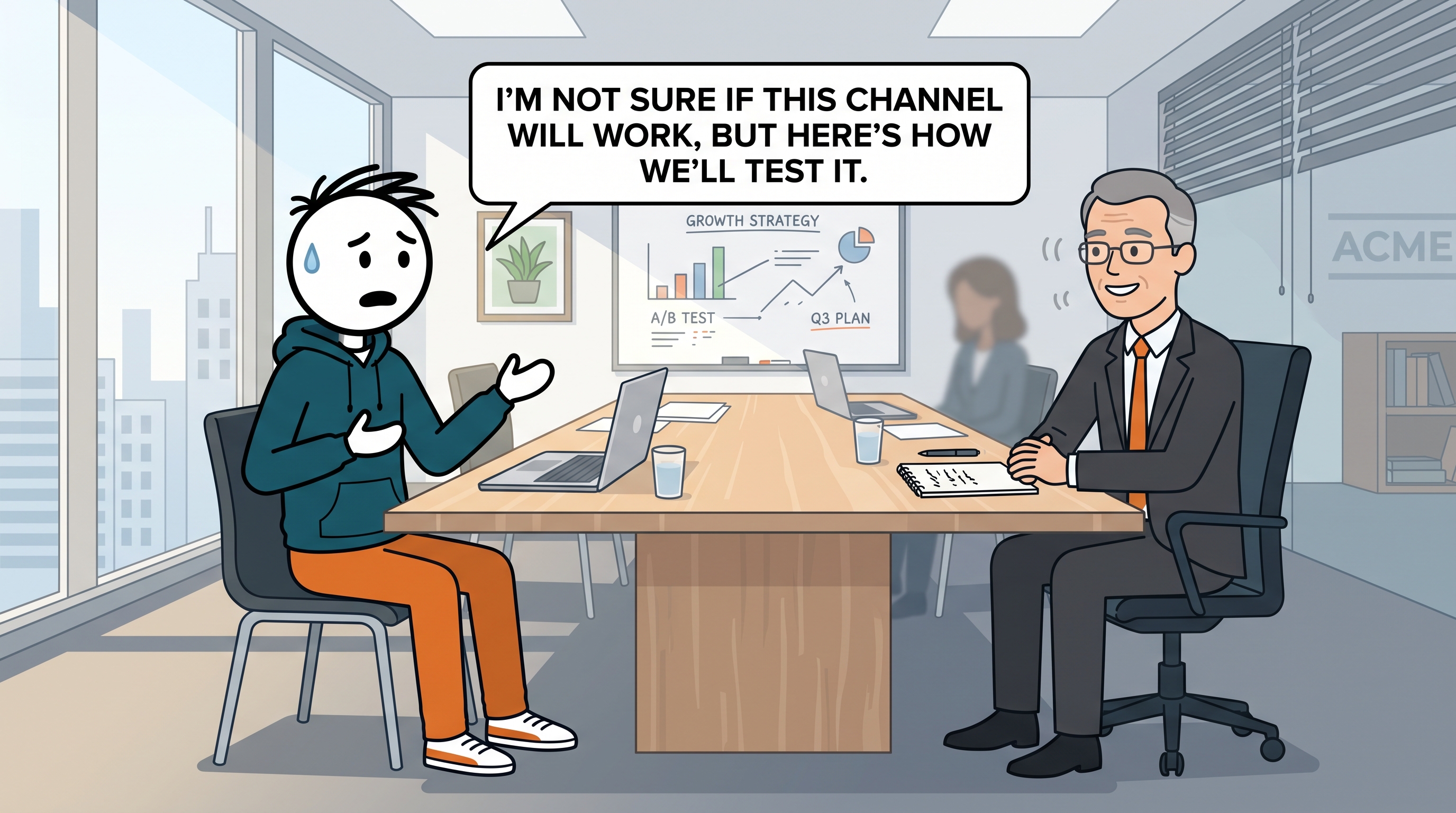
But here's the trap. Many founders think they need to be perfect. They rehearse until they sound like robots. They avoid showing uncertainty. They try to project confidence by never admitting weakness. This backfires dramatically. Investors are experts at detecting inauthenticity. They meet hundreds of founders every year. They can smell a rehearsed pitch from across the room. What they actually want to see is the real person. The most successful fundraising conversations include moments of genuine vulnerability. A founder who admits, "I'm not sure if this channel will work, but here's how we'll test it," sounds trustworthy. A founder who says, "We've got it all figured out," sounds dangerous. This is called the pratfall effect. People who appear competent but occasionally make mistakes are actually more likable than people who appear perfect. A small, honest admission of uncertainty makes you more trustworthy, not less.
The Investor's Secret Fear
Now let me share something that few founders understand. Investors are not just evaluating you. They're evaluating themselves. Every investment decision is a reflection of their judgment. If you make them feel smart during the pitch, they'll want to invest. If you make them feel confused, they'll pass. This is why overly complex presentations are deadly. If an investor has to work hard to understand your business, they'll assume the problem is you, not them. Simple explanations signal mastery. Confusing explanations signal incompetence. The great investor Peter Thiel famously said that a great business is one that can explain itself in one sentence. If you can't articulate your business simply, you don't understand it well enough. But wait. There's another layer to this. The investor is also thinking about their own career. Venture capital is a reputation business. Every partner is building a personal brand. They want to be associated with winners. They want to be seen as visionaries. This means your pitch needs to give them something to tell their colleagues. A narrative they can repeat. A story that makes them look good. "I just met this incredible founder who's going to change everything" is a much more compelling message than "I just met a founder with a strong CAGR projection."
The Story Framework
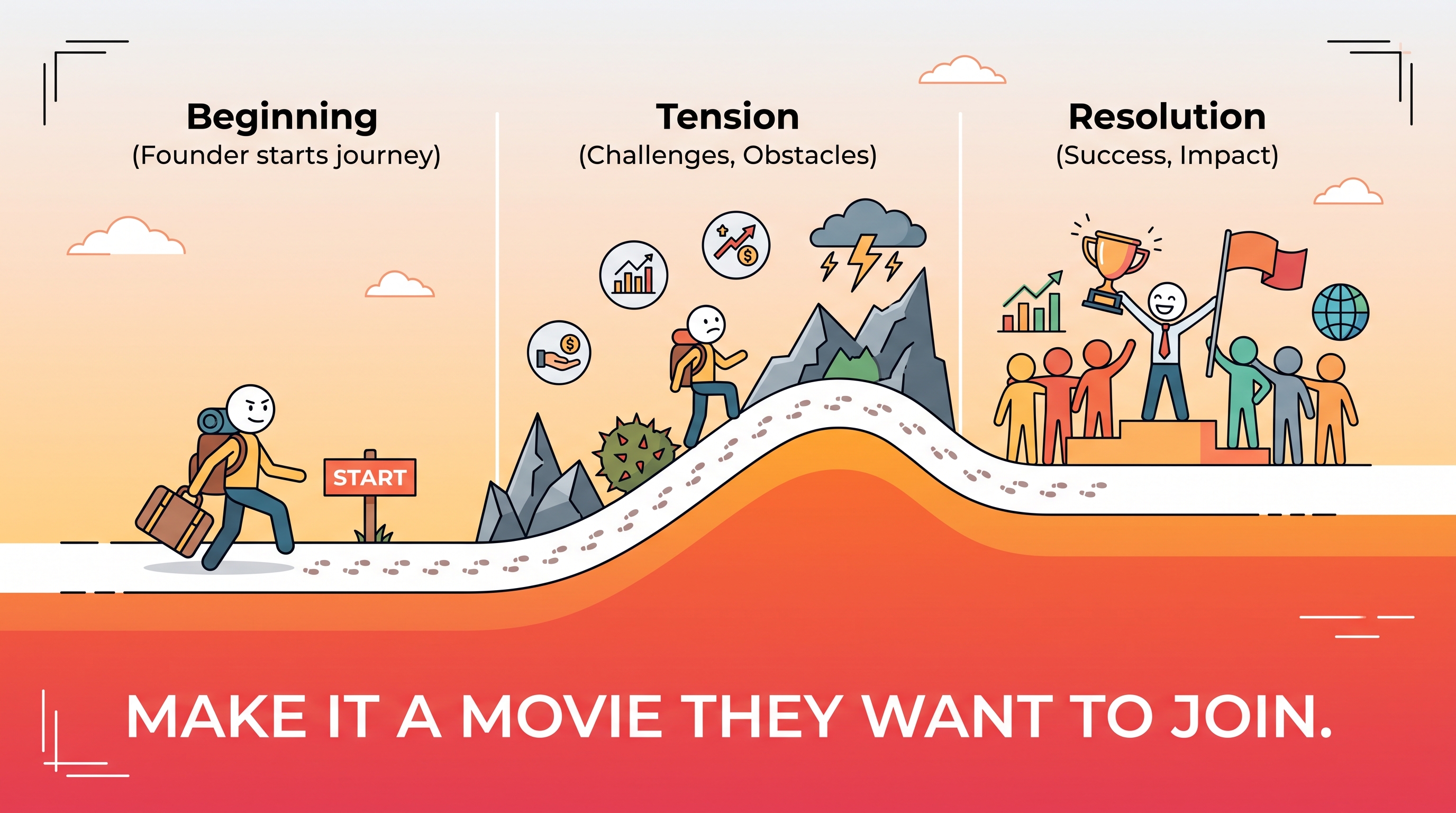
So how do you actually apply all of this? First, stop practicing your slides. Start practicing your story. Your narrative should have a clear beginning, middle, and end. It should have tension. It should have resolution. It should make the investor feel like they're watching a movie they want to be part of. Second, do your research. Not on the market. On the investor. What do they care about? What have they said in public? What makes them excited? Every person is different. Generic pitches die. Specific, tailored pitches succeed. Third, practice asking questions. The best pitch conversations are actually dialogues, not monologues. Ask the investor about their portfolio. Ask what they've learned from their failures. Ask what they think the biggest risk is. This shows confidence, curiosity, and emotional intelligence. Fourth, never defend your projections. They're wrong anyway. Instead, talk about what you'll learn. The future is uncertain. The investor knows this. The question is not whether your numbers are right. The question is whether you can adapt when they're wrong. Fifth, embrace the no. Most investors will say no. This is not a reflection of your business. It's a reflection of their constraints, their portfolio, their personal preferences. A no is just data. It tells you something about fit. It doesn't tell you something about value.
The Deepest Insight
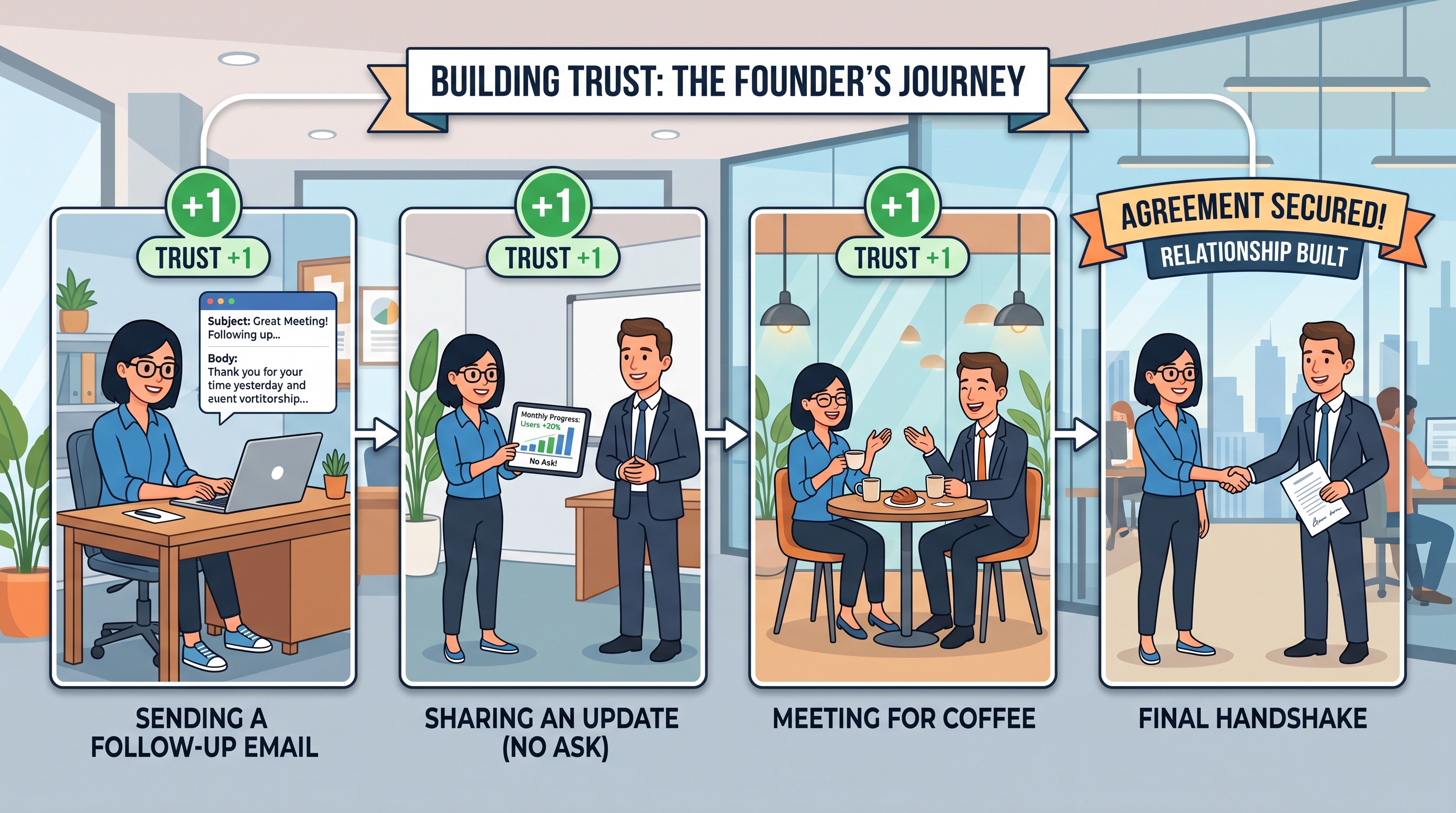
Now, here's the deeper insight. The psychology of fundraising is the psychology of selling your future self. The investor is not betting on your company today. They're betting on the person you will become in three years. They're betting on your ability to grow, to learn, to lead. This is why track record matters less than you think. Early-stage investors are buying potential. Potential is not demonstrated by past success. It's demonstrated by present behavior. How you handle tough questions. How you respond to feedback. How you treat the junior person in the room. Every interaction is a signal. Every email, every follow-up, every thank you note, every small moment is building a picture of who you are. The decision gets made in aggregate, across all these tiny signals, not in the forty-five minute meeting. Think about it. The investor will spend more time with you than with most people in their life. They will see you at your best and, eventually, at your worst. They need to believe they'll still like you when things get hard. Because things will get hard. Startups are not linear. They're chaotic, stressful, and often humiliating. The investor is betting on the relationship as much as the business. They need to know you'll call them when things go wrong, not just when things go right. This is why the best founders treat fundraising like a relationship, not a transaction. They build connections before they need money. They stay in touch. They share updates even when there's nothing to sell. By the time they actually fundraise, the relationship already exists.
What Actually Matters
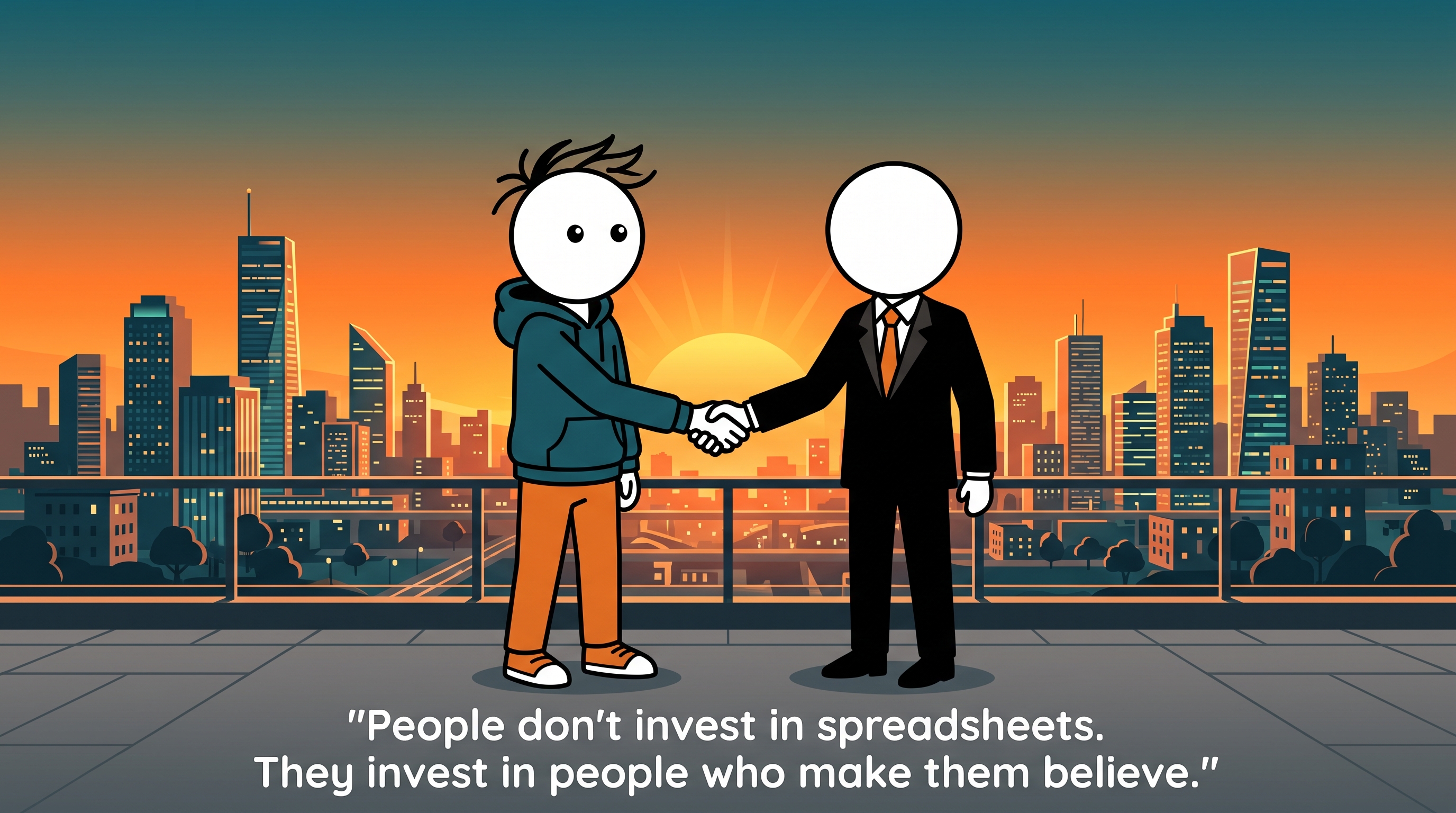
Let me leave you with something that might change how you think about this entirely. The most successful fundraising conversations are not about the business at all. They're about meaning. What drives you? What do you care about? What makes this work matter? Investors are human beings. They want to feel like their money is going somewhere important. They want to feel like they're part of something bigger than a return on investment. The money is real. But the meaning is what makes the money worth it. So when you walk into that next pitch, remember what you're actually doing. You're not selling a company. You're inviting someone to join a mission. You're offering them a chance to be part of a story that hasn't been written yet. And if you can make them believe that story needs to be told, the numbers will take care of themselves. Because in the end, people don't invest in spreadsheets. They invest in people who make them believe.
Start building belief today.
Frequently asked questions
What is the most important factor in fundraising success?
Trust. Investors make emotional decisions they justify with numbers. If they trust you, they'll find reasons to invest. If they don't, no slide deck will save you.
How do I build trust with investors?
Three things: confidence without arrogance, competence through simple explanations, and a genuine emotional connection to the problem you're solving.
Why do investors follow the crowd?
Loss aversion. The pain of missing out on a unicorn is worse than the pain of making a bad investment. Following the crowd feels safer.
Should I admit uncertainty in a pitch?
Yes. This is called the pratfall effect. A small, honest admission of uncertainty makes you more trustworthy, not less. It shows self-awareness and authenticity.
How do I make my pitch memorable?
Tell a story with a clear beginning, middle, and end. Create tension and resolution. Make the investor feel like they're watching a movie they want to be part of.
What do investors really want?
Meaning. They want to feel like their money is going somewhere important. They want to be part of something bigger than a return on investment.