Startup Festivals, Hackhouses, Tech Events, Meetups, Investor Conferences, Keynotes
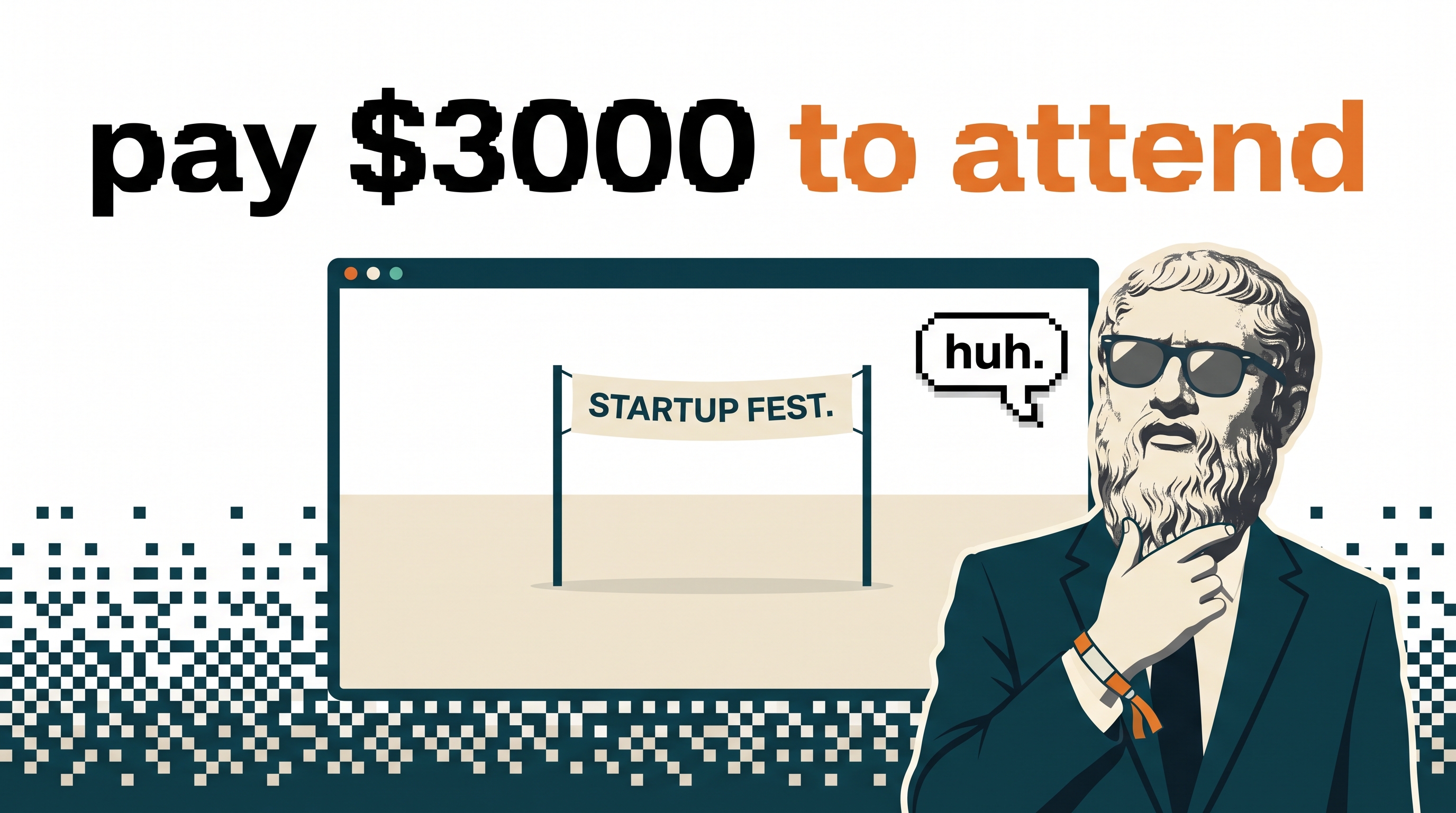
The Startup Industrial Complex . Why You're Paying $3,000 to Network With Nobody.

It is a Tuesday morning. You’ve paid $3,000 for a startup festival ticket, planning to fly across the country. A hotel is booked, you also have a new blazer, huh. You are ready to network, learn, and hopefully meet an investor interested in whatever is in your git repository. And then the big day finally arrives. You sit in a room with 500 other founders, all waiting for the same thing. The keynote speaker is a VC who has already said no to you twice. The breakout sessions are led by people who've never built a company. The networking breakfast is a scramble for business cards that would never be followed up. And the only real connection you will make is with the barista at the coffee stand. You leave the festival feeling empty, not because you haven’t met anyone. But because you’ve met everyone and connected with no one. This is the startup event industrial complex. It's a multi billion dollar industry that preys on founder FOMO and it's charging you exorbitant prices for access to nothing.
What Are These Events, Really?
Let's break down the ecosystem. Hackhouses, founder meetups, breakfasts, mixers, startup festivals etc. I can go on with the whole list but they won’t fit on this page. One thing in common: they charge founders to attend or be part of. Hackhouses: A weekend of coding, pitching, and "collaboration" — often cramped, poorly organized, and attended by people who are more interested in the free pizza than the product. Founder meetups: A room full of founders. Just a lot of people who are all trying to sell each other something. Startup festivals: A massive event with stages, booths, and thousands of attendees, most of whom are vendors selling to each other. Investor conferences: A gathering of VCs who are there to network with each other, not with you. You're paying for the privilege of being in the same building as people who don't want to talk to you or hear your world changing idea of a business. Keynotes: A single speaker with a single message often recycled from generic startup advice, carefully packaged for people who are mostly checking their email. The common thread? They're all charging you a premium for access that doesn't exist.
What You're Actually Paying For
| COST ITEM | AMOUNT | WHAT IT ACTUALLY BUYS |
|---|---|---|
| TICKET | $500-$5,000 | Entry to the building |
| TRAVEL | $500-$2,000 | A plane ticket |
| ACCOMMODATION | $500-$1,500 | A hotel bed |
| MEALS | $100-$300 | Overpriced conference food |
Total: $1,600 $8,800. For a weekend of networking that could have been done in 20 minutes on LinkedIn. And the ROI? Zero.
The Economics of FOMO
The reason these events are priced exorbitantly is simple: they're selling fear. Fear of missing out. If you don't attend, you might miss the connection. You might miss the insight. You might miss the opportunity. And if you miss it, someone else will find it. Fear of being left behind. The ecosystem is moving fast. If you're not in the room, you're not part of the conversation. You're not part of the deal flow. You're not part of the community. Fear of irrelevance. The founder who attends every conference is seen as "in the know." The founder who stays at their desk building their product is seen as "out of the loop." The event organizers know this. And they price accordingly. They're not selling a conference. They're selling a ticket to relevance, and relevance, apparently, costs $3,000.
What You Actually Get
Here's the truth about these events: The people you want to meet aren't there. The top VCs, the best founders, the most valuable connections they're not at the conference. They're building their companies or probably canvassing investment partnerships on fundverse.io. The people who are there are trying to sell you something. Event sponsors, vendors, and service providers. They're not there to network. They're there to pitch. The content is recycled. The keynotes are the same keynotes from last year. The panels are the same panels from the last conference. The insights are the same insights from the last podcast you listened to. The networking is transactional. You're not building relationships. You're swapping business cards. The follow up rate is 2%. The conversion rate is 0%. The opportunity cost is enormous. The 3 days you spent at the conference could have been 3 days of building. 3 days of customer calls. 3 days of product iteration.
Why We Pay
The psychology of the price tag is fascinating. Social proof. If it's expensive, it must be valuable, the high price signals status. It signals exclusivity and signals that you're part of something important. Sunk cost. Once you've paid, you're committed. You'll justify the expense because you've already spent the money. You'll tell yourself it was worth it even if it wasn't. Confirmation bias. You'll find the one conversation that was valuable and use it to justify the whole trip. You'll remember the one insight and forget the 50 hours of wasted time. The price tag is not a reflection of value. It's a reflection of psychology. And you're paying for it.
What You Should Actually Be Doing Instead
If you want to network, build relationships, and grow your company, there are better ways to spend your time and money. 1. Attend small, curated events. Instead of the massive festival, find the intimate dinner. The 20 person gathering. The private breakfast. The events where you actually have conversations, not just handshakes. 2. Build relationships before the event. Don't show up cold. Reach out to people you want to meet before the event. Schedule a coffee. Arrange a meeting. Use the event as a catalyst, not the main event. 3. Skip the keynote. Go to the bar. The real conversations happen in the margins. The coffee line. The bar. The hallway. Focus on the spaces where people are actually talking. 4. Host your own event. Invite 10 founders you admire. Buy dinner. Have a conversation. It will cost you less than a conference ticket, and the connections will be deeper. 5. Build your company. The best networking is building something people want. When you have traction, people come to you.
How to Decide If an Event Is Worth It
Before you buy a ticket, ask yourself: 1. Who will I actually meet? Name 3 people you want to meet. If you can't, don't go. 2. What will I learn that I can't learn for free? If the content is available online, you don't need to be there. 3. What's the opportunity cost? 3 days away from your company. Is it worth it? 4. Can I get the same value for less? A podcast, a book, a small dinner. Is the event really the best use of your resources? 5. What's the conversion rate? How many people who attend these events actually get value? The answer is: very few.
Skip the Festival, Build Your Company
The startup event industrial complex is a machine designed to extract money from founders. It's designed to sell you access that doesn't exist. It makes you feel like you're missing out. But here's the truth: the founders who build the most valuable companies aren't at conferences. They're at their desks. They're talking to customers. They're building products. They're doing the work. The conference is a distraction full of “wannabe industry experts”. The keynote is a delay. The networking is a mirage. The only thing that actually matters is your product, your customers, and your team. So skip the festivals, the keynotes. Save your $3000 and spend that time building something that actually matters.
Final Thoughts
I'm seeing too many founders spend thousands of dollars on conferences that deliver nothing. Precious time is being wasted on events that don’t move the needle. Most founders are chasing the illusion of access and end up with nothing but a pile of business cards. Don't fall for it.
Frequently asked questions
Are there any events worth attending?
Yes — small, curated events, private dinners, and gatherings where you actually have conversations. Skip the massive festivals.
How do I know if an event is worth it?
Name 3 people you want to meet. If you can't, don't go. Also consider the opportunity cost — could that time be better spent building your company?
Why are these events so expensive?
Because they're selling fear. FOMO, the fear of being left behind, and the fear of irrelevance. The price tag is about psychology, not value.
What's the best way to network?
Build something people want. When you have traction, people come to you. Also, small dinners and intimate gatherings are better than massive conferences.
Should I go to a conference if I'm fundraising?
Probably not. The VCs who are worth meeting aren't at conferences — they're at their desks. The best way to meet them is through a warm intro, not a conference.
What if I get a free ticket?
The ticket is the smallest cost. Consider the travel, accommodation, and opportunity cost. If it's not worth your time, don't go — even if it's free.