How Much to Raise at Each Stage – and What Investors Actually Check Before Opening Their Cheque Books
Pre‑Seed, Seed, or Series A – how much should you raise, and what do investors really look for? This guide breaks down the typical cheque sizes, stage‑by‑stage investor focus, and the strategic framework for raising the right amount.
The Fundraising Question That Keeps Founders Up at Night
"How much should I raise?" It's the first question investors ask – and the one founders dread answering. Too high, and you look greedy or naive. Too low, and you signal a lack of ambition or run out of runway before your next milestone. The truth is, the right number isn't a guess. It's a calculation based on your stage, your milestones, and what investors are actually looking for when they evaluate your business. This guide walks you through each fundraising stage – Pre‑Seed, Seed, and Series A – with typical cheque sizes, investor focus areas, and the strategic framework to get it right.

The Fundraising Ladder – An Overview
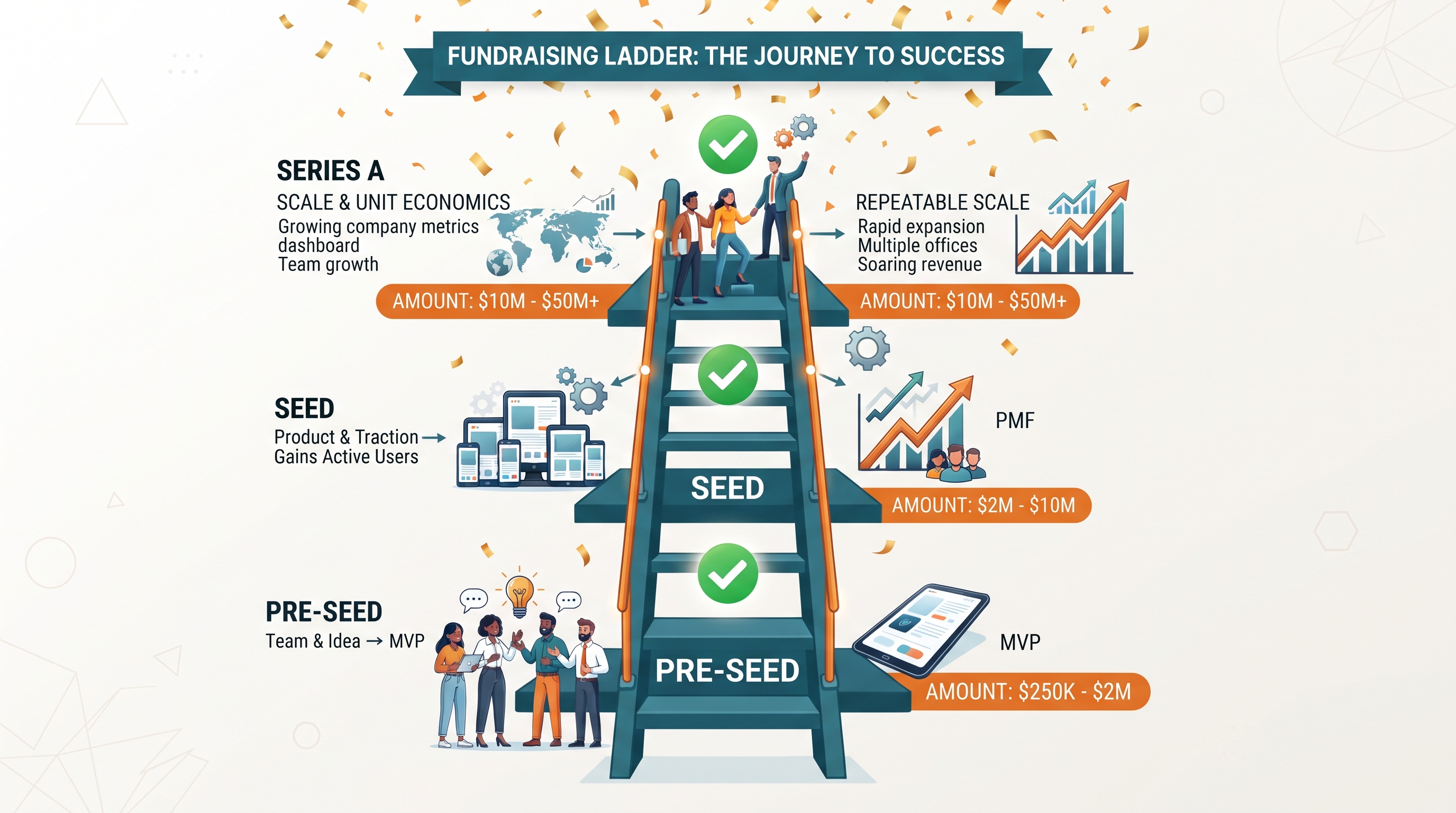
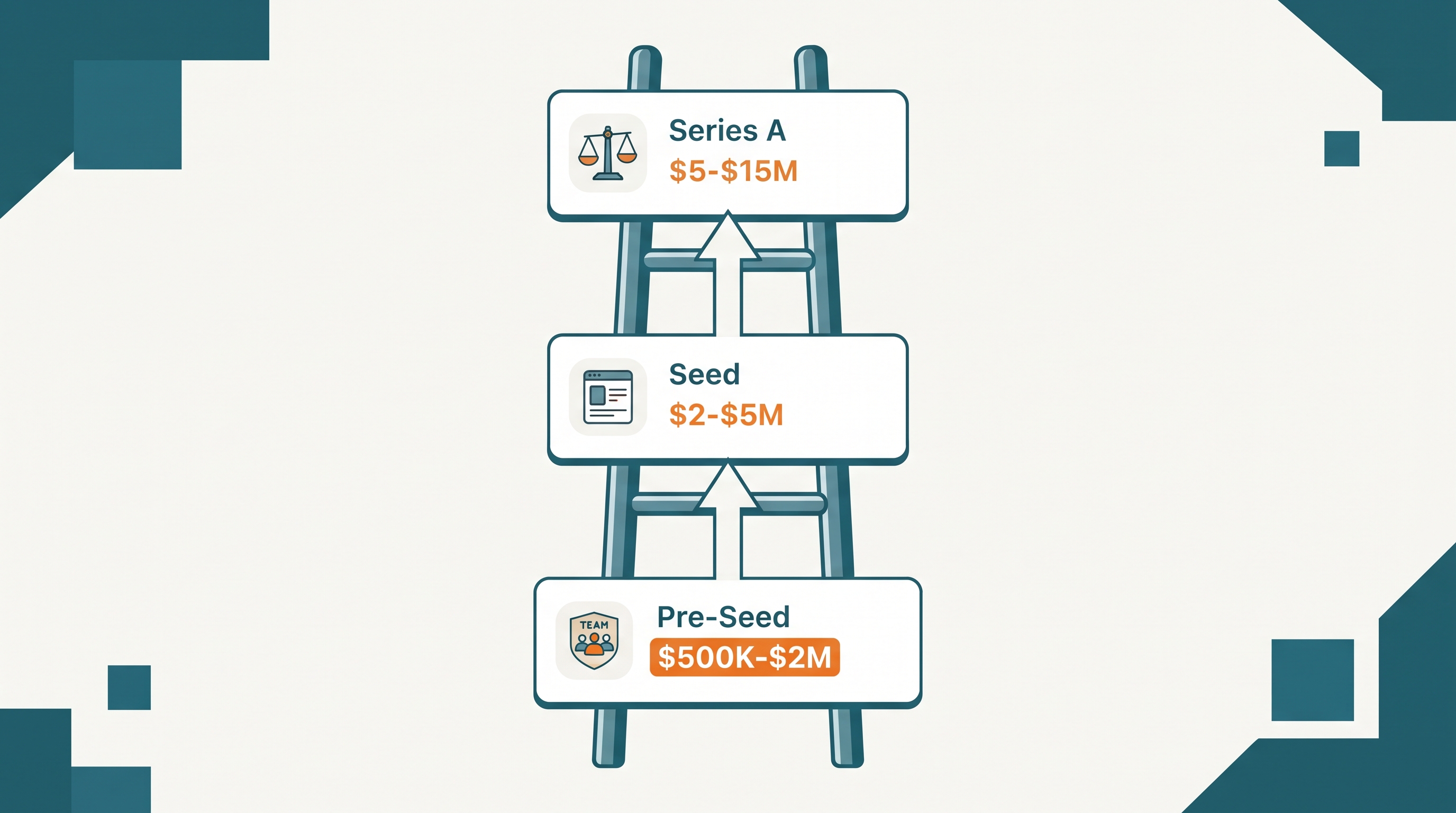
Think of fundraising as a ladder. Each rung represents a stage, and each stage has a typical cheque size and a set of criteria investors use to decide whether to climb with you.
| Stage | Typical Cheque | Investor Focus | Milestone |
|---|---|---|---|
| Pre‑Seed | $500K – $2M | Team & Idea | Build MVP |
| Seed | $2M – $5M | Product & Traction | Product‑Market Fit |
| Series A | $5M – $15M | Scale & Unit Economics | Repeatable Scale |
This isn't rigid – there are always exceptions – but it's a reliable framework. Let's break down each stage in detail.
Pre‑Seed – The Team and Idea Stage
Typical Cheque: $500,000 – $2,000,000 Pre‑Seed is the earliest stage of institutional funding. You might have a prototype, but you likely don't have significant revenue or a full‑fledged product. At this stage, investors are betting almost entirely on the team and the idea. What Investors Check:
- Team Quality – Do you have the right founders? Investors look for domain expertise, complementary skills, coachability, and a history of execution. They want to see that you can recruit, adapt, and persevere.
- Idea Viability – Is the problem real and urgent? Is your solution differentiated? Is the market gap big enough? You need a compelling narrative that passes the "why now" test.
- Market Gap – Even at Pre‑Seed, investors want to see a clear opportunity. If the market is saturated or the problem isn't painful, they'll pass.
Your Milestone : Build a minimum viable product (MVP) that you can put in front of real users. You don't need revenue yet – but you do need a working prototype that validates your core assumption.
How to Approach Seed Fundraising
- Lead with your team story – why are you the right people to solve this problem?
- Keep your ask focused on building the MVP. Show a clear timeline and budget.
- Target angel investors, early‑stage VCs, and accelerators that specialise in your sector.
Seed – The Product and Traction Stage
Typical Cheque: $2,000,000 – $5,000,000 Seed funding is where you prove that your product has legs. You should have a functional product in market and some early signals that users want it. Investors are now looking for evidence of product‑market fit. What Investors Check:
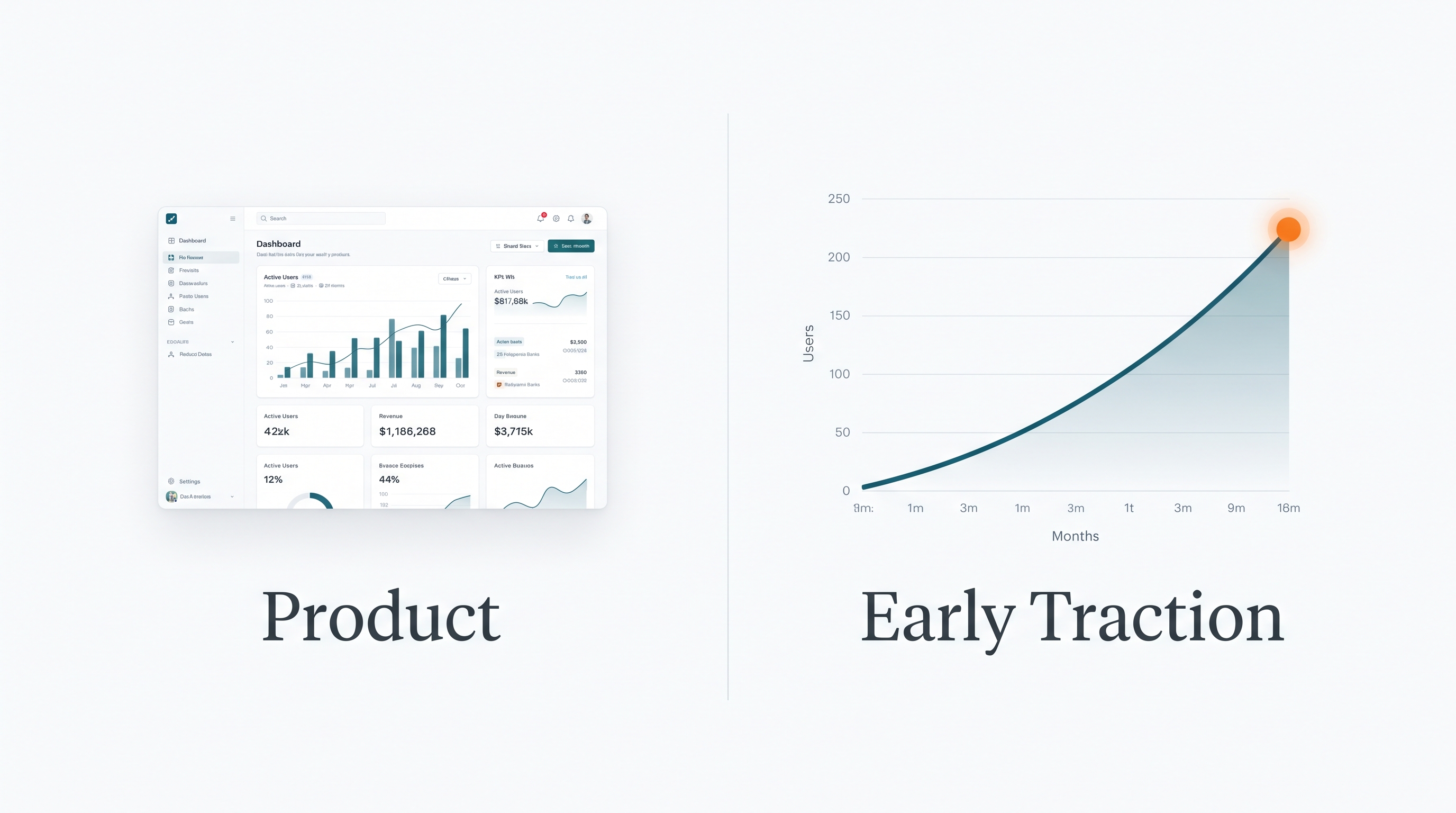
- Product Quality – Is the product functional, usable, and defensible? They'll evaluate the user experience, technical architecture, and competitive moat.
- Early Traction – This is critical. Traction can take many forms: user growth, engagement metrics, retention, waitlist signups, or even early revenue. Investors want to see that people are not just trying your product – they're coming back.
- Engagement Metrics – DAU/MAU, time in app, referral rates – these tell the story of whether your product is sticky or a one‑time novelty.
Your Milestone : Achieve product‑market fit. This means you have a repeatable, scalable way to acquire and retain customers, and you understand your unit economics well enough to project growth.
How to Approach Seed Fundraising
- Put your traction front and centre – lead with your best metric.
- Show a clear product roadmap and how the funding will accelerate it.
- Have a clear GTM (go‑to‑market) strategy – how will you acquire customers cost‑effectively?
Series A – The Scale and Unit Economics Stage
Typical Cheque: $5,000,000 – $15,000,000 Series A is where the real scrutiny begins. You should have proven product‑market fit and be ready to scale aggressively. Investors are now looking for evidence that your business can become a category leader with healthy margins. What Investors Check:
- Scale Metrics – Market share, revenue growth, team expansion, and operational efficiency. They want to see that you can grow without breaking.
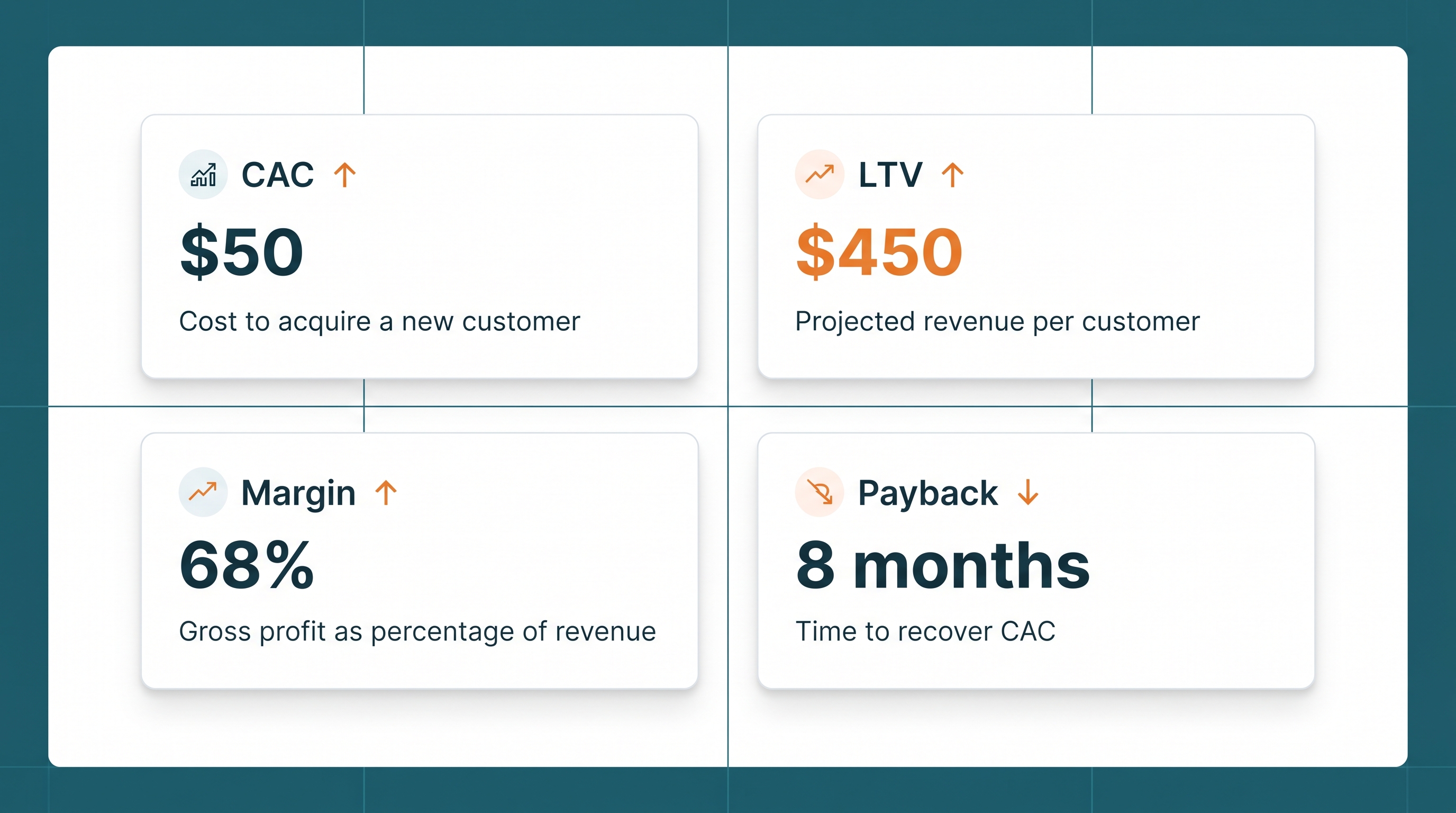
- Unit Economics – This is the deal‑maker or breaker. CAC (Customer Acquisition Cost), LTV (Lifetime Value), gross margins, and payback period must all be healthy and improving. If your unit economics don't work at scale, you don't have a venture‑scale business.
- Market Share – Are you winning against competitors? Are you becoming the default choice in your category? Market share growth signals defensibility.
- Expansion Plan – How will you enter new markets, launch new products, or capture adjacent customer segments?
Your Milestone : Prove you can scale repeatably and profitably. Show a clear path to profitability or a dominant market position.
How to Approach Series A Fundraising
- Prepare a detailed financial model with clear assumptions – investors will tear it apart.
- Have a data room ready with all customer contracts, financials, and operational metrics.
- Lead with your best unit economics figure – it's the headline investors care about most.
The Over‑Raise and Under‑Raise Traps
Founders often think bigger is better. But raising too much can be as harmful as raising too little. The Over‑Raise Trap: Raising a larger round than you need signals that you don't have a clear plan for the money. It also means more dilution, higher expectations, and a harder time raising your next round if you don't hit aggressive targets. Investors may wonder: "If they're taking this much now, what will they ask for next time?" The Under‑Raise Trap: Raising too little means you'll run out of runway before reaching your next milestone. This forces you to raise again on less favourable terms – or worse, shut down. It also signals a lack of ambition or poor financial planning. The Goldilocks Principle: Raise just enough to get to your next clear milestone – and no more. This demonstrates discipline, strategic thinking, and respect for investor capital.
How to Calculate Your Ideal Raise Amount
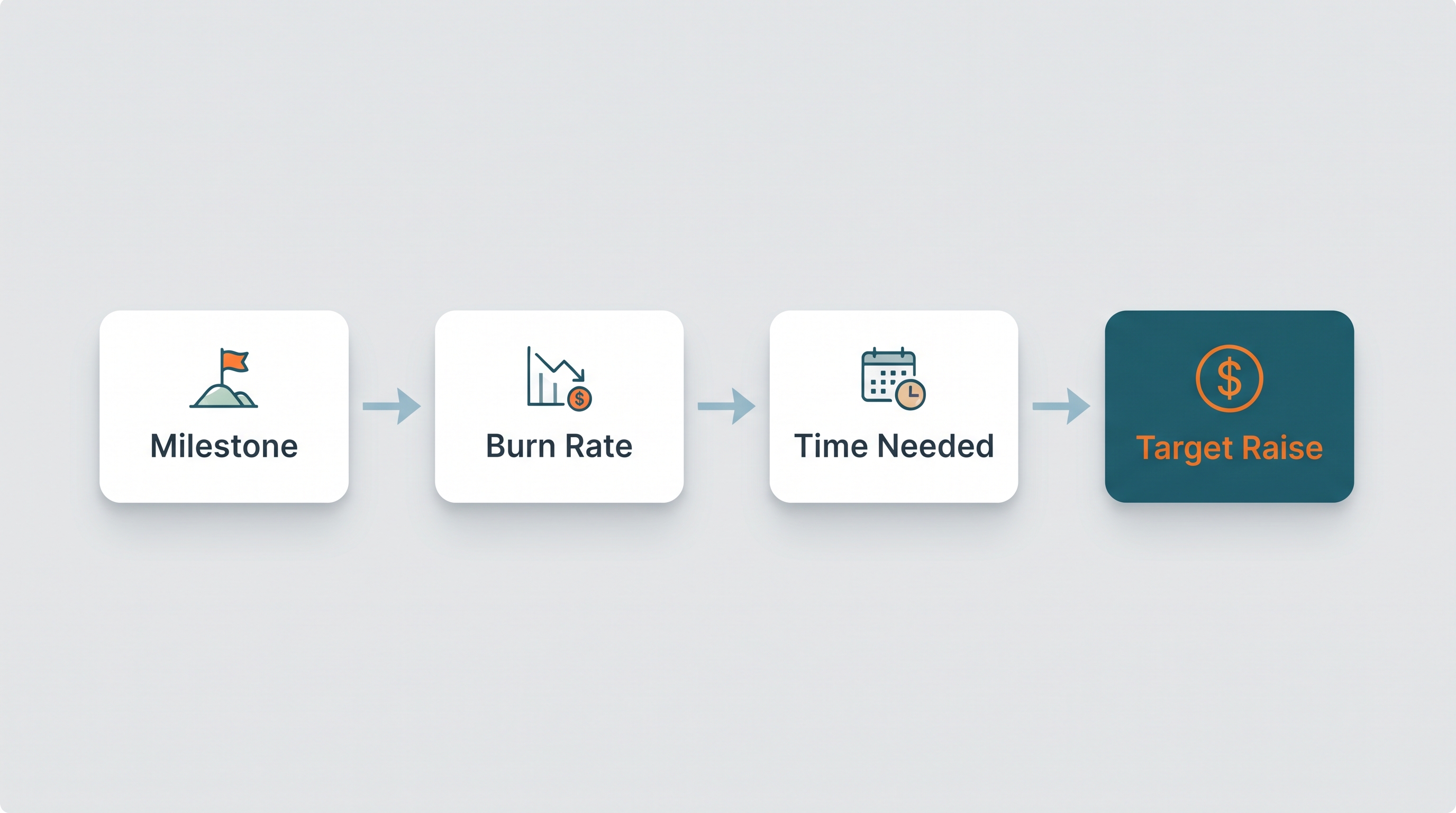
The formula is simple: Amount to Raise = (Monthly Burn Rate) × (Months of Runway Needed to Hit Next Milestone) Define your next milestone. Is it an MVP? Product‑market fit? Repeatable scale? Be specific. Estimate your monthly burn rate. Include salaries, marketing, operations, and overhead. Calculate the time needed. How many months to hit the milestone? Be realistic and add a 20% buffer for delays. Multiply burn × months. That's your target raise. Add a small contingency buffer. 10‑15% for unexpected costs or market shifts. Now you have a data‑driven number – not a guess.
Investor Psychology – What They're Really Thinking

Behind every cheque is a partner who has to justify the investment to their fund. Here's what they're evaluating: Conviction, not greed – They want to see a founder who is focused on building a great company, not extracting maximum value from the round. Milestone alignment – Does your ask match your plan? If you're raising $5M but can't articulate what milestone you'll hit with it, they'll assume you're not ready. Capital efficiency – Can you do more with less? Investors love founders who are scrappy and resourceful. Downside protection – If things go wrong, can you pivot or extend runway? They want to see that you've thought about risk.
Conclusion – Raise Smart, Not Just Big
Fundraising isn't about getting the biggest cheque – it's about getting the right cheque at the right time. Match your ask to your stage, your milestones, and your evidence. Investors respect founders who understand their business well enough to know exactly how much they need – and why. Before you send your next deck, ask yourself: What milestone am I funding? How long will it take? What do I need to prove to get to the next stage? The answers will tell you exactly how much to raise.
Ready to calculate your ideal raise?
Frequently asked questions
Is there a hard rule for how much to raise at each stage?
No – the ranges are guidelines, not rules. Some startups raise more or less depending on their industry, geography, and capital needs. Always anchor your raise to your specific milestones.
What if I need more than the typical range?
That's fine – but you'll need a compelling justification. Investors will want to see why your business requires more capital than peers. Be prepared with detailed financial models.
Can I skip Pre‑Seed and go straight to Seed?
Yes – if you already have a product and traction. Pre‑Seed is for early‑stage ideas. If you have proven product‑market fit, you may skip straight to Seed.
What if investors offer more than I asked for?
This happens, but be cautious. Accepting more means more dilution and higher expectations. You can accept a larger round only if you have a clear, defensible plan for the extra capital.
How do I know if I've achieved product‑market fit?
There's no single metric, but signs include: high retention, organic growth, customer referrals, low churn, and customers who would be "very disappointed" without your product (you can survey them).
What's the biggest mistake founders make when deciding how much to raise?
Over‑raising based on ego or fear, rather than a clear milestone plan. It leads to dilution, misalignment, and pressure to over‑deliver.