Angel Investor vs VC: Who Should You Raise From? A Founder's Guide
Angel investors and venture capitalists both fund startups — but they are fundamentally different. This guide breaks down the seven key differences and helps you choose the right partner for your stage, goals, and values.
The founder who picks the wrong investor doesn't just raise money, they sign up for a relationship that shapes their company for years. You've built something real. You have a product, early customers, and a vision. Now you're standing at a crossroads, staring at two very different paths. Angel investor. Venture capitalist. Both can write you a cheque. Both can accelerate your journey. But they are not the same thing. Not even close. This guide breaks down the seven key differences between angels and VCs — and helps you choose the right partner for your stage, your goals, and your values.
The Fundamental Difference — Whose Money Is It?
The most important distinction between angels and VCs is the source of capital. Angel investors are individuals who invest their own money. They're high-net-worth individuals — often former founders or executives — who write cheques from their personal wealth. They answer only to themselves. Venture capitalists are professional investors who manage funds of other people's money. They pool capital from limited partners — pension funds, endowments, foundations, and institutions. They are fiduciaries, legally obligated to act in their LPs' best interests. This structural difference shapes everything: how they invest, how fast they decide, how much control they want, and what they expect in return.
The Scale of the Ecosystem
The numbers tell a story of scale and reach. There are over 330,000 active angel investors in the US alone. In 2025, US angels backed roughly 70,000 deals totaling $28 billion. Global VC investment reached more than $500 billion in 2025, up from $391.9 billion in 2024. US VC firms closed 15,352 deals worth $320 billion. Both are massive engines of startup funding. But they serve different stages and different founders.
Investment Stage — When Do They Come In?
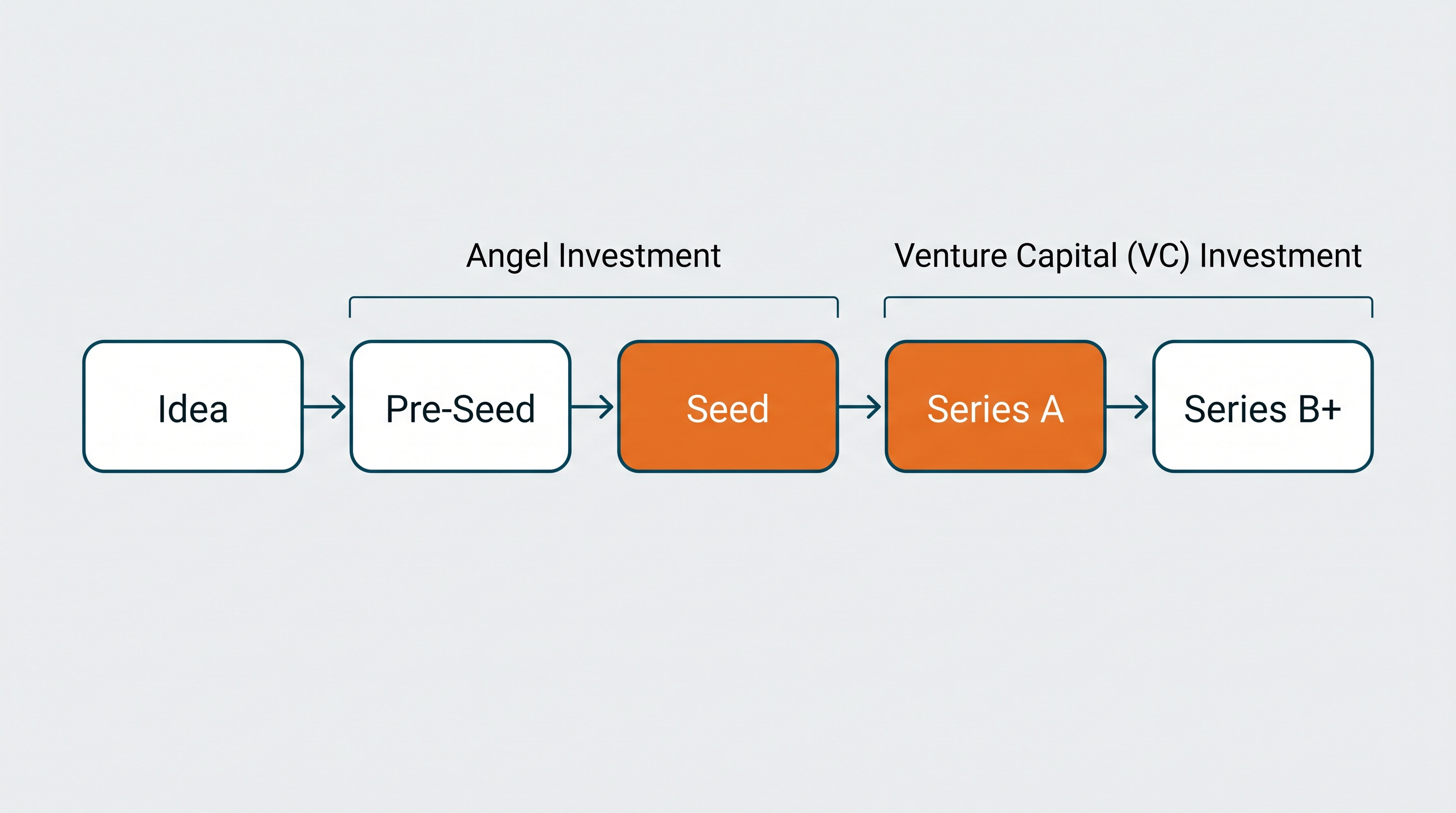
Angels and VCs enter at different points in your journey. Angel investors are often the first external funding source for startups. They step in during the pre-seed or seed stages — when you're still developing your product and trying to find product-market fit. More than 50% of angel investments in 2025 were concentrated in pre-seed and seed stages. Venture capitalists typically enter at later stages — seed, Series A, and beyond. They want to see demonstrated market traction, product-market fit, and a clear path to scale. If you're at the idea or prototype stage, you're likely looking at angels. If you have revenue and traction, VCs become relevant.
Check Size — How Much Do They Invest?
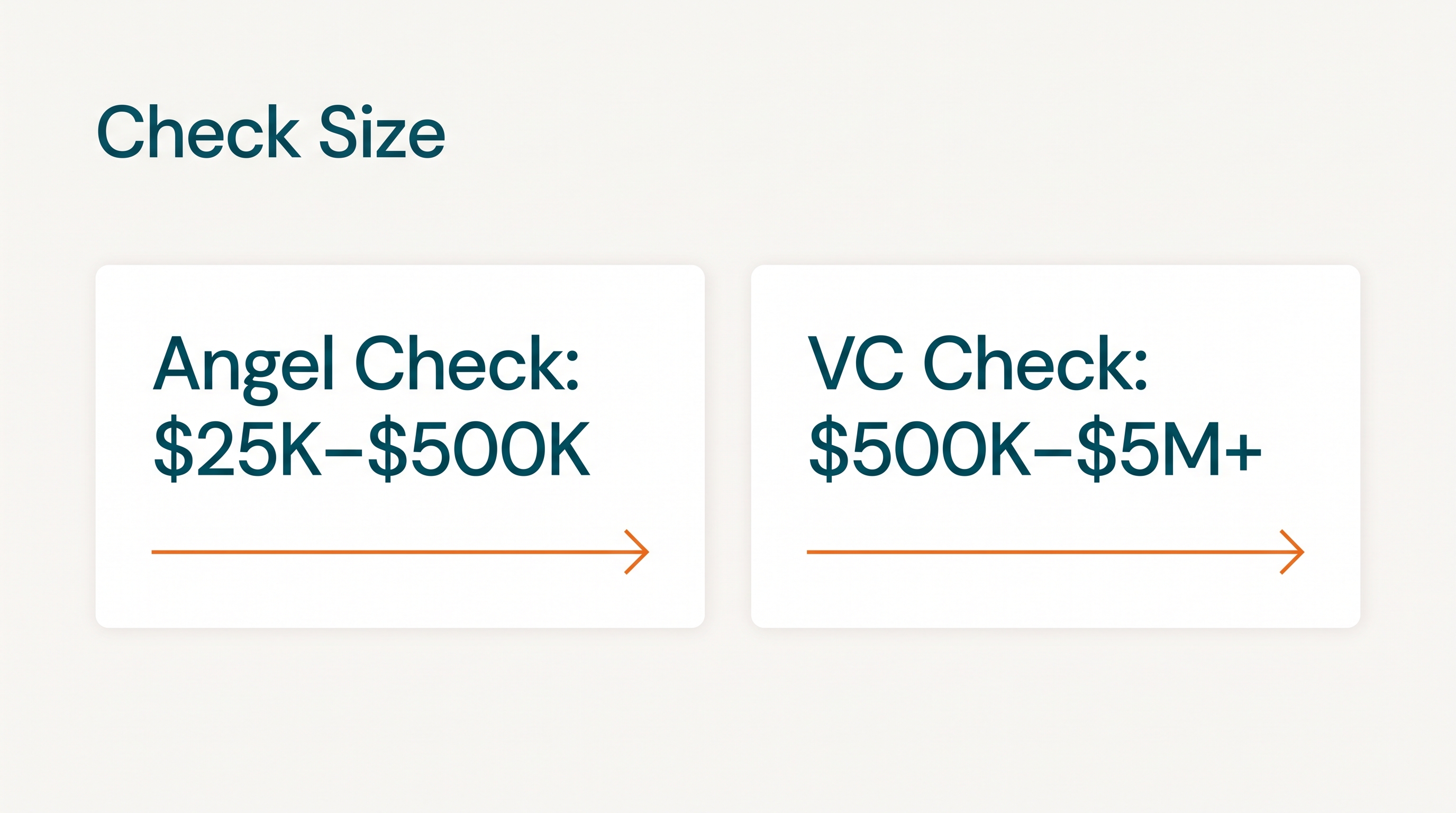
The size of the cheque reflects the stage and the risk. Angel checks typically range from $25,000 to $500,000 per investment. Individual angels may write as little as $1,000, with syndicates pooling up to $3 million on average. VC checks are significantly larger: $500,000 to $5 million or more, depending on the fund size and stage focus. Seed funds might go as low as $250,000, but Series A and later funds write $3 million to $20 million+. Ask yourself: how much capital do you actually need? If it's under $500,000, angels are your natural fit. If you need millions to scale, VCs are the right conversation.
Control and Involvement — Who's in the Driver's Seat?
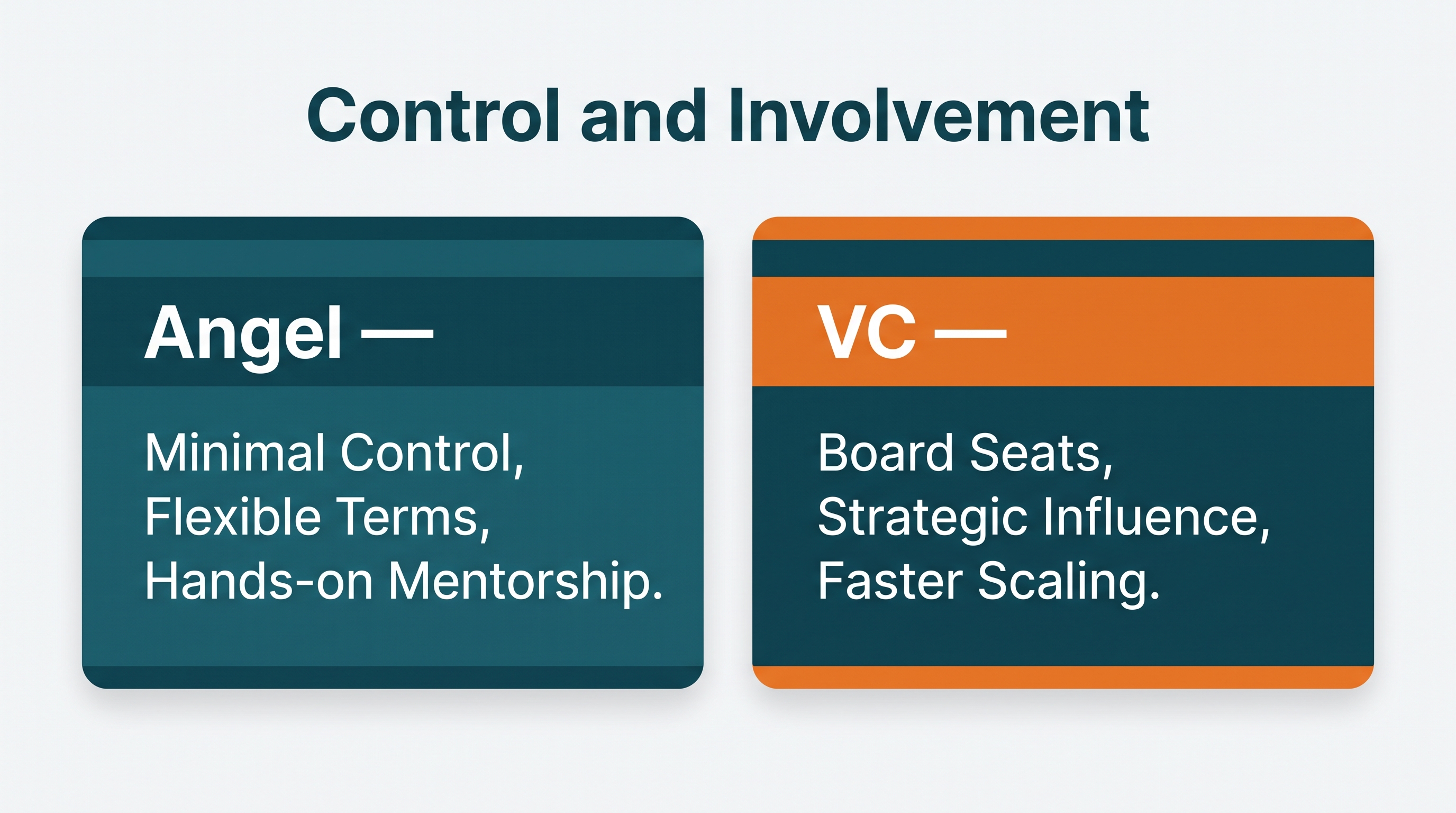
This is where the relationship feels most different. Angel investors typically take a hands-on mentorship approach with minimal board control. They may offer advice, make introductions, and provide strategic guidance — but they rarely demand board seats. They're often content with minority stakes and limited voting rights. Venture capitalists take board seats, exert strategic influence, and push for faster scaling. Board membership provides governance rights, access to detailed information, and influence over major decisions. VCs typically negotiate specific voting rights on major decisions — selling the company, raising more capital, or changing the business fundamentally. The trade-off is clear: angels give you more autonomy. VCs give you more firepower — but with more oversight.
Decision Speed — How Long Does It Take?
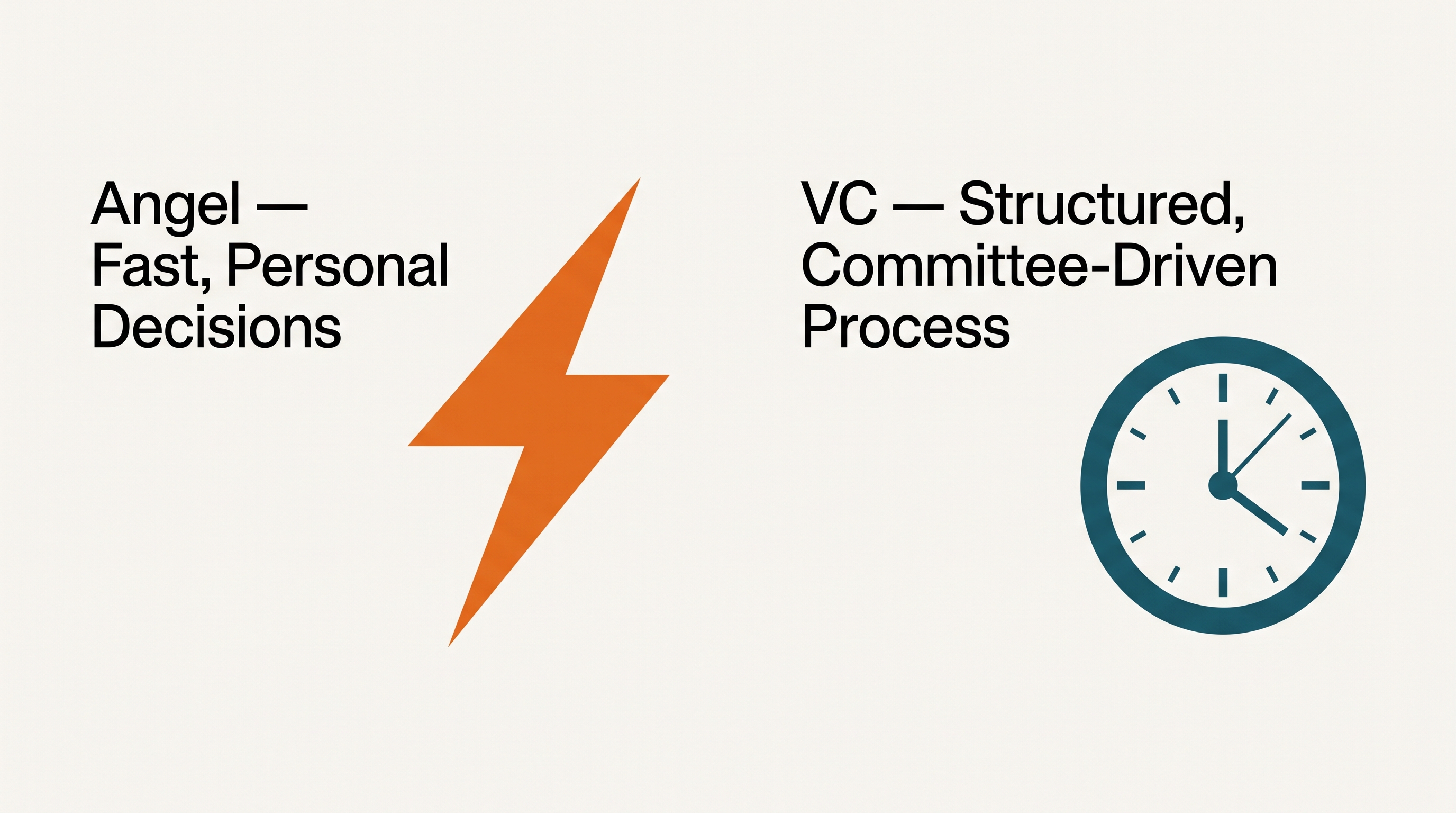
Speed matters, especially when you're running out of runway. Angel investors make fast, personal decisions. They may rely on gut feeling, the entrepreneur's passion, and the potential they see in the idea. This allows for quicker access to capital. Venture capital firms employ a structured, committee-driven decision-making process. This involves detailed market analysis, assessment of the business model, and evaluation of growth potential. Decisions can take weeks or months. If you need capital fast, angels are the better bet. If you can wait for a larger, more structured process, VCs are an option.
Risk Tolerance — Who Will Bet on You?
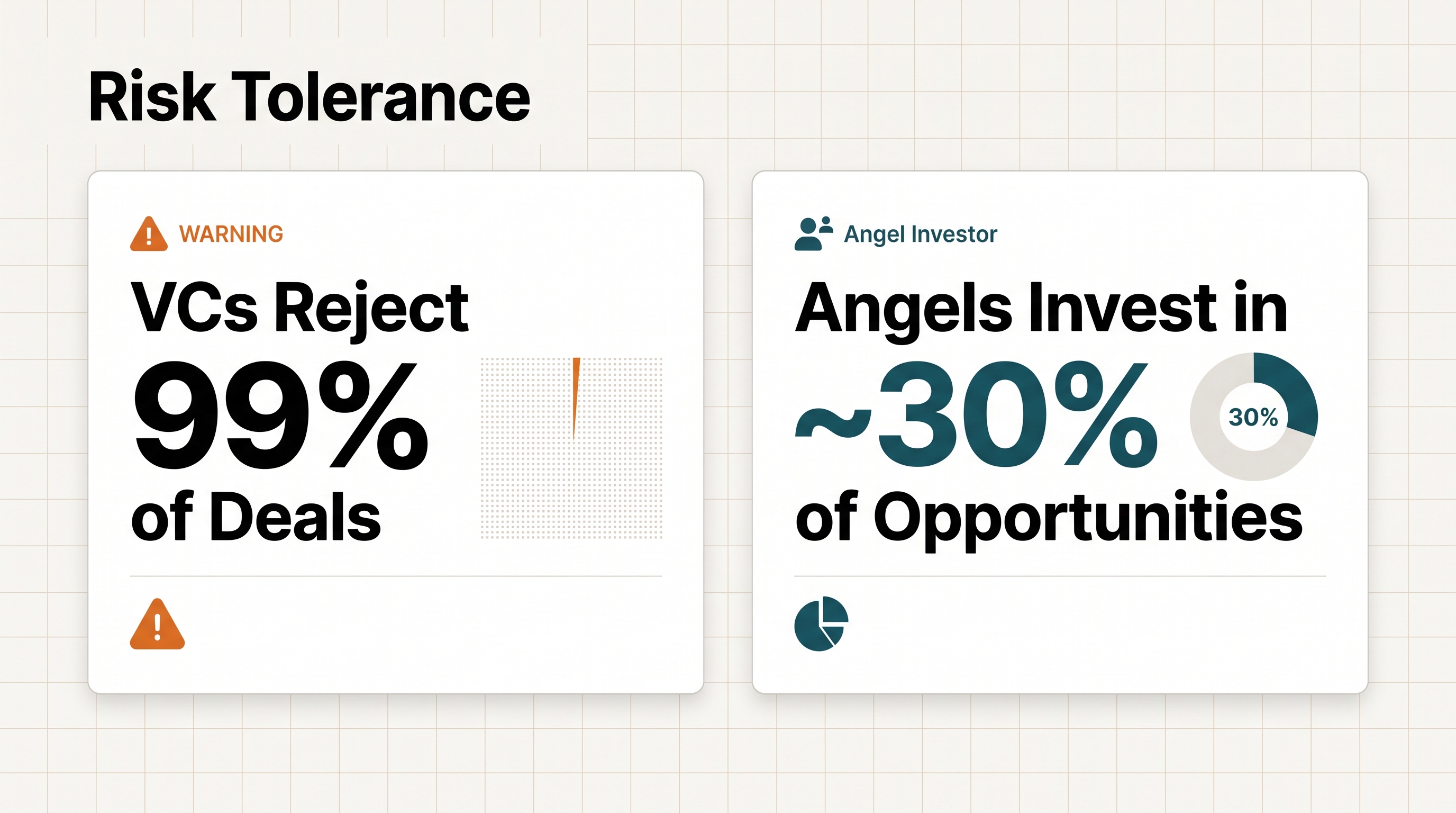
Risk tolerance is a key differentiator. Angel investors generally have a higher tolerance for risk. They often invest in unproven ideas or technologies, understanding that many of their investments may fail. They're willing to take these risks for the potential of high returns. Venture capitalists have lower risk tolerance. They need to deliver returns to their limited partners and therefore want to see proven traction before they invest. The numbers reflect this: VCs reject 99% of the deals they see. Angels invest in about 30% of opportunities. If you're early-stage and unproven, your odds are much better with angels.
The Equity Trade-off — How Much Do You Give Up?
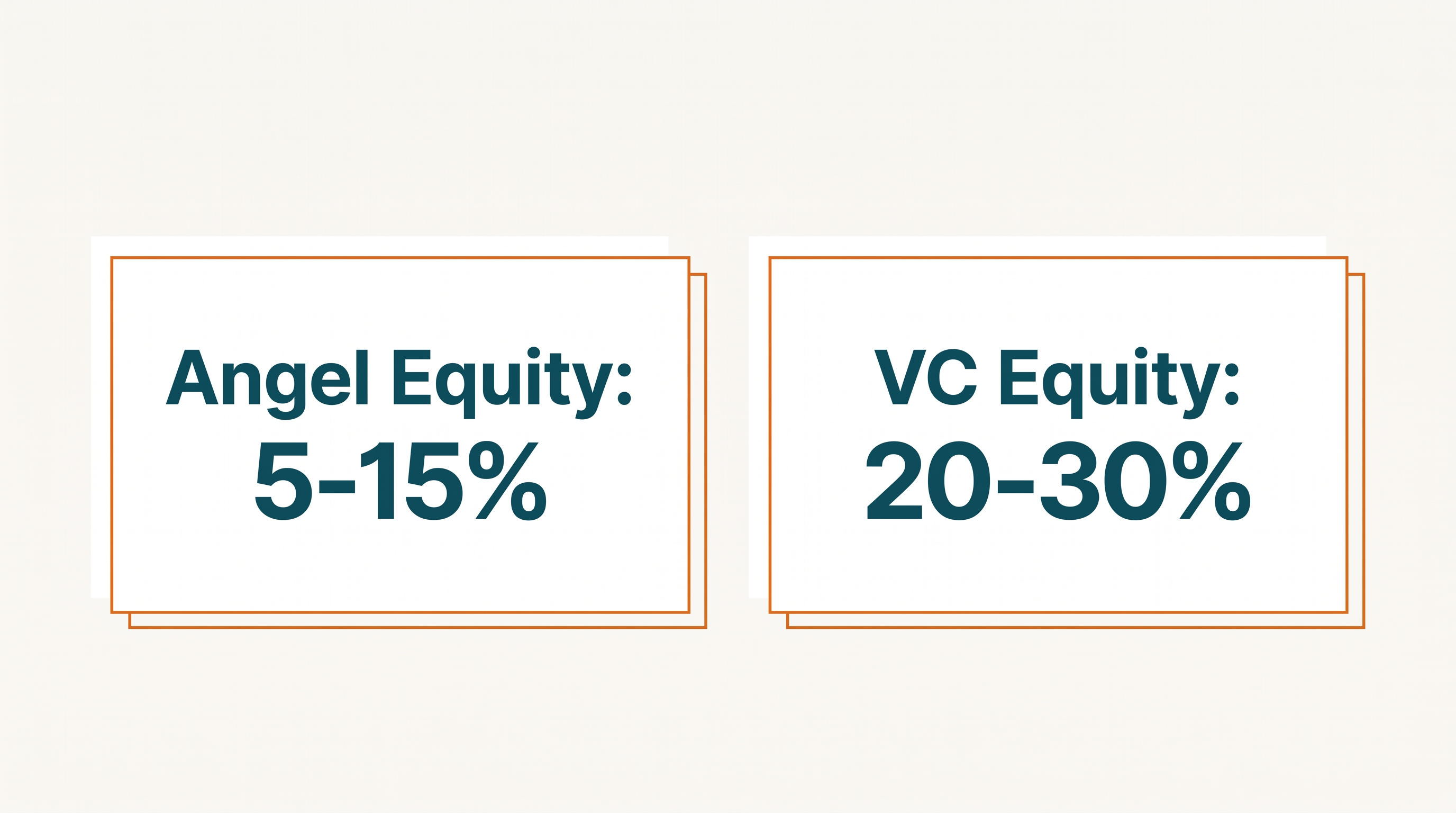
Both angels and VCs take equity in exchange for capital. But the percentages are different. Angel investors typically take 5-15% of your company. Because they invest smaller amounts and take higher risks, their ownership stake is usually lower than VCs. Venture capitalists typically take 20-30% of your company. They need meaningful ownership to move the needle on their fund returns. A $100 million VC fund makes about 30 investments of approximately $3 million each, targeting 10-20% ownership in each. The equity you give up is permanent. Choose wisely.
When to Choose Angels — The Early Believers
Angels are the right choice when:
- You're at the idea, pre-seed, or seed stage
- You need under $500,000
- You have minimal traction but a compelling vision
- You want a flexible, hands-off relationship
- You need fast access to capital
Angels invest with conviction early, while other investors wait for a lead VC to de-risk the round. They're often the first believers in your vision.
When to Choose VCs — The Growth Accelerators
VCs are the right choice when:
- You're at seed stage or beyond
- You need over $1 million
- You have strong metrics, traction, and product-market fit
- You're ready to scale aggressively
- You can handle formal reporting and board oversight
- You're ready to scale aggressively
VCs bring significant funding, access to networks and new markets, and credibility with customers and partners. They're designed to accelerate growth — but they come with higher expectations.
The Ghosting Reality — What the Numbers Don't Tell You
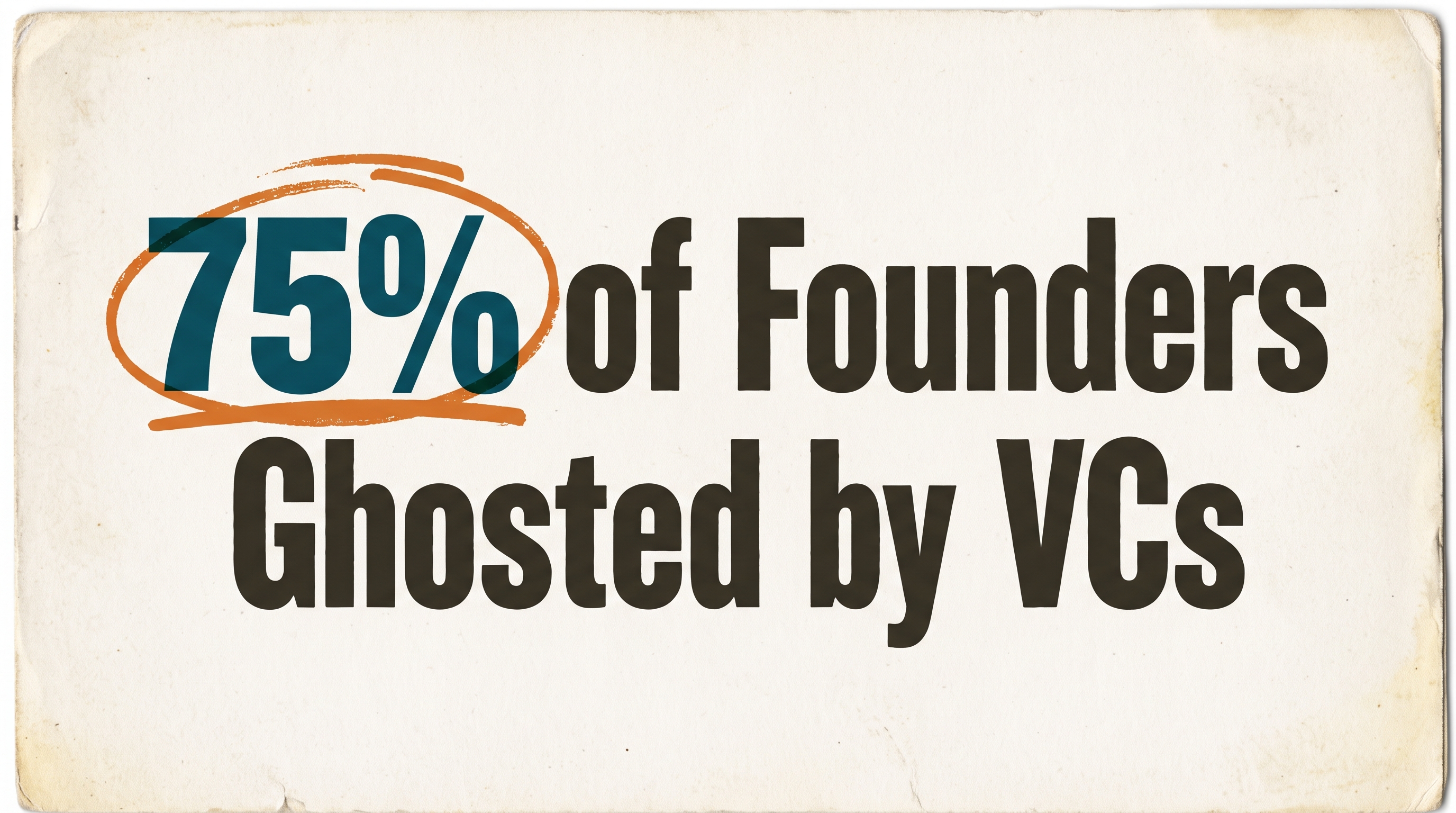
There's a reality that founders need to understand. Over 75% of founders report being ghosted by VCs. You send a deck, you wait, and you never hear back. Angels are different. They invest in about 30% of the opportunities they see. They're more accessible, more responsive, and more likely to give you a yes or a no. The takeaway: if you're early-stage, don't waste months chasing VCs who will likely ignore you. Build relationships with angels first. Get the traction that makes you VC-ready.
The Takeaway — Know Your Investor
The wrong investor can slow you down. The right one can accelerate your journey. Angels give you flexibility, mentorship, and fast decisions — ideal for early-stage founders who need to prove their concept. VCs give you firepower, scale, and strategic guidance — ideal for founders ready to go big. The decision comes down to your stage, your sector, your goals, and how much control you want to keep. Know your investor. Choose your path. And remember: the right partner makes all the difference.
Ready to find your funding match? Evaluate whether angels or VCs are the right fit for your stage, sector, and goals. Start your fundraising journey today.
Frequently asked questions
What is the main difference between an angel investor and a VC?
Angels invest their own money at the earliest stages (pre-seed/seed) with smaller cheques ($25K-$500K) and minimal control. VCs manage funds of other people's money, invest at later stages (Series A+), write larger cheques ($500K-$5M+), and typically take board seats.
How much equity do angels and VCs typically take?
Angels typically take 5-15% of your company. VCs typically take 20-30%. The exact percentage depends on valuation, stage, and deal structure.
Which is better for an early-stage startup?
Angels are generally better for early-stage startups. They have higher risk tolerance, make faster decisions, and are more accessible. VCs typically wait for proven traction before investing.
Can I raise from both angels and VCs?
Yes. Many founders start with angel funding to develop their product, then transition to VC funding as they gain traction and need larger capital for growth.
Why do VCs reject so many deals?
VCs reject about 99% of the deals they see. They have a low risk tolerance, need to deliver returns to their limited partners, and require proven traction before investing.
How long does it take to get a decision from an angel vs a VC?
Angels make fast, personal decisions — often within days or weeks. VCs go through a structured, committee-driven process that can take weeks or months.