
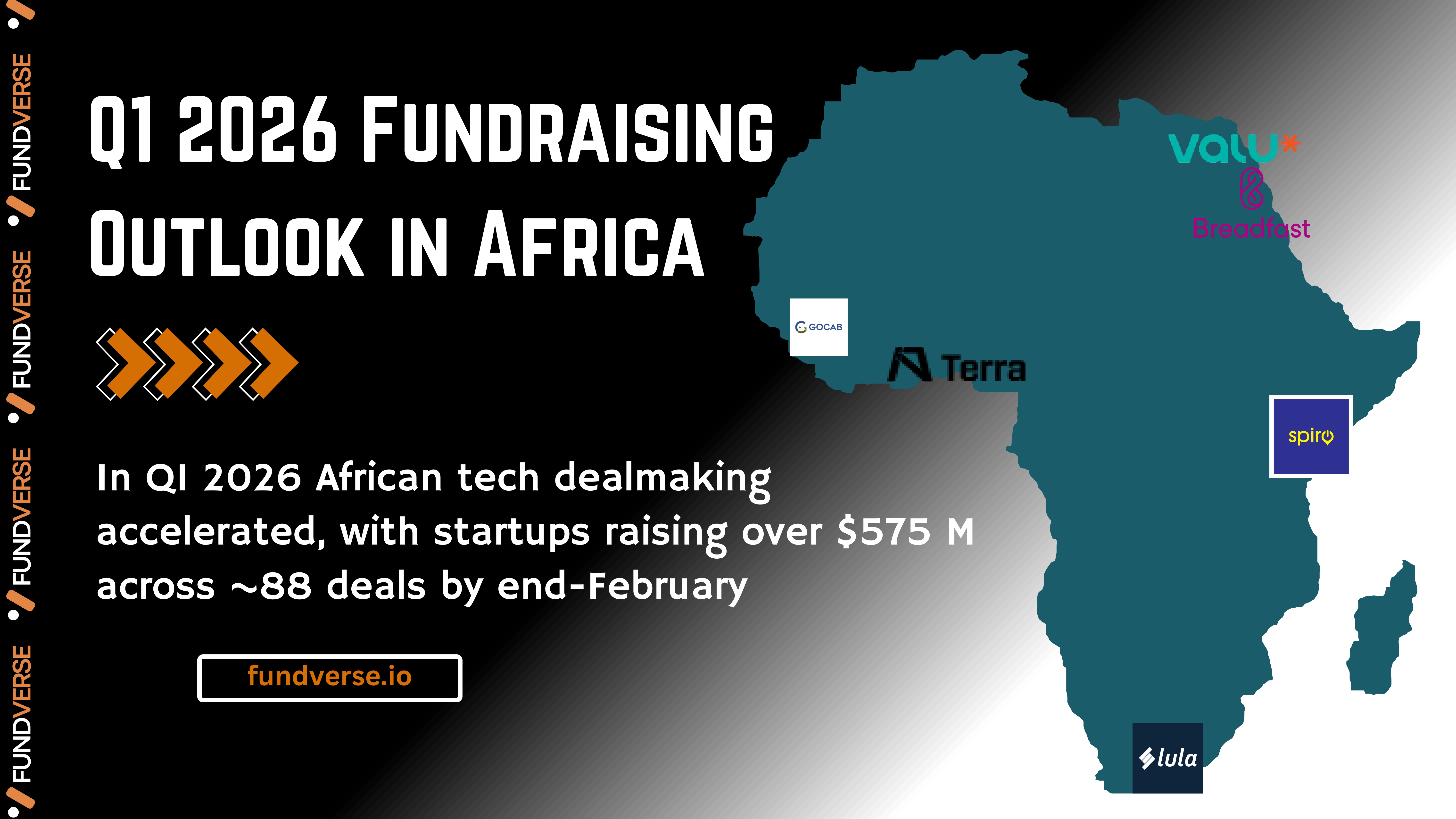
Africa’s startup ecosystem is evolving fast, with capital becoming more selective and performance-driven. This report-backed analysis breaks down the biggest deals, investor trends, and what founders must understand to raise in 2026.
2026 Fundraising Outlook in Africa
The Shift Has Already Happened
There was a time when raising capital in Africa was largely driven by narrative. A compelling vision, a strong founder story, and the promise of untapped markets were often enough to get investors interested. That time is over.
In 2026, fundraising across Africa has become more disciplined, more data-driven, and significantly more selective. Investors are no longer chasing potential alone. They are chasing proof.
The ecosystem is not shrinking, it is maturing. Capital is still available, but it is flowing differently. Founders who understand this shift will position themselves ahead of the market, while those who rely on outdated fundraising strategies will struggle to get attention.
This is not a downturn. It is a recalibration.
The State of African Fundraising in 2026
The article highlights a clear pattern across the continent. Funding activity continues, but with a sharper focus on fundamentals such as revenue quality, retention, and scalability.
Investors are prioritizing businesses that demonstrate a clear path to profitability rather than those relying on aggressive growth without structure. This is particularly evident in sectors such as fintech, climate tech, and logistics, where capital is still active but deployed with more scrutiny.
Another defining trend is the reduction in deal velocity. Rounds are taking longer to close, and due diligence has become more thorough. Investors are asking deeper questions about unit economics, customer acquisition efficiency, and long-term defensibility.
At the same time, there is an increase in participation from strategic investors and family offices, who are entering the market with a long-term perspective rather than short-term returns.
Notable Deals Shaping the Market
The article captures several key transactions that define where capital is flowing and what investors are backing in 2026.
High-Impact Deals Across the Ecosystem
The 2026 fundraising landscape across Africa is being shaped by a mix of equity, debt, and hybrid financing structures, reflecting a more sophisticated and capital-efficient market. The following deals highlight where investor conviction is strongest and how capital is being deployed across sectors and regions.




ValU, a fintech company based in Egypt operating in the BNPL and payroll space, secured a $63.6 million debt facility from the National Bank of Egypt in January 2026. This transaction reinforces the growing role of local financial institutions in supporting fintech infrastructure through non-dilutive capital.
In Nigeria, MAX, also known as Metro Africa Xpress, raised $24 million to scale its electric mobility fintech platform. The round was backed by a strong syndicate including Equitane DMCC, Novastar Ventures, Endeavor Catalyst, and the Energy Entrepreneurs Growth Fund, reflecting continued investor interest in climate-aligned mobility solutions.
NowPay, another Egypt-based fintech focused on payroll solutions, announced a $20 million strategic deal through a joint venture with Saudi financial services firm Tas’heel. This structure signals a growing trend of cross-border partnerships and regional expansion through joint ventures rather than traditional funding rounds.
Morocco’s proptech startup Yakeey raised $15 million in a round led by Enza Capital, with participation from IFC, Beltone Venture Capital, and CDG Invest. The deal highlights increasing attention toward real estate technology and digitization of property markets across North Africa.
In the defense technology space, Nigeria’s Terra Industries completed two significant raises within a short period. The first round of $11.75 million in January was led by 8VC with participation from Valor Equity, Lux Capital, SV Angel, Nova Global, and Resilience17. This was followed by a $22 million round in February led by Lux Capital, with continued support from 8VC and other institutional investors, signaling strong conviction in frontier technology sectors.
GoCab, an Ivory Coast-based mobility fintech company focused on electric vehicles, raised a total of $45 million in February 2026. The round combined $15 million in equity led by JANNGO Capital and supported by E3 Capital, KawiSafi Ventures, and Cur8 Capital, alongside $30 million in Sharia-compliant debt financing. This blended structure reflects the increasing use of innovative financing models tailored to regional markets.
South Africa’s Lula, a fintech platform focused on SME lending, secured a $21 million facility from FMO, the Dutch development finance institution. This deal underscores the importance of development finance institutions in supporting small business financing across the continent.
In Ethiopia, Lovegrass Ethiopia, an agritech company specializing in teff-based products, raised $5 million from British International Investment. The deal highlights continued investor interest in food security and value-added agricultural processing.
Egypt’s Breadfast, a rapidly growing grocery e-commerce platform, raised $50 million from a diverse group of global investors including Mubadala Investment Company, IFC, Olayan Financing Company, SBI Investment, EBRD, Y Combinator, Novastar Ventures, 4DX Ventures, AAIC, and a Saudi family office. The company’s prior valuation was estimated at approximately $400 million, indicating strong growth momentum in digital commerce.
Spiro, an e-mobility company with operations headquartered in Kenya, secured $50 million in funding from Afreximbank, Nithio, and the Africa Go Green Fund, supported by the African Development Bank. This deal reflects increasing institutional backing for clean energy transportation solutions across Africa.
SolarAfrica, based in South Africa, raised $94 million in debt financing from Rand Merchant Bank and Investec to expand its solar energy projects. This transaction highlights the scale of capital required for infrastructure and renewable energy development on the continent.
Finally, Enko Education, a South Africa-based edtech company operating K-12 schools, secured a $22 million debt facility from Standard Bank in March 2026, demonstrating the growing role of structured financing in the education sector.
These deals are not just numbers. They represent a broader shift toward sectors that solve structural challenges while demonstrating measurable traction.
What Investors Are Really Looking For Now
The report makes one thing clear. The bar has been raised.
Proof Over Promise
Investors expect founders to come to the table with evidence, not assumptions. This includes consistent revenue growth, strong retention metrics, and a clear understanding of customer behavior.
Efficiency as a Core Metric
Growth is no longer enough. Investors are analyzing how that growth is achieved. Startups that can demonstrate efficient customer acquisition and improving margins are more likely to attract capital.
Market Understanding
Founders who deeply understand their market stand out immediately. This goes beyond surface-level insights and requires a clear articulation of customer pain points, competitive dynamics, and long-term opportunities.
Execution Speed with Discipline
Execution still matters, but reckless scaling does not. Investors are backing founders who can move fast while maintaining operational control and financial discipline.
The Role of New Capital Players
Family offices, angel syndicates, and strategic corporate investors are becoming more active across Africa. These players bring a different approach to investing, often focusing on long-term value creation rather than short-term exits.
This shift is creating new opportunities for founders, especially those who may not fit the traditional venture capital model.
However, accessing these investors requires a different strategy. Relationships, credibility, and targeted outreach are becoming more important than ever.
What This Means for Founders
The fundraising environment in Africa is not becoming harder. It is becoming clearer.
Founders who succeed in 2026 will be those who approach fundraising as a structured process rather than an opportunistic activity.
You Need a System, Not Hope
Raising capital now requires a repeatable system that includes investor research, outreach, follow-ups, and continuous updates. Founders must treat fundraising as a core function of the business.
Your Story Must Be Backed by Data
Narratives still matter, but they must be supported by real metrics. Investors are looking for alignment between what you say and what your numbers prove.
Timing Matters More Than Ever
Starting early is critical. Waiting until you urgently need capital reduces your leverage and limits your options. The most successful founders begin building investor relationships long before they raise.
Where Platforms Like Fundverse Fit In
In a market that demands precision, tools that streamline fundraising are becoming essential.
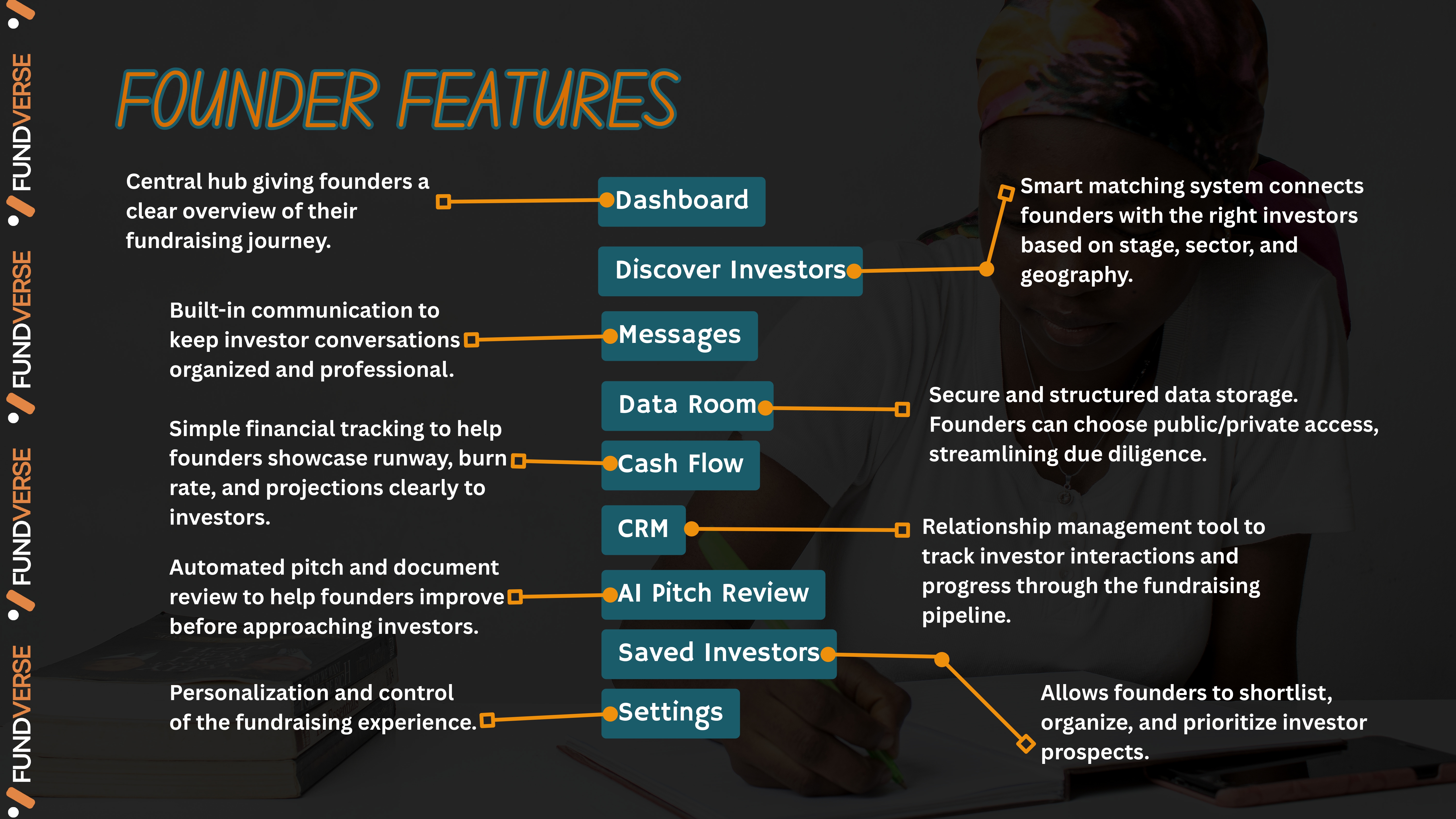
Fundverse positions itself as an infrastructure layer for modern fundraising, helping founders move from scattered processes to structured execution.
Through features such as investor matchmaking, pitch optimization, and CRM tracking, platforms like Fundverse enable founders to manage their fundraising pipeline with clarity and efficiency.
For investors, including family offices and venture firms, these tools provide better visibility into deal flow, improved screening mechanisms, and more efficient decision-making processes.
As the ecosystem matures, the role of such platforms will only become more significant.
The Outlook for the Rest of 2026
The trajectory for African fundraising remains strong, but selective.
Capital will continue to flow into startups that demonstrate real value, solve meaningful problems, and operate with discipline. Sectors such as fintech, climate tech, and logistics will remain key areas of focus, while new opportunities will emerge in underexplored markets.
The gap between prepared and unprepared founders will widen. Those who understand the new rules will move faster, close stronger rounds, and build more resilient companies.
If you are preparing to raise in 2026, do not rely on outdated strategies.
Build a system. Track your pipeline. Match with the right investors.
Start your fundraising journey with clarity and structure today at https://fundverse.io/
Frequently Asked Questions
Topics
Africa fundraising 2026
African startup funding
venture capital Africa
startup investment Africa